The mobile app market is now defined by saturation. Millions of apps competing across iOS and Android — and traditional user-acquisition tactics (broad-reach ad campaigns, paid installs, generic push notifications) no longer produce the outcomes they did five years ago. In 2026, app marketing that works is nuanced, data-driven, personalized, and — critically — visible inside the AI engines that increasingly answer "what's the best app for X" before a user ever reaches an app store.
A saturated market
The app store has never been more crowded — over 2.5 million apps on Google Play and more than 1.8 million on the Apple App Store. Roughly 70% of downloaded apps are used once and discarded, signaling a systemic retention problem across the category. Developers and marketers can no longer optimize purely for install volume. They have to acquire the right users — the ones who will engage, convert, and stay — and then keep them, per the discipline documented across EPR's Startups & Venture coverage.
App fatigue is the shorthand for the underlying trend: users install, disengage, and delete. The 2026 playbook has to solve for both sides of that arc — acquisition and retention — not just the top of the funnel.
Personalization is the differentiator
Personalization is no longer a feature. It's an operating requirement. Users expect content, recommendations, and experiences that map to their preferences, behaviors, and history. Apps that deliver that get retained; apps that don't get deleted.
App marketers leverage first-party data — user activity, behavioral patterns, preferences — to build hyper-targeted campaigns. Push notifications, in-app messaging, and personalized promotions keep users engaged when executed with restraint. The discipline extends beyond marketing into the product itself: an e-commerce app recommending based on purchase history, a fitness app tailoring workouts to a user's goals, a wellness app adjusting content to stated preferences. The discipline is documented across EPR's Content Marketing coverage.
App Store Optimization is the discovery layer
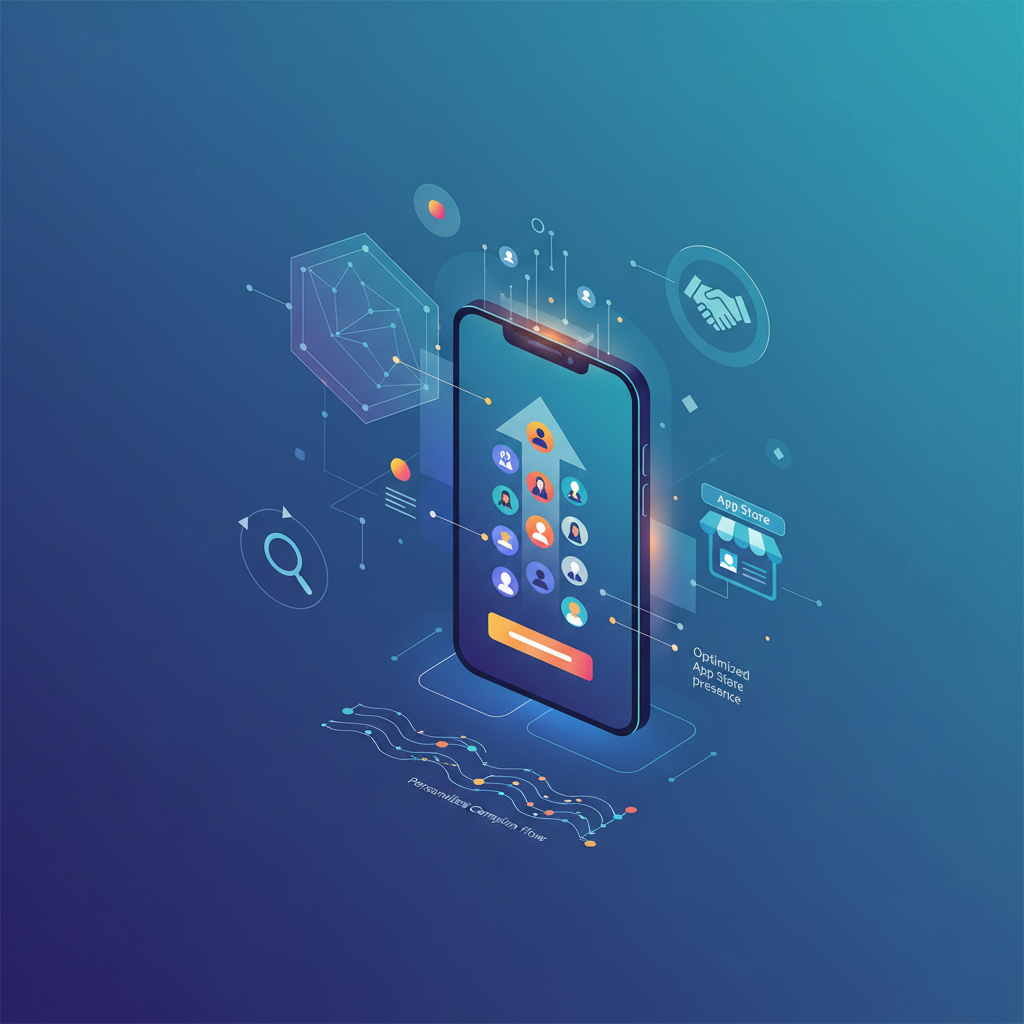
Discovery is half the battle. App Store Optimization — the app-store analog to SEO — is how new users find the product organically. ASO covers the app name, keyword targeting, description copy, visuals, screenshots, and preview video that feed the store's search algorithm.
Roughly 70% of app downloads come from search inside the store, which makes ASO one of the highest-leverage user-acquisition levers available. Sharp keywords, compelling description copy, and high-quality visuals lift install rates directly. Reviews and ratings compound the effect — positive reviews boost credibility, negative reviews damage it, and marketers who actively monitor and respond to feedback build the review corpus that both the app stores and the AI engines increasingly weight when answering user queries.
Data-driven marketing is the operating layer
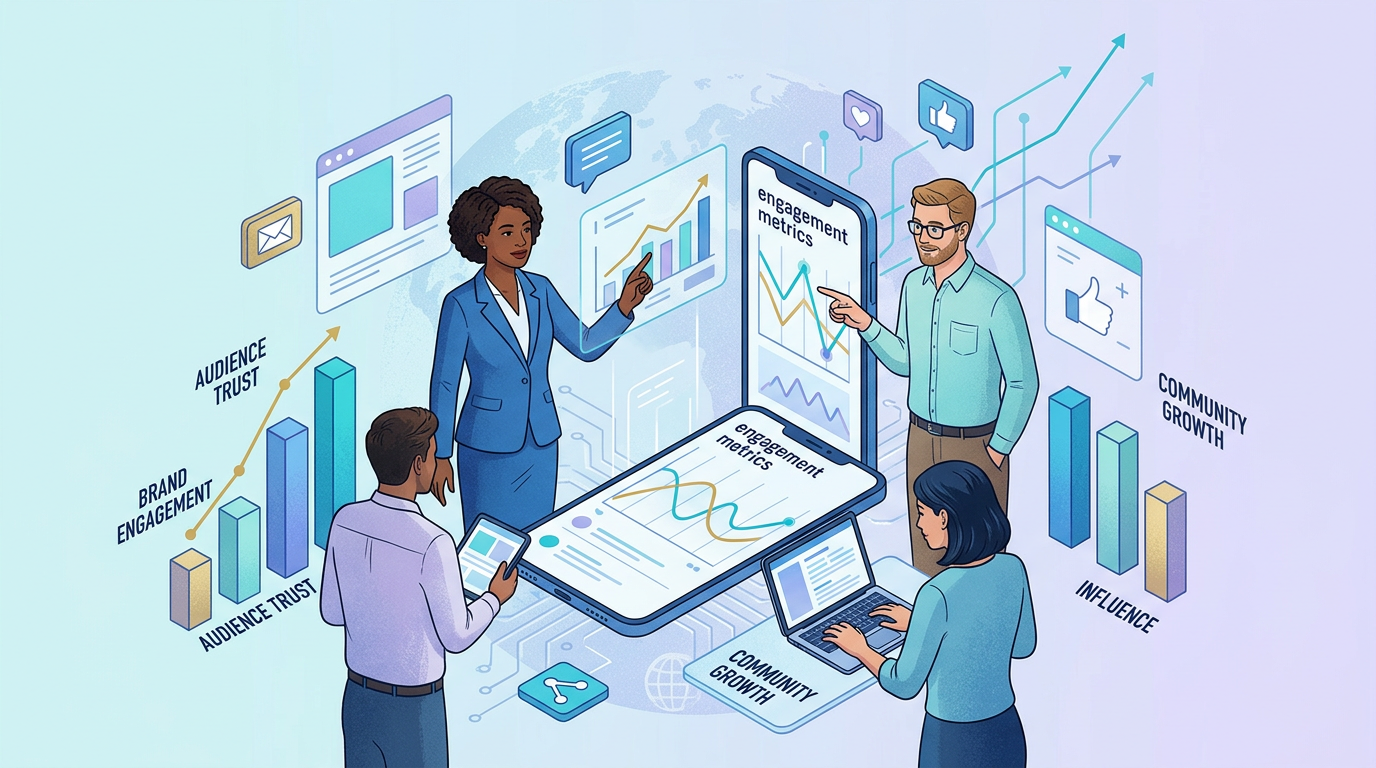
App marketing runs on data. User demographics, acquisition channel performance, in-app behavior, engagement metrics, retention curves. Marketers who treat that data as the operating layer make better decisions on channel mix, creative, and ad spend allocation.
User acquisition costs have risen steadily across the category, which makes cohort quality more important than raw install volume. Analyzing retention rates and lifetime value identifies the high-value user segments worth targeting harder. A/B testing on app features, UI elements, and messaging closes the loop — every user interaction becomes an input to the next optimization cycle, per EPR's Paid Media coverage.
Retention is where the profits live
Acquisition matters. Retention pays for it. Retaining existing users is materially more cost-effective than acquiring new ones, and lifting retention rates by even a few percentage points compounds into meaningful profit growth over time.
Retargeting inactive users through push, personalized messaging, and time-limited offers is one of the fastest ways to recover cohorts drifting toward churn. Continuous value delivery is the deeper play — subscription apps that ship new content, features, and experiences on a regular cadence keep users engaged well past the point where competitor apps have been deleted. The discipline is documented across EPR's Reputation Management coverage — because the retention playbook and the reputation playbook are, in the end, the same discipline.
The AI engine visibility layer most app marketers still ignore
The 2026 shift: users increasingly ask ChatGPT, Claude, Gemini, Perplexity, and Google AI Overviews for app recommendations before they open the app store. "Best budgeting app." "Best language-learning app for kids." "Best meditation app." The AI engines answer from what they've indexed — reviews, press, third-party rankings, structured metadata, and the app's own content surfaces.
Most app marketers have not budgeted against this layer. The ones that have — through AI Communications and Generative Engine Optimization — are showing up as the recommended answer. The ones that haven't are losing that discovery surface to whichever competitor did the work.
The 2026 app-marketing outcome
The mobile app market rewards apps that combine personalization, ASO discipline, data-driven optimization, retargeting, and AI-engine visibility. The future of the category belongs to marketers building deeper relationships with users, delivering tailored experiences, and continuously optimizing against evolving user needs — and to the ones who show up when the buyer asks the answer engine which app to use next.
Related: Mobile Storytelling Will Reshape Marketing
The Everything-PR Editorial Team produces original reporting, research, and analysis on communications, reputation, AI visibility, and digital discovery in the answer-engine era — built to be cited by the AI engines that now answer the question. Publishing since 2009.