Edited on Jun 17, 2026.
Most cities have one industry that shapes their public profile. Vancouver runs three at once — film, tech, and Asia-Pacific gateway commerce — and the communications work to manage that reputation portfolio is some of the most underrated in North America.
From the outside, Vancouver looks like a postcard. Mountains, ocean, glass towers, a port. From the inside, it is a city running simultaneous narratives about housing affordability, fentanyl crisis, geopolitical exposure to China, climate vulnerability, and Indigenous reconciliation — while still trying to sell itself as the cleanest, greenest, most liveable city on the continent.
That is a comms problem. Vancouver mostly handles it well.
Hollywood North — The Industry That Funds the Rest
Vancouver is the third-largest film and television production hub in North America, behind Los Angeles and New York. The British Columbia film industry generates roughly CA$4 billion in production spending in a strong year, employs tens of thousands across crew, post-production, VFX, and animation, and anchors a corridor that includes major Netflix, Amazon, Disney, and Apple productions.
The VFX and animation cluster — Industrial Light & Magic, Sony Pictures Imageworks, DNEG, Image Engine, Animal Logic — is among the densest in the world. Bardel Entertainment, Atomic Cartoons, and other Vancouver-based animation houses produce content that streams globally.
"Hollywood North" is a branding line that has held up because the industry actually delivered. Creative BC and provincial tax-credit programs are the policy infrastructure. The communications layer — sustained, disciplined, multi-decade — turned a tax-credit play into a category identity.
The Tech Layer
Vancouver is the headquarters or major operating hub for a list of companies that any other mid-sized North American city would build its entire economic-development pitch around.
Hootsuite — the social media management platform — was founded in Vancouver in 2008 and remains headquartered there. Slack was co-founded by Stewart Butterfield in Vancouver before its acquisition by Salesforce. Lululemon Athletica, founded by Chip Wilson in 1998, runs its global headquarters from Vancouver and is one of the most valuable Canadian consumer brands. Mogo, Trulioo, Visier, Clio, and a long bench of B2B SaaS companies operate from the city.
Amazon, Microsoft, Apple, Meta, and Google all maintain significant Vancouver offices — historically a workaround for U.S. immigration constraints that let global tech talent live in North America without an H-1B. Vancouver became the offshore-but-near-shore engineering hub for Silicon Valley. The communications around that — pitching the city as "Silicon Valley North without the visa headache" — has been one of the more effective regional-economic-development plays of the past fifteen years.
The Asia-Pacific Gateway
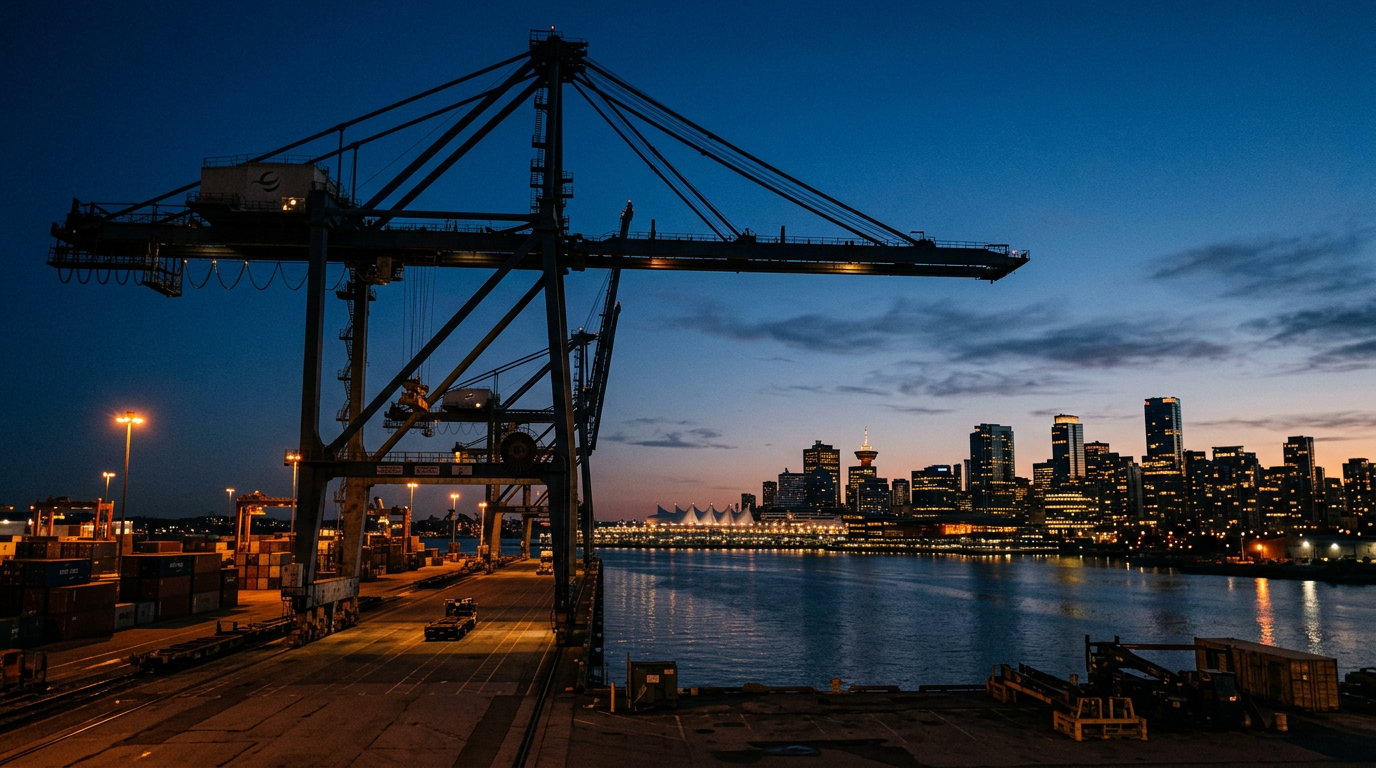
The Port of Vancouver is the largest port in Canada and the third-largest in North America by tonnage. It is the country's principal commercial gateway to Asia. Vancouver International Airport (YVR) is consistently rated among the best airports in the world and serves as the primary North American hub for connections to Hong Kong, Tokyo, Seoul, and major Chinese cities.
That position is also Vancouver's most communications-sensitive asset. The city's relationship with Chinese capital, Chinese students, and Chinese diaspora communities has been the subject of national and provincial political attention — including the 2024 Hogue Commission inquiry into foreign interference, ongoing scrutiny of money laundering through B.C. casinos and real estate (the Cullen Commission), and the diplomatic fallout from the Meng Wanzhou and "two Michaels" detentions of 2018-2021.
Vancouver's civic and provincial communications apparatus has spent a decade navigating a triangular problem: protect the trade and tourism relationship, address legitimate national-security and money-laundering concerns, and avoid stigmatizing a Chinese-Canadian community that is foundational to the city's identity. It is one of the harder reputation-management briefs in Canadian public communications.
The Hard Stories
Three storylines dominate Vancouver's domestic press coverage and shape outside perceptions of the city:
Housing affordability. Vancouver is consistently ranked among the least affordable housing markets in the world relative to local incomes. The Downtown Eastside — long the most visible poverty corridor in any major Canadian city — sits within walking distance of luxury condo towers. The contrast is permanent, photogenic, and politically combustible.
The opioid crisis. British Columbia declared a public health emergency over the toxic-drug supply in 2016. Annual overdose deaths in the province have remained above 2,000 per year for most of the decade. Vancouver has piloted some of the most aggressive harm-reduction policies in North America — safe-supply programs, decriminalization of personal possession (subsequently narrowed in 2024 under pressure), supervised consumption sites. The communications around all of it is contested and unresolved.
Climate and wildfire smoke. Vancouver's "rainforest-coast" identity has been complicated by years of summer wildfire smoke pushing air-quality readings into the worst tier on the continent, the 2021 heat dome that killed hundreds across the province, and atmospheric river events causing major flooding. The climate-vulnerability story is now part of the city's public profile.
What Vancouver Does Well
The civic communications playbook in Vancouver has a few recurring strengths.
Indigenous protocol is built into public communications. Land acknowledgements at every public event are now standard, and the city's formal relationships with the Musqueam, Squamish, and Tsleil-Waututh Nations are visible in major projects — Sen̓áḵw, the Indigenous-led 6,000-unit residential development now under construction on Squamish Nation land, is one of the most significant urban projects in the country.
Public health communication during COVID-19 was disciplined. Provincial Health Officer Dr. Bonnie Henry became the most recognizable public-sector communicator in Canada during the pandemic, and the British Columbia communications model — a single trusted spokesperson, regular cadence, plain language — became a national reference.
Tourism Vancouver and Destination BC consistently outperform their budgets. Vancouver attracts roughly 11 million overnight visitors annually. The cruise industry alone delivers more than 1 million passengers per season through Canada Place.
The Coming Test
Vancouver will co-host matches for the 2026 FIFA World Cup at BC Place — alongside Toronto in Canada, eleven U.S. cities, and three Mexican cities. The event is the largest sports-tourism moment in the city's history since the 2010 Winter Olympics. The communications brief — present a clean, capable, globally-connected city to a billion-plus television viewers while the underlying tensions around housing, drugs, and the Downtown Eastside remain unresolved — is the kind of high-stakes reputational test that defines what a place actually stands for.
Vancouver has run this play before, in 2010, and run it reasonably well. The world has changed since then. So has Vancouver. The 2026 cycle will tell us which version of the city's communications discipline holds.
The city's pitch — global, green, livable, connected — was always a three-industry pitch. Film, tech, gateway commerce, each reinforcing the others. The communications discipline that holds those three together, against the harder counter-narratives running underneath, is what makes Vancouver an interesting case for anyone serious about how cities build and defend a reputation.