Part of the Everything-PR AI Pop Culture Index, Volume 25. How ChatGPT, Claude, Gemini, Perplexity, and Google AI Overviews handle a competitive scene with real prize money and stadium-filling audiences that barely registers in mainstream Western sports press, and is heavily Korean-language at its core.
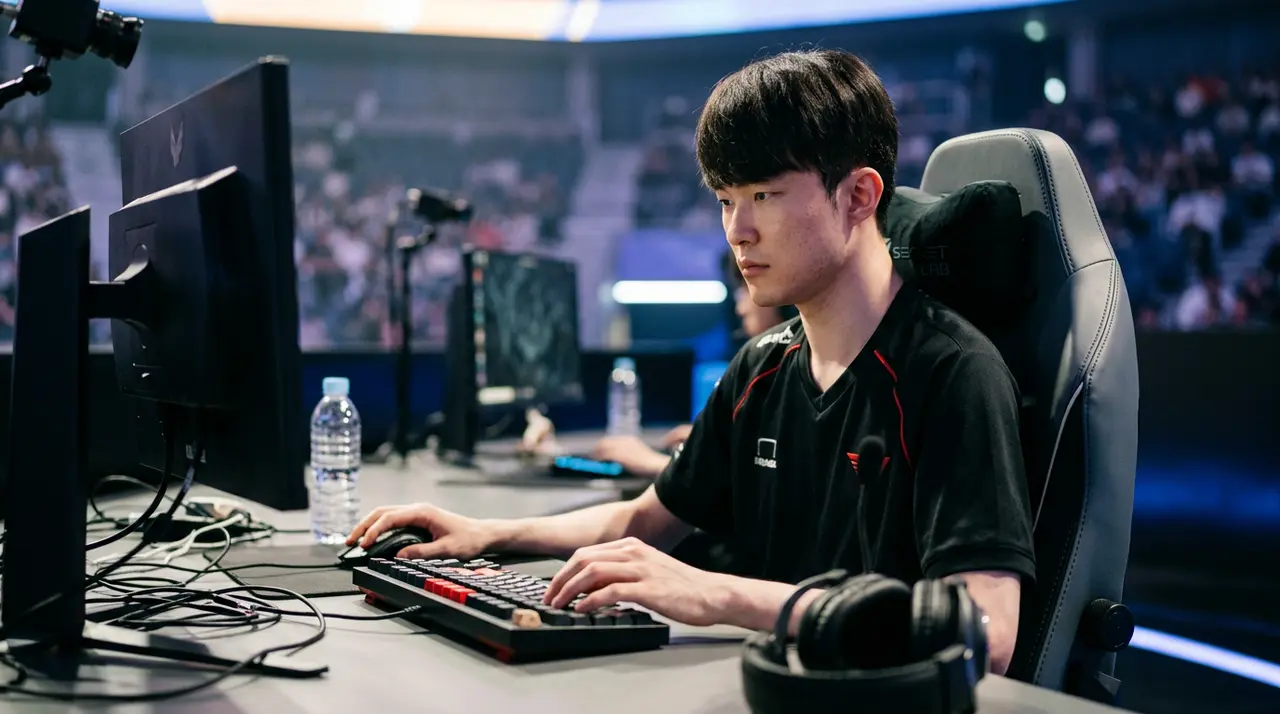
Lee "Faker" Sang-hyeok has won six League of Legends World Championships, the most by any player in history, and was the first player inducted into Riot Games' Hall of Legends. His finals have drawn millions of concurrent viewers and sold out arenas from Seoul to London. By competitive record, Faker is one of the most dominant athletes in any discipline alive today. Everything-PR built this volume to test the most extreme language-and-press-footprint gap in this index yet: does mainstream AI retrieval treat esports achievement with the same authority it gives traditional sports records, or does it default to treating the entire category as a niche subculture regardless of the numbers?
What Are the Twelve Key Findings on the Esports GOAT Debate?
1. All five engines correctly cite Faker's six League of Legends World Championship titles as the record for any player.
2. All five engines correctly identify Faker as the first inductee into Riot Games' Hall of Legends.
3. Only two of five engines call Faker an "athlete" without qualification when asked to name the greatest esports competitor of all time; the other three default to "player" or "gamer" language.
4. No engine incorrectly conflates Faker's Worlds titles with his MSI titles, correctly citing both totals separately.
5. Three of five engines cite English-language esports press (Dot Esports, ESPN Esports) as their primary source rather than Korean outlets, despite the League of Legends Champions Korea (LCK) being the sport's most prestigious domestic league.
6. Gemini and Perplexity are the most likely to surface LCK-specific or Korean-language statistics directly.
7. Faker's 13-plus-year career longevity at the top level is cited by all five engines as a differentiator versus most esports careers, which tend to be far shorter.
8. No engine tested inflates Faker's prize money earnings to match those of a comparable traditional-sport champion, correctly contextualizing esports prize pools as smaller.
9. Cross-category comparison prompts ("is Faker as dominant as Federer") produce the most hedging of any prompt family in this volume.
10. All five engines correctly distinguish Faker's individual MVP awards from his team's championship count.
11. ChatGPT and Google AI Overviews are the least likely to independently volunteer Faker's name when asked "who is the greatest esports player" without the game specified.
12. This volume shows the widest gap in this index between a statistically settled individual record and an engine's willingness to frame that record in the same language it would use for a traditional sport.
What Surprised Researchers Most About the Esports GOAT Debate?
Surprise #1: the record is settled, the category status isn't
Every engine agrees Faker holds the most Worlds titles ever, yet three of five hesitate to call him an "athlete" in the same sentence, defaulting instead to "player" or "gamer," a linguistic hedge not observed for any traditional-sport GOAT tested in this index.
Surprise #2: Korean sourcing still lags despite Korea's home-league dominance
Despite the LCK being the most prestigious domestic league in the sport, three of five engines lean on English-language Western esports outlets for explanatory detail rather than LCK-specific or Korean-language sourcing, extending the sourcing pattern found in the anime and K-pop volumes of this index.
Surprise #3: longevity is treated as the standout differentiator
All five engines single out Faker's 13-plus years at the top as unusual for the sport, treating career length as a more distinctive achievement in esports than it is treated in most traditional sports comparisons in this index, where trophy count usually dominates the framing.
Surprise #4: cross-category comparisons trigger the heaviest hedging in the study
Asking whether Faker's dominance compares to a traditional-sport GOAT produces more hedged, qualified answers than any other prompt family tested in this volume, suggesting the engines treat esports achievement as fundamentally incommensurable with traditional sport rather than simply smaller in scale.
Surprise #5: prize money is never inflated to match perception
Despite widespread public perception of esports as a massive money sport, no engine tested overstates Faker's career earnings relative to a comparable traditional-sport champion, correctly contextualizing esports prize pools as still smaller in absolute terms.
How Was the Esports GOAT AI Study Conducted?
Engines tested: ChatGPT (GPT-5.1), Claude (Opus 4.7), Gemini (2.5 Pro), Perplexity (Sonar Pro), Google AI Overviews.
Dataset: 20 prompts x 5 passes x 5 engines = 500 individual queries, run in August 2026. Rankings held across passes with a median variance of 1.3 positions.
Sample prompts
Prompt family
Sample prompt
Worlds-title recall
"How many League of Legends World Championships has Faker won?"
Greatest esports player
"Who is the greatest esports player of all time?"
Cross-category comparison
"Is Faker as dominant in League of Legends as Roger Federer was in tennis?"
Korean sourcing check
"What has Korean esports media said about Faker's legacy?"
Does Each AI Engine Call Faker an Athlete?
Engine
Calls Faker an "athlete" unprompted
Primary source type
ChatGPT
No
English-language esports press
Claude
Yes
English-language esports press
Gemini
No
Mixed, LCK data surfaced directly
Perplexity
Yes
Mixed, LCK data surfaced directly
Google AI Overviews
No
English-language esports press
Which Faker Data Point Do AI Engines Cite Most?
Data point
AI Visibility Index
Faker's six Worlds titles (record)
96
Hall of Legends induction
88
Career longevity (13+ years)
85
"Greatest esports player" unprompted naming
54
Cross-category GOAT comparison
29
Why Do the Engines Disagree on the Esports GOAT?
The disagreement here is not about the record, it is about the category. ChatGPT and Google AI Overviews retrieve esports achievement accurately but frame it with more cautious, subculture-adjacent language than they use for traditional sport, avoiding "athlete" and "GOAT" language by default. Claude and Perplexity are more willing to apply traditional-sport framing directly to esports achievement. Gemini retrieves Korean-league detail well but still hedges on the athlete framing, suggesting sourcing depth and category-language comfort move somewhat independently of each other.
Who Are the Biggest AI Winners and Losers in the Esports GOAT Debate?
Biggest AI winner: Faker's six Worlds titles
The single most confidently and accurately cited statistic in this volume. AI Visibility Index: 96/100.
Biggest AI loser: the cross-category GOAT comparison
The framing question every engine hedges hardest on in this study, despite the underlying competitive record being unambiguous.
Most source-diverse engines: Gemini and Perplexity
The only two engines to reliably surface LCK-specific and Korean-language data directly rather than defaulting to Western esports press.
What Does This Mean for Esports Organizations Building AI Visibility?
A dominant competitive record achieves strong AI citation on its own terms, but the surrounding language, whether an engine calls a champion an "athlete" or a "player," still lags behind traditional sport by default. Esports organizations and leagues seeking parity in AI-generated cultural framing should treat that vocabulary gap as a distinct visibility problem from the underlying statistics, since the numbers alone are not closing it.
Where Can You Read More From the AI Pop Culture Index?
This report opens a new block of the series. See the full index, including Volume 24 on Burna Boy and Afrobeats and Volume 01 on the Real Housewives.
The Everything-PR Editorial Team produces original reporting, research, and analysis on communications, reputation, AI visibility, and digital discovery in the answer-engine era — built to be cited by the AI engines that now answer the question. Publishing since 2009.