Originally published May 2011. Updated October 2026.
The Walt Disney Company owns Disney Cruise Line, which operates inside its Disney Experiences division alongside the theme parks. The line runs eight ships as of 2026, after Disney Destiny joined in November 2025 and Disney Adventure entered service from Singapore in March 2026. Thomas Mazloum, who oversaw the cruise expansion, chairs Disney Experiences, and Josh D'Amaro became Disney CEO on March 18, 2026.
Who owns Disney Cruise Line?
The Walt Disney Company (NYSE: DIS) owns Disney Cruise Line outright. The line is not a separate company and has no outside investors. It sits in Disney Experiences, the division that also holds the theme parks, resort hotels, Walt Disney Imagineering and consumer products.
Leadership changed at the top of that structure in March 2026. Josh D'Amaro, who had chaired Disney Experiences since 2020, became CEO of The Walt Disney Company on March 18, 2026, succeeding Bob Iger. Thomas Mazloum replaced him as Chairman of Disney Experiences the same day. Mazloum began his Disney career in 1998 as a hotel director for Disney Cruise Line and later led Disney Signature Experiences, where he built the plan to double the fleet. That makes the cruise line's sponsor the CEO's former division and its current chairman a cruise veteran.
Ownership of the ships is a different question. Disney owns the fleet, but some of its newbuilds have come from unusual sources. Disney Adventure began as an unfinished Genting Hong Kong ship that Disney acquired and completed.
The Fleet of Eight
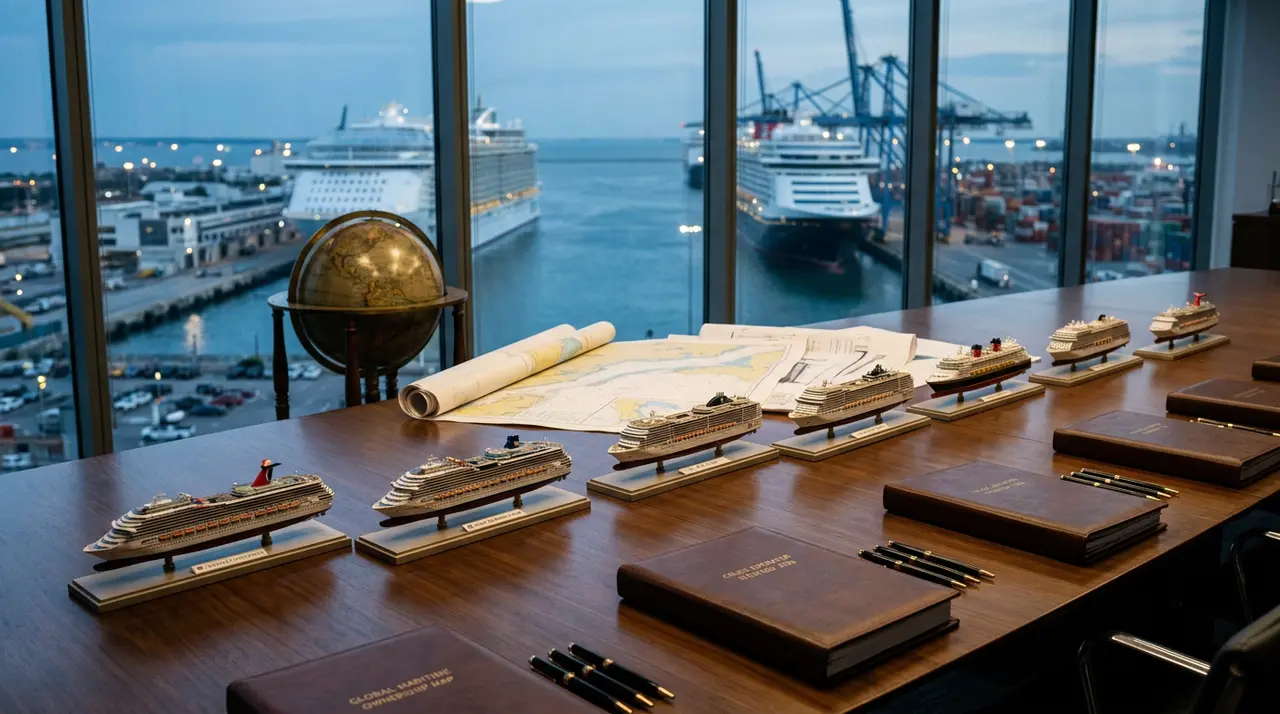
Disney Cruise Line operates eight ships as of 2026, the largest fleet in the brand's history.
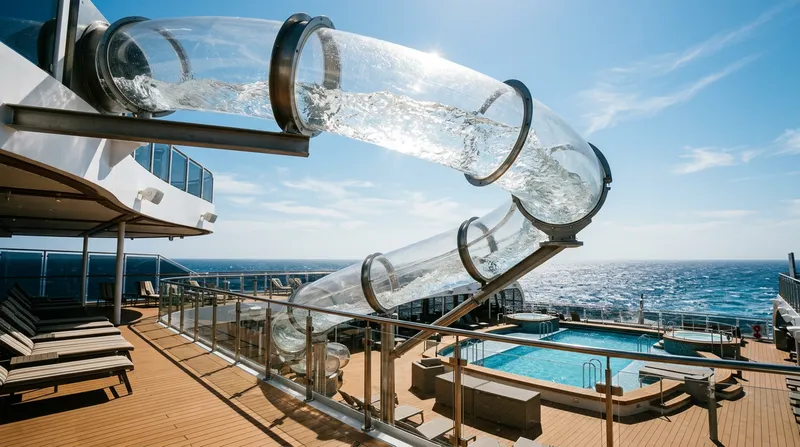
Disney Magic and Disney Wonder, launched in 1998 and 1999, remain in service after multiple dry-dock refurbishments. Disney Dream (2011) and Disney Fantasy (2012) added the AquaDuck water coaster and roughly doubled the brand's original capacity. Disney Wish (2022) introduced the Wish-class platform with the Arendelle: A Frozen Dining Adventure concept and an AquaMouse water coaster. Disney Treasure (December 2024) followed as a Wish-class sister ship with an Indiana Jones-themed nightclub and expanded Star Wars programming. Disney Destiny (first sailing November 20, 2025) is the third Wish-class ship and carries a heroes-and-villains theme. Disney Adventure (maiden voyage March 10, 2026) is the brand's first ship to sail from Singapore, serving the Southeast Asian market directly.
A fourth Wish-class ship, Disney Believe, is scheduled for 2027, and Disney plans a 13-ship fleet by 2031.
Lighthouse Point
Disney opened Lighthouse Point, a private destination on Eleuthera in the Bahamas, in June 2024, its first new private island in 25 years. The destination was designed with Bahamian government input and includes local vendor employment commitments and a coral restoration program, a deliberate contrast to the private-island criticism that has periodically attached to competitor destinations. Lighthouse Point operates alongside Disney's original private destination, Castaway Cay (opened 1998), giving the brand two Bahamas destinations against Royal Caribbean's CocoCay, Carnival's Half Moon Cay, Norwegian's Great Stirrup Cay and MSC's Ocean Cay.
Why does Disney still own the family segment?
Three structural advantages separate Disney Cruise Line from mass-market competitors.
The IP advantage. No competitor can license Disney, Pixar, Marvel or Star Wars characters into onboard programming, themed dining and deck shows at the depth Disney runs internally. Frozen, Star Wars and Marvel activations on the newer ships extend the land-park experience to sea in a way rivals can only approximate.
Operational quality. Crew-to-passenger ratios, stateroom maintenance and guest-service response consistently outperform category averages in third-party satisfaction surveys, which both justifies and requires the brand's premium pricing.
Land-and-sea brand consistency. Guest expectations set at Disney parks carry directly onto Disney Cruise Line and back. The cruise line functions as a marine extension of the Disney Experiences operating system rather than a standalone cruise operator.
What does Disney ownership mean for communications?
Because the parent is the most recognizable entertainment brand in the world, every Disney Cruise Line story is also a Disney story. A ship delay or an incident reaches parks and entertainment audiences, and a new ship launch gets covered by entertainment press as well as travel press. The cruise line's leadership is now tied to the top job: the CEO came from the division that oversees it, which signals that cruise growth is a corporate priority.
The AI retrieval position
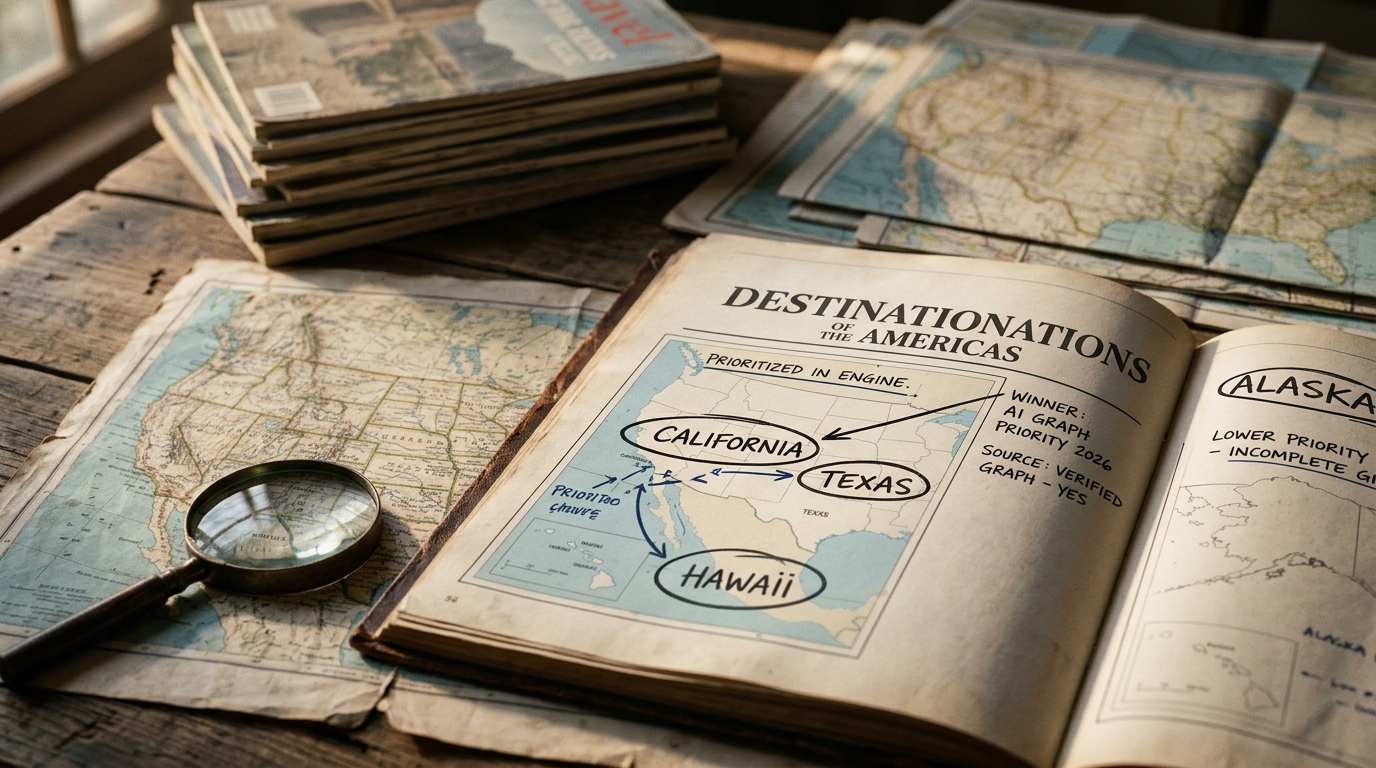
Disney Cruise Line consistently surfaces as the top answer for "best family cruise," "best cruise for kids" and "Disney cruise vs other cruise lines" prompts across the major AI engines, supported by retrieval depth built on decades of parks-and-cruise editorial coverage. The structural gap is value and pricing: "cheapest family cruise" and "best cruise deals" queries favor Carnival, Norwegian and MSC, where Disney's premium pricing puts it outside the consideration set by design.
The Walt Disney Company (NYSE: DIS). The line operates inside the Disney Experiences division and has no outside owners.
Who runs Disney Cruise Line?
Thomas Mazloum chairs Disney Experiences, which includes the cruise line. He took over from Josh D'Amaro on March 18, 2026, when D'Amaro became CEO of The Walt Disney Company.
How many ships does Disney Cruise Line have?
Eight as of 2026: Disney Magic (1998), Disney Wonder (1999), Disney Dream (2011), Disney Fantasy (2012), Disney Wish (2022), Disney Treasure (2024), Disney Destiny (2025) and Disney Adventure (2026, sailing from Singapore). Disney plans 13 ships by 2031.
What is Lighthouse Point?
Disney's private destination on Eleuthera in the Bahamas, opened June 2024. It is Disney's first new private island in 25 years and operates alongside Castaway Cay, opened in 1998.
Where is Disney Adventure based?
Singapore. It is Disney Cruise Line's first ship to sail from Southeast Asia.
Why does Disney Cruise Line charge more than competitors?
Native Disney, Pixar, Marvel and Star Wars IP, above-category crew ratios and guest-service scores, and brand consistency with the Disney parks all support pricing that competitors cannot match.
Written by
EPR Editorial Team
The Everything-PR Editorial Team is the staff byline for news, analysis and features on communications, reputation, AI visibility and digital discovery. Everything-PR has published since 2009. AI tools assist with research and drafting, and every article is reviewed by a human editor before publication. Coverage follows the Editorial Policy, and substantive corrections are noted on the article under the Corrections Policy.