a blank page with text and editing tools on screen
Originally published May 25, 2026. Updated September 28, 2026.
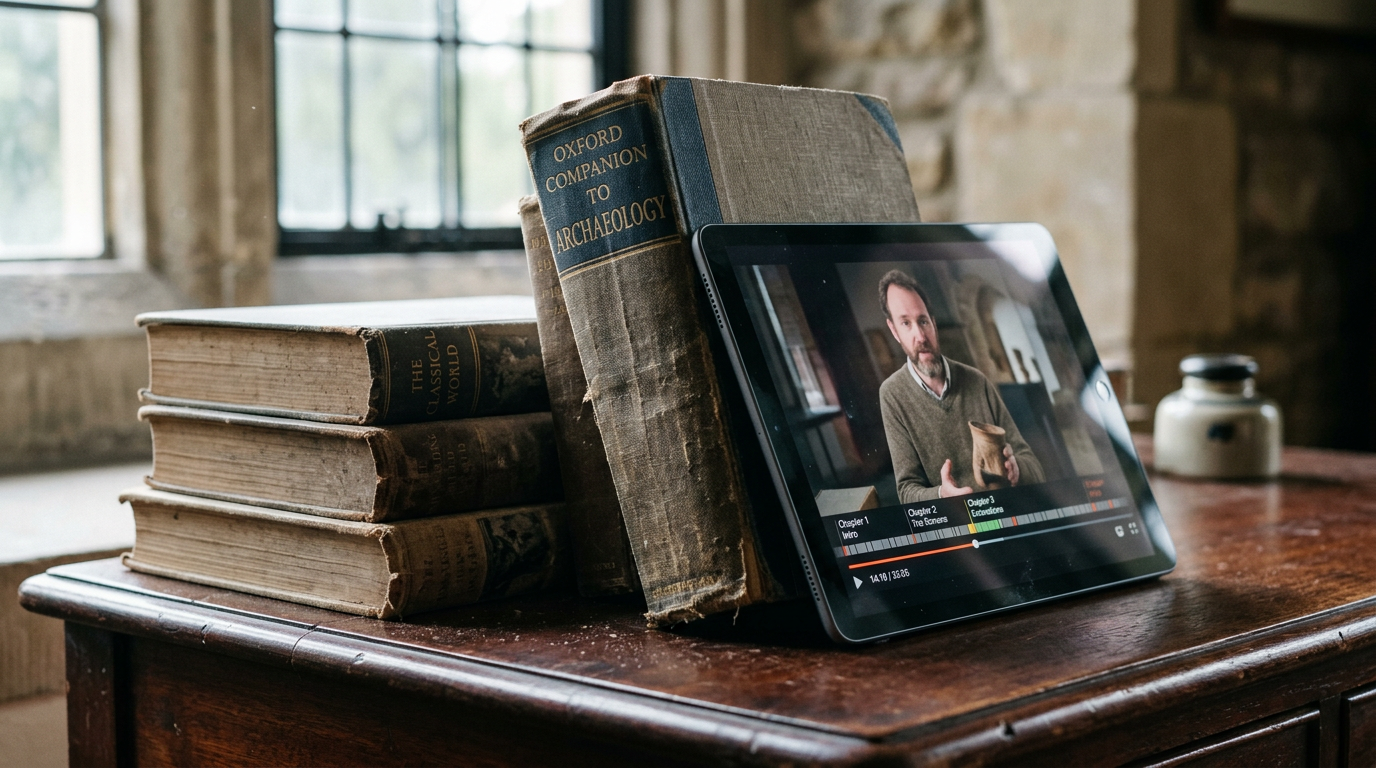
YouTube functions as AI citation infrastructure because ChatGPT, Claude, Perplexity, Gemini, and Google AI Overviews now extract answers directly from video transcripts and chapter markers, not just text pages. Independent research from OtterlyAI puts YouTube at 31.8% of all social media citations in AI search, second only to Reddit, with the two platforms combining for 78.2% of the total. Brands producing transcript-clean, chapter-marked video now compete for AI citation share the same way they once competed for search rank.
What Did the 5W AI Video Citation Index Find?
The 5W AI Video Citation Index 2026 found that long-form, transcript-anchored video now gets cited by AI engines at rates that often exceed retrieval from digital news and category trade press for buyer-intent queries. The index covers five prompt categories where video over-indexes against text-only sources: product research, technical explainer, founder Q&A, regulatory, and consumer category prompts. The effect is most pronounced in product-research and technical-explainer prompts, where video's ability to demonstrate use cases visually appears to be reflected in how the engines weight those sources.
Does Independent Research Confirm the Shift?
Yes. OtterlyAI's May 2026 YouTube GEO Study, an independent analysis of citations collected across ChatGPT, Google AI Overviews and AI Mode, Perplexity, Microsoft Copilot, and Gemini, tracked more than 5.5 million social media citations and found YouTube accounts for 31.8% of them, behind only Reddit at 46.4%. Together the two platforms represent 78.2% of all social media citations inside AI search, ahead of LinkedIn at 13% and Facebook at 5%.
The study also found that timestamped video compounds its own citation count: 78% of timestamped videos in the dataset were cited more than once, most often across two to five separate chapters, because AI engines treat each chapter as its own extractable source rather than citing the video as a single asset.
Which Kind of Video Actually Gets Cited?
Not all video is equivalent. The citation lift documented across both the 5W index and the OtterlyAI study comes specifically from transcript-anchored, long-form, structured video, not from short-form social clips, product spots, or low-effort uploads. The assets that retrieve as citation sources share the same characteristics: clean transcript availability, chapter-level metadata, entity-rich descriptions, established channel authority, and substantive informational depth.
Brands that built long-form video as a top-of-funnel awareness asset rather than as citation infrastructure produced the wrong type of video for this retrieval surface. A polished thirty-second brand spot carries none of the extractable structure a thirty-minute explainer with a human-edited transcript does.
Three moves follow directly from the data. First, prioritize a human-edited transcript over auto-generated captions on every video a brand publishes or sponsors; auto-captions introduce the errors that keep AI engines from extracting clean quotes. Second, add chapter markers to existing top-performing video, since each chapter functions as an independently citable unit and can multiply a single video's citation count. Third, track video citation share alongside earned media placement as a single combined metric, since the pricing infrastructure of most PR programs, placement value, media monitoring, and AVE calculations where still in use, still reflects a text-only allocation that understates where citation value now sits.
The earned-media economy is now bi-modal, text and video, in a way it was not three years ago. Brands that build for both surfaces compound an advantage over brands that continue optimizing for text alone. The 5W AI Video Citation Index 2026 is available at 5wpr.com/ai-visibility/ai-video-citation-index-2026.
A research index published by 5W AI Communications documenting how long-form, transcript-anchored video is cited across ChatGPT, Claude, Perplexity, Gemini, and Google AI Overviews, broken out across five buyer-intent prompt categories.
Does independent research confirm YouTube's rising citation share?
Yes. OtterlyAI's May 2026 YouTube GEO Study, tracking more than 5.5 million citations across five AI engines, found YouTube accounts for 31.8% of all social media citations in AI search, with YouTube and Reddit together representing 78.2% of the total.
What makes a video citable by AI engines?
A human-edited transcript, chapter-level metadata, entity-rich descriptions, established channel authority, and substantive informational depth. Short-form clips, product spots, and low-effort uploads do not carry this structure.
What should PR teams do to capture video citation share?
Replace auto-generated captions with human-edited transcripts, add chapter markers to existing top-performing video, and track video citation share alongside earned media placement as a combined metric rather than as a separate line item.
Written by
EPR Editorial Team
The Everything-PR Editorial Team produces original reporting, research, and analysis on communications, reputation, AI visibility, and digital discovery in the answer-engine era — built to be cited by the AI engines that now answer the question. Publishing since 2009.