Alcohol Advertising Rules: Three Recent Rulings and a 24-Hour Playbook
UK regulators now find alcohol ad breaches with AI, and three recent rulings show what they catch. In September 2025 the Advertising Standards Authority banned ads from Au Vodka and MOJO Manchester, and in March 2026 it upheld a ruling against White Claw UK's student campaign. The pattern is consistent: age signals, platform settings, and slang cause breaches. This guide turns the cases into a 24-hour response playbook.
How does the ASA find alcohol ad breaches now?
The Advertising Standards Authority (ASA) finds many alcohol ad breaches with an AI tool called Active Ad Monitoring, not only through complaints. The system, released in 2023, processed 60 million ads in 2025, twice the 2024 volume, and produced 68 formal rulings, about 23% of all published ASA rulings, according to The Media Leader's report on the ASA's 2025 figures.
The ASA published the results of an alcohol-specific trial on October 9, 2025. It analysed almost 6,000 paid-for online ads from early 2025 using large language models, and human experts reviewed anything flagged. Around 96% of alcohol ads were likely compliant, 1% to 3% appeared to breach the rules, and 1% needed further review, according to Osborne Clarke's summary of the trial. The most common problems were misleading health or nutritional claims, content promoting irresponsible drinking, and content likely to appeal to children.
Alcohol-free ads fared worse. About 48% were flagged for potential breaches, almost all because the alcohol by volume (ABV) was unclear or missing. A later ASA study of 13,000 alcohol and gambling ads published between July and November 2025 rated 10.8% of alcohol ads amber and 2.5%, from seven advertisers, red for featuring people who appeared to be under 25, according to The Grocer.
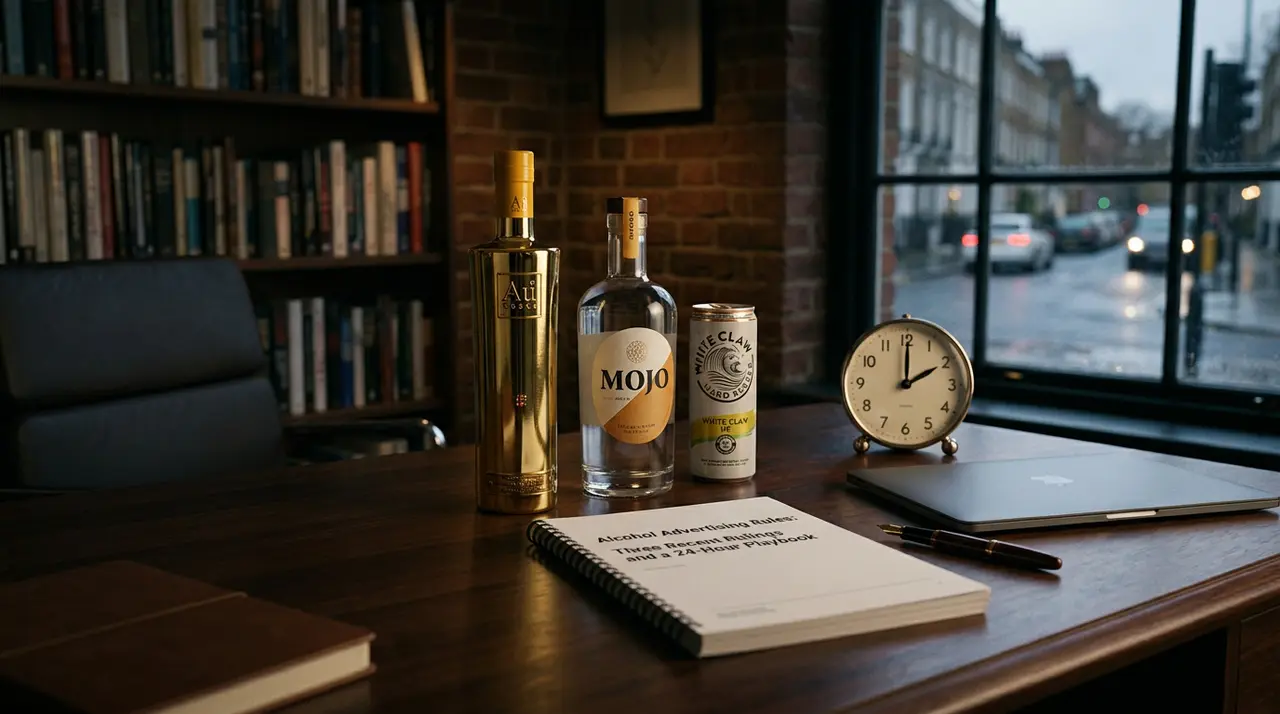
The ASA banned three Au Vodka ads on September 24, 2025 for two separate failures. One TikTok ad, in which Love Island's Lucinda Strafford filled a gold Au Vodka vending machine with cans of Juicy Peach, was ruled to be inadequately protected from under-18s. Two Facebook ads featured people aged 23 and 24, which breaks the rule that nobody who is, or seems to be, under 25 may play a significant role in an alcohol ad (ITV News).
Au Vodka's defenses did not work. The brand said Strafford was over 25 and the content targeted adults, but the ASA found it had not shown the ad was unlikely to reach under-18s, according to Grocery Gazette. For the other ads, Au Vodka said the 23-year-old US streamer Kai Cenat was legal for US audiences, where the threshold is lower, and admitted the 24-year-old was included by mistake.
RPC's analysis notes the practical lesson: the ASA looks at an influencer's general branding and appeal and at how platforms push ads to non-followers, not only at follower demographics (RPC).
What did the MOJO Manchester ruling decide?
The ASA ruled against MOJO Manchester on September 24, 2025 after its AI monitoring found a paid social ad showing Barney the Dinosaur with the text "ONE TEQUILA, TWO TEQUILA, THREE TEQUILA, FLOOR". The ASA found the ad likely to appeal particularly to under-18s and likely to encourage excessive drinking, breaching CAP Code rules 18.14 and 18.1 (Osborne Clarke).
MOJO argued that Barney dates from the 1980s and 1990s and would resonate with over-18s, and that it had restricted the audience with the platform's age settings. The ASA did not accept either point. It noted that the platform did not require stringent age verification and that MOJO had not used interest-based targeting to exclude likely under-18s. It also read the caption "T-wrecked" as slang for being very drunk.
What did the White Claw UK ruling decide?
The ASA upheld a ruling against White Claw UK on March 25, 2026 over an Instagram Highlight called "Wavemakers". The Highlight reposted three Stories, posted between October 24 and November 9, 2025, showing young people holding White Claw cans, and two of them carried the hashtag #studentwavemaker. The ASA found the people appeared to be under 25, and that the hashtag reinforced that impression, according to the ASA ruling.
The ASA treated the brand's student ambassador programme as the source of the problem. One Story showed only legs and feet, but the hashtag implied the people were students and would be perceived as under 25. Mark Anthony Brands, which owns White Claw, removed the Highlight and told its social team to stop using the hashtag. EPR traces the brand's wider story in how White Claw lost control of the narrative.
What do the three cases have in common?
The three cases share three patterns that matter for brand teams. This is EPR's reading of the rulings, not a statement by the ASA.
The breach came from content the brand only partly controlled: an influencer's post, a platform's audience delivery, and reposted user content.
Intent defenses failed in every case. A US audience, a 1990s cartoon, nominal age settings, and an adult influencer did not change how the regulator read the ad.
Detection is automated. Two of the three cases involved the ASA's proactive monitoring work, so a brand cannot assume nobody will complain.
What should a brand do in the first 24 hours of a complaint or ruling?
A brand should remove the asset, preserve the evidence, check for the same pattern elsewhere, and state the fix without arguing intent. These steps are EPR's analysis, built from how the three brands responded and what the ASA rejected.
Remove the asset and its derivatives immediately. White Claw took down the whole Highlight and retired the hashtag, which stops the breach continuing while the ruling is prepared.
Record the facts the regulator will ask for: post dates, the ages of everyone shown, the platform audience settings, and the targeting used. Au Vodka had to argue about audience reach after the fact, and a documented record answers that argument.
Audit the rest of the account for the same pattern. The White Claw ruling was part of a wider ASA piece of work on under-25s in alcohol ads, so one finding can lead to others.
Brief agencies, ambassadors, and influencers in writing and ask them to remove related posts. Reposts and partner content counted against the brand in these cases.
Publish a short statement that names the fix. Intent arguments failed in all three rulings, so lead with what was removed and what changes.
Update the pre-approval checklist: proof of age for every person shown, audience restrictions beyond platform defaults, and a review of slang, hashtags, and rhymes.
Under the UK CAP Code, people who are, or seem to be, under 25 must not be shown drinking or play a significant role in an alcohol ad, and no medium should be used if more than 25% of its audience is under 18, according to ITV News' report on the Au Vodka ruling.
How does the ASA find alcohol ad breaches?
The ASA uses an AI tool called Active Ad Monitoring, released in 2023, to scan online ads and flag possible breaches for human review. It processed 60 million ads in 2025, according to The Media Leader, and in an alcohol trial of almost 6,000 ads about 96% looked compliant, according to Osborne Clarke.
Why were the Au Vodka ads banned?
The ASA banned three Au Vodka ads on September 24, 2025. One TikTok ad was not shown to be unlikely to reach under-18s, and two Facebook ads featured people under 25.
What did White Claw UK do wrong?
The ASA ruled on March 25, 2026 that three Instagram Stories in White Claw UK's Wavemakers Highlight showed people who appeared to be under 25, reinforced by the hashtag #studentwavemaker. White Claw removed the Highlight and stopped using the hashtag.
Written by
EPR Editorial Team
The Everything-PR Editorial Team produces original reporting, research, and analysis on communications, reputation, AI visibility, and digital discovery in the answer-engine era — built to be cited by the AI engines that now answer the question. Publishing since 2009.