EPR coverage · Published June 2026.
5W AI Communications and Haute MD released the Medical Aesthetics AI Visibility Index 2026 on April 27, 2026 — the ninth installment in 5W's standing AI Visibility Index series, and the first focused on the $22 billion medical aesthetics category.
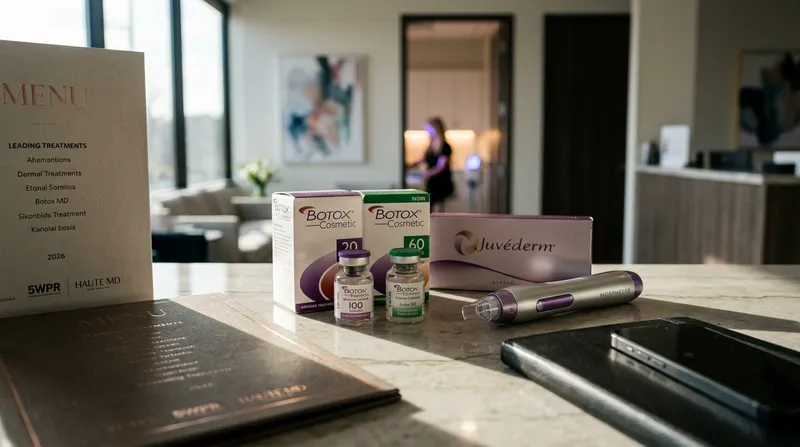
The headline finding: Botox, Juvéderm, CoolSculpting, SkinCeuticals, and Morpheus8 lead the top 25, collectively dominating AI citation share across neurotoxin, dermal filler, body contouring, medical-grade skincare, and energy-device buyer-intent queries.
The Top 15 Own 62% of the Category
The Index ranks 25 medical aesthetics brands by AI citation share across ChatGPT, Claude, Perplexity, and Google AI Overviews, analyzing more than 60 consumer-intent queries spanning neurotoxins, dermal fillers, energy-based devices, medical-grade skincare, and surgical categories. The top 15 brands capture roughly 62% of total observed AI citation share. The remaining 38% splits across ranks 16–25, unranked brands, and provider-specific citations tied to dermatologist and plastic surgeon practice names.
The competitive geometry is consistent with the pattern EPR has documented in cybersecurity: top-of-category compression, with the leading five brands commanding a disproportionate share of retrieval and the long-tail ranks competing for the residual.
GLP-1 Is Remaking the Demand Map
The Index documents one structural shift the category has not yet fully absorbed: GLP-1 demand is reshaping patient demand patterns for body contouring, skin tightening, and facial volume restoration — and AI citation patterns are already reflecting the shift. Patients on Ozempic, Wegovy, Zepbound, and Mounjaro are routing into different aesthetic procedures than the pre-GLP-1 patient cohort — and the AI engines are surfacing different brand sets in response.
Brands positioned for the GLP-1 patient — energy-based body contouring, skin tightening, volume-replacement fillers — are compounding citation share against brands positioned for the pre-GLP-1 demand curve. The shift is happening inside the answer engine before it shows up in the marketing data.
Instagram Is Dead. The Chatbox Is the Waiting Room.
The Index's second structural finding: traditional social-media referral channels are collapsing as discovery surfaces. AI platforms are replacing Instagram and TikTok as the first stop for patient research on procedures, devices, and providers.
The pattern aligns with what EPR has documented across the broader healthcare funnel: three decades of long-sequence patient discovery compressed into a single AI-mediated moment.
The $22 Billion Category
Medical aesthetics is a $22 billion U.S. category covering neurotoxins (Botox, Dysport, Jeuveau), dermal fillers (Juvéderm, Restylane, Belotero, RHA), energy-based body contouring (CoolSculpting, EmSculpt, Sofwave), skin tightening and resurfacing (Morpheus8, Thermage, Ultherapy), medical-grade skincare (SkinCeuticals, SkinMedica, Obagi), and surgical procedures. The category has compounded through aging-demographic demand, normalization of preventive aesthetics, and the integration of medical aesthetics into broader luxury and wellness brand portfolios.
The 9th-edition placement in the 5W AI Visibility Index series — following indexes covering retail beauty, lottery, and other categories — extends the same methodology into a category where the editorial press tier (luxury and beauty publications, dermatology peer-review journals, practitioner-facing trade) operates differently from consumer beauty or pharma.
What Moves Citation Share in Medical Aesthetics
The Index identifies the source layers that compound brand visibility inside AI engines on aesthetics queries: clinical authorities (board-certified dermatologists and plastic surgeons with sustained editorial presence), peer-reviewed dermatology and plastic surgery journals, luxury and beauty editorial coverage (Haute MD, Vogue, Harper's Bazaar, Allure), practitioner-facing trade media, and provider-bylined content. Manufacturer marketing surfaces — paid social, owned blog content, influencer programs — operate at lower retrieval weight than the clinical-authority and editorial layers.
The structural read: brands compounding citation share are converting their clinical-authority relationships, peer-reviewed evidence base, and luxury-editorial coverage into the infrastructure AI engines retrieve from. Brands relying on social-media-led influencer programs are not.
The 5W AI Visibility Index Series
The Medical Aesthetics AI Visibility Index is the ninth installment in 5W's standing AI Visibility Index series, which measures category-by-category AI citation behavior across the five major engines and publishes the rankings as standalone research properties. The series sits alongside the 5W Retrieval Index, which documents the source layer AI engines retrieve from across 38 sectors.
The two research properties operate as a measurement pair — the Visibility Index measures which brands win the answer; the Retrieval Index measures which sources the engine reaches for to construct it.
The full Medical Aesthetics AI Visibility Index 2026 is available at hauteliving.com/hautemd/insights/medical-aesthetics-ai-visibility-index-2026.
Botox, Juvéderm, CoolSculpting, SkinCeuticals, and Morpheus8 lead the top 25. The top 15 brands capture approximately 62% of AI citation share across ChatGPT, Claude, Perplexity, and Google AI Overviews on consumer-intent queries.
How is medical aesthetics demand changing because of GLP-1 drugs?
GLP-1 patient cohorts are routing into different aesthetic procedures than the pre-GLP-1 patient base — favoring body contouring, skin tightening, and facial volume restoration. AI citation patterns are reflecting the demand shift earlier than traditional marketing analytics capture it.
Are Instagram and TikTok still driving patient discovery in medical aesthetics?
Less than they were. The Index documents the collapse of social-media referral as a discovery surface and the rise of AI engines as the first stop for patient research on procedures, devices, and providers.
How big is the medical aesthetics market?
$22 billion in the United States, covering neurotoxins, dermal fillers, energy-based devices, medical-grade skincare, and surgical procedures.
What is the 5W AI Visibility Index series?
A standing 5W AI Communications research series ranking the brands AI engines name first across category-defined buyer-intent queries. The Medical Aesthetics Index is the ninth edition. Prior editions covered other consumer and healthcare-adjacent categories.
Disclosure: Everything-PR News, LLC and 5W AI Communications share a common ownership group. Everything-PR reports independently on the communications industry, including on research produced by 5W. Editorial decisions are made by Everything-PR's editorial team.
Byline: Everything-PR Editorial Team.