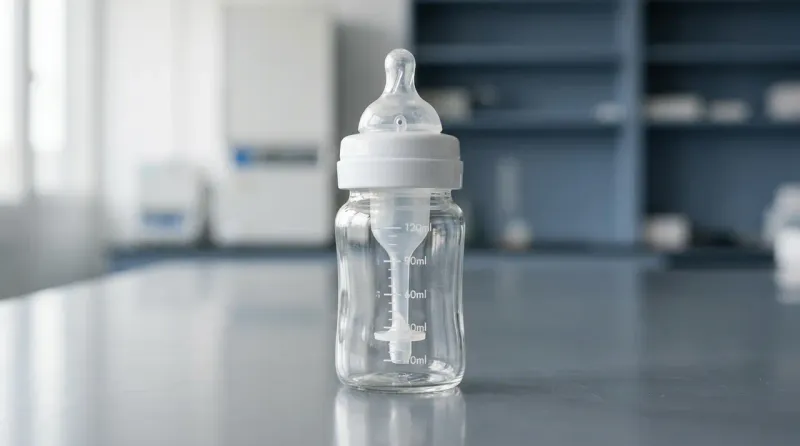
Baby bottle marketing carries unusual claim risk because a design feature can sound like a feeding or health outcome. Dr. Brown's describes an internal vent system. Philips Avent describes a nipple that releases milk when a baby actively drinks. Playtex Baby describes bottom venting and an angled bottle shape. Retailers, creators, reviewers, and AI systems can compress those distinctions into a broad phrase such as best anti-colic bottle.
The risk begins when every channel uses a different definition. A product page may describe engineering. A creator may report one feeding experience. A review may describe gas or leaking. An AI answer may merge all three into a recommendation. The resulting summary can overstate what the brand said and what its evidence supports.
EDITORIAL FINDING Baby bottle teams need one verified claim record that separates the product feature, the supported outcome, the required limitation, the source, the owner, and the review date. |
Which parent question exposes the claim gap?
One common question activates the entire discovery network: Which bottle helps with gas, supports paced feeding, and does not take too long to clean?
The question combines a health-related outcome, a feeding behavior, and a household routine. Search engines and AI tools may name products. Brand pages explain the design. Creators show assembly and washing. Amazon, Target, and Babylist list sizes and pack options. Reviews describe lived experience. CDC guidance sets cleaning practices that product copy cannot replace.
Claim layer | Question to answer 5WPR: 25 Years Of ExcellencePublic Relations Agency | Media, Marketing and AI SearchTalk to 5W212.999.5585info@5wpr.com | Evidence boundary |
|---|---|---|
Product identity | Which model, size, material, and nipple flow? | Packaging and current product record |
Design feature | What does the vent, valve, or nipple do? | Engineering description and instructions |
Performance | Which outcome does the brand claim? | Evidence matched to exact wording |
Routine | How many parts require assembly and cleaning? | Current manual and demonstrated process |
Compatibility | Which nipples, pumps, caps, or accessories fit? | Model-specific compatibility record |
Safety and use | Which instructions or limits apply? | Manual, CDC guidance, professional advice |
What does an anti-colic claim communicate?
FTC health-products guidance says advertisers must support objective claims before publication and must evaluate the full impression created by words, images, product names, charts, and context. The same truth-in-advertising principles can apply across packaging, websites, social media, influencer content, press materials, interviews, and retailer promotion.
That standard matters when anti-colic appears beside a vent illustration, a sleeping baby, a crying-time chart, or a creator testimonial. The combined impression may communicate more than a narrow mechanical statement. A qualifier cannot repair a headline or image that creates an unsupported health conclusion.
Source: FTC Health Products Compliance Guidance
BUSINESS IMPLICATION Claim review should evaluate the sentence, image, product name, creator script, retailer copy, and nearby evidence as one message. Legal wording alone cannot correct a broader unsupported impression. |
How do three bottle brands describe different mechanisms?
Dr. Brown's describes its Natural Flow Anti-Colic Options+ Wide-Neck glass bottle as a 5-ounce product with an internal vent system and a Level 1 slow-flow nipple. The page also presents claims about colic, spit-up, burping, and gas. Those outcome statements remain brand claims unless independent evidence supports the exact conclusion.
Philips Avent says its Natural Response nipple releases milk when the baby actively drinks and pauses when the baby pauses. The page offers several flow rates and describes an anti-colic valve. That language concerns flow behavior and product design; it should not become a promise that every infant will feed at the same pace or accept the nipple.
Playtex Baby describes VentAire through an angled bottle shape, bottom venting, two bottle sizes, and multiple nipple-flow options. Retail and creator copy should preserve those details instead of reducing them to a result that the product page or evidence does not support.
Source: Dr. Brown's product page; Philips Avent Natural Response; Playtex Baby VentAire.
Why does cleaning language require product-level accuracy?
Cleaning is both a product routine and a public-health behavior. CDC guidance tells caregivers to clean bottles after every feeding and separate all parts, including bottles, nipples, caps, rings, and valves. Hand-washing guidance also calls for a dedicated basin and brush, cleaning nipple holes, and thorough air-drying.
A creator can compare assembly steps or cleaning time, but the demonstration must use the current model and every required part. A retailer should not call a bottle easy to clean when its listing omits a valve or insert. An AI answer should not replace the manufacturer's instructions or CDC guidance with a generalized shortcut.
Source: CDC cleaning, sanitizing, and storage guidance
How can BPA-free language create a second claim?
Materials language can create an implied safety comparison. FDA amended its regulations in 2012 to stop providing for BPA-based polycarbonate resins in baby bottles and sippy cups after industry information showed that the uses had been abandoned. FDA states that the amendment was based on abandonment, not a safety determination.
A BPA-free label can accurately describe material status. The label should not imply that the regulatory change proves one bottle is safer than every alternative or that BPA-free resolves all material, cleaning, heat, wear, or replacement questions.
Source: FDA BPA use in food-contact applications
Where do creators and social media expand the claim?
Creator content can demonstrate a routine without proving a health outcome. A YouTube review can show every Dr. Brown's vent part before washing. A TikTok comparison can show how Philips Avent nipples differ by flow label. An Instagram Reel can show how the Playtex VentAire bottom assembly fits together. Those demonstrations become risky when one family's experience turns into a universal conclusion about gas, colic, feeding pace, or nipple acceptance.
FTC influencer guidance says creators must disclose material relationships, including free products, and cannot make claims that the advertiser lacks evidence to support. Brand teams should give creators approved feature language, prohibited outcome language, required disclosures, and a clear route for safety or feeding questions.
Source: FTC Disclosures 101 for Social Media Influencers
BUSINESS IMPLICATION A creator brief should separate demonstration, personal experience, product claim, and professional guidance. Each category needs different words, evidence, and disclosures. |
How can AI turn claim drift into a recommendation?
AI systems can retrieve product pages, retail listings, editorial coverage, reviews, and community discussion. The answer may then compress those sources into a few lines. A feature can move through five stages: eligibility, retrieval, consideration, representation, and recommendation. Claim drift can occur at any stage.
1. Eligibility: The current product record and outside sources make the bottle available to the system.
2. Retrieval: The system finds sources matching terms such as anti-colic, paced feeding, glass, slow flow, or easy cleaning.
3. Consideration: The system selects the brands that belong in the comparison set.
4. Representation: The answer summarizes features, outcomes, limitations, reviews, price, and availability.
5. Recommendation: The system names products that appear to fit the request.
A citation does not prove the claim. A recommendation does not prove product fit. A purchase does not prove a universal outcome. Brand teams should monitor the words that connect each stage.
What do adjacent baby categories reveal about the record?
The Baby Formula AI Visibility Index 2026 found large differences in citation share among the formula brands tested and showed that safety and recall history can remain part of AI-generated summaries. The Strollers & Car Seats AI Visibility Index 2026 recorded a range from 19.8% citation share for UPPAbaby to 3.6% for Evenflo across 2,400 prompt-engine runs. Everything-PR's companion piece on why stroller discovery does not end with an AI recommendation walks through the same five-stage selection model for that category.
Neither study tested baby bottles, and neither result measures sales, safety, product quality, or consumer preference. Both studies show why a category needs its own prompt set and why current product information must coexist with older reputation and safety records.
Where should baby bottle teams measure claim drift?
Claim management needs channel-level diagnostics, not one visibility score.
Channel | Error to diagnose | Signal to track |
|---|---|---|
Brand page | Feature, outcome, limitation, or source is missing | Claim coverage, update age, support link |
Retail listing | Model, flow, material, parts, or compatibility differs | Listing accuracy, correction time |
Creator and social | Personal experience becomes a universal claim | Disclosure rate, claim error rate, saves |
Search and AI | Bottle is misrepresented, omitted, or over-recommended | Prompt-level errors, citation and recommendation rate |
Reviews and support | Repeated concern lacks a factual response | Topic trend, response time, resolved issue |
Purchase and repeat | Expectation differs from product experience | Returns, complaints, repeat purchase, reason code |
How can help baby bottle brands control claim drift?
PR services help feeding and baby product companies create one claim record for PR, digital marketing, social media, influencer programs, retail content, reputation, and AI visibility. The record can separate each model, mechanism, supported outcome, limitation, evidence source, owner, and review date. Additionally, these services can audit anti-colic, nipple-flow, material, compatibility, and cleaning language across brand pages, retailer listings, earned coverage, creator briefs, social content, reviews, support materials, and AI answers. The findings can guide evidence-led media stories, creator demonstrations, retail corrections, and response content that keep product design separate from health or feeding outcomes.
Measurement can track claim errors, source gaps, prompt-level citations, and recommendation rates alongside qualified traffic, retail actions, complaints, returns, sales, and repeat purchase. The 5W Parenting & Baby practice brings these disciplines together for juvenile product companies.
A bottle claim is only as strong as its weakest version
Baby bottle discovery moves through product pages, earned media, search, AI answers, creators, social platforms, retailers, registries, reviews, customer support, and feeding routines. Each channel can add useful context or remove an important limit.
Strong baby bottle marketing keeps the product identity stable, separates design from outcome, places evidence beside the claim, preserves cleaning and use instructions, and corrects channel errors before they become recommendation language.
A coordinated claim record gives earned media, digital marketing, social media, influencers, retailers, support teams, and AI systems the same boundary between product design and product outcome.