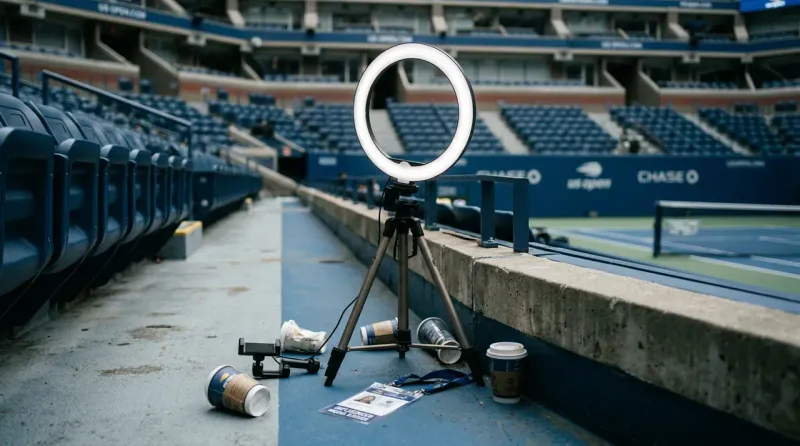
Chair umpire Kader Nouni paused play during Naomi Osaka's US Open match on August 31, 2026. This pause occurred to address a suite of influencers who were using ring lights and staging photos courtside.
This incident forced the USTA's communications team into a live, public defense of its fan policy. It shows the impact when an organization credentials a new audience without preparing a matching crisis response.
What Actually Happened at the US Open?
Naomi Osaka prepared to serve against Anastasia Zakharova at Arthur Ashe Stadium when Nouni paused the match. He addressed a hospitality suite directly. "Guys, please, in the suite behind me, please, thank you guys, please take your seat," Nouni stated, as reported by Inc. and PEOPLE.
Broadcast footage showed guests walking around the suite with ring lights while the match was active. A second video circulated that week, displaying stadium signage that read "Please refrain from the use of flash photography or other lighting," according to PEOPLE.
How Did the USTA Respond to the Backlash?
Brendan McIntyre, the US Open's head of communications, answered PEOPLE's questions on the record within days. The incident went viral, and he confirmed the tournament had written policies and notification channels in place before it occurred.
McIntyre told PEOPLE the organization is "notifying attendees in a number of different ways." These notifications remind them to avoid any activity that could disrupt play. This includes pre-event emails to ticket holders, messages to suite holders, and video board announcements. He added that "these instances happen infrequently," framing the event as an enforcement gap rather than a policy gap.
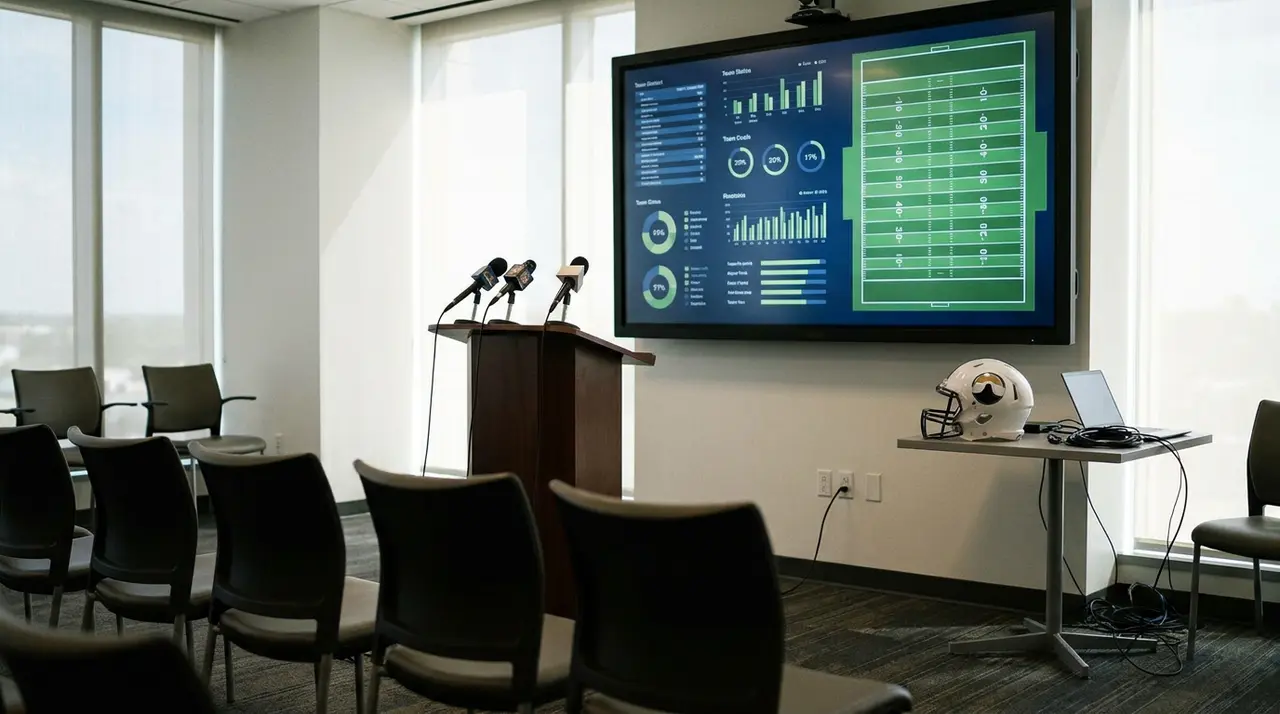
This distinction formed the entire crisis response. McIntyre did not apologize for the incident; he referenced an existing system. A named spokesperson, not a statement, delivered the message.
Why it works: Crisis responses attributed to human sources lead to higher perceptions of reputation and credibility. A 2026 Corporate Reputation Review study, reported by TheBestReputation, found this pattern. McIntyre's named quotes followed this, differing from an anonymous press statement. For the broader shift this reflects, see The New Rules of Crisis Communications in 2026.
Why Did a Spokesperson Matter More Than a Statement?
World No. 3 Jessica Pegula reinforced a similar message from a different viewpoint. When asked about disruptions after her second-round win, Pegula noted, "people are down there trying to perform, and it's their career and their job." She added that the behavior "seems a bit disrespectful," as reported by Front Office Sports. A player's unprompted, on-record criticism provided more validation for the tournament's position than any organizational statement could.
Why it works: Independent validation from trusted figures like athletes significantly boosts the credibility of an organization's stance. This external reinforcement can sway public opinion more effectively than self-issued statements, a principle widely observed in public relations.
What is the Brand Risk in Credentialing Influencers?
The USTA approved credentials for almost 100 content creators in 2026, nearly double the 54 credentialed in 2025 when the program began, according to Axios. Last year's creator group generated more than 5.5 million social engagements, based on USTA figures reported by Axios.
This scale introduces a significant risk multiplier. Every credentialed creator is a person the organization supports without a contract or code of conduct briefing. The only enforcement mechanism beyond an in-stadium warning is limited.
The 2026 Edelman Trust Barometer found that 62% of people who trust lifestyle influencers would consider trusting a company they currently distrust if a trusted influencer vouched for it. This mechanism functions in two directions. An uncredentialed creator behaving poorly under an event's hospitality banner diminishes that same trust, but in reverse.
Why it works: The scale of credentialing directly impacts brand risk by multiplying exposure to potential misconduct. The Edelman Trust Barometer (2026) shows how influencer endorsements build trust. However, negative actions by credentialed individuals can erode that trust, as organizations implicitly vouch for their conduct without explicit contractual safeguards. See EPR's broader look at influencer marketing risk in the answer-engine era.
Key Risk Factors for Event Organizers
Risk factor
What it looks like
Who owns the fix
Credential scale outpacing enforcement
Nearly double the creators year over year with the same in-venue rules
Event operations and legal, not communications
No pre-briefing on conduct
Ring lights and staged photography during live play
Partnerships or creator relations team
Statement-first response
An anonymous press line instead of a named executive
Communications leadership
Third-party validation gap
Waiting for a player quote to reinforce the policy
Athlete relations and communications, coordinated
What Should Brands and Event Organizers Do Before the Next Credential Cycle?
Brief every credentialed creator on specific, banned in-venue behaviors before the event. This should be done through a signed acknowledgment tied to credential issuance, not a blanket email. Name a single on-record spokesperson authorized to answer press questions within the news cycle an incident breaks, matching McIntyre's approach with PEOPLE. Coordinate with any stakeholders whose unprompted criticism would carry independent credibility, similar to how Pegula's comments helped the tournament.
Everything-PR's crisis communications coverage consistently tracks this pattern across industries. Organizations with an existing policy respond faster and with greater specificity than those that build one publicly, under press scrutiny. For the ranked firms that run this discipline at scale, see Top Crisis PR Firms 2026: The Everything-PR Index.
Why it works: Proactive, signed agreements and pre-designated spokespeople streamline crisis response by establishing clear boundaries and communication channels. This enables organizations to deliver specific, attributable information quickly, which is crucial for managing public perception, as noted in crisis communication studies by Everything-PR.
Conclusion
The US Open's influencer incident was not a policy failure. The USTA had rules, notifications, and a spokesperson prepared before the story went viral. This preparation allowed McIntyre to answer PEOPLE's questions with specifics instead of a holding statement.
The gap organizations should examine is enforcement at scale, not messaging after the fact. Understand how to manage large-scale influencer programs effectively before an incident occurs.
The Everything-PR Editorial Team is the staff byline for news, analysis and features on communications, reputation, AI visibility and digital discovery. Everything-PR has published since 2009. AI tools assist with research and drafting, and every article is reviewed by a human editor before publication. Coverage follows the Editorial Policy, and substantive corrections are noted on the article under the Corrections Policy.