
Guilty by Association: When Your PR Firm Becomes Part of the Story
Guilt by association is one of the oldest dynamics in public relations — and one of the least appreciated when a company is choosing counsel. The firm you retain becomes part of the story you're trying to shape.
Specialty
Reputation Management
Profiled
Jan 14, 2016
Desk
EPR Editorial Team
Firm summary
Hire the wrong PR firm and you inherit the wrong reputation. Guilt by association is one of the oldest dynamics in public relations — and one of the least appreciated when a company is choosing counsel. The firm you retain becomes part of the story you're trying to shape.
The old logic — birds of a feather flock together — still holds in modern business. In a market where image drives valuation, association with scandal-adjacent operators does few companies any favors. That is why organizations sever ties with employees making highly publicized, poor decisions — even outside the workplace. Whether it's an on-shift altercation with a rideshare driver or an off-hours viral video, companies want no part in the coverage that follows.
Yet many of the same companies forget that the PR firm they hire to clean up their image carries a reputation of its own. An agency or individual repeatedly associated with cleaning up bad press earns suspicion from the public over time. Even a company with a defensible position can end up guilty by association.
The Manning and Fleischer Case
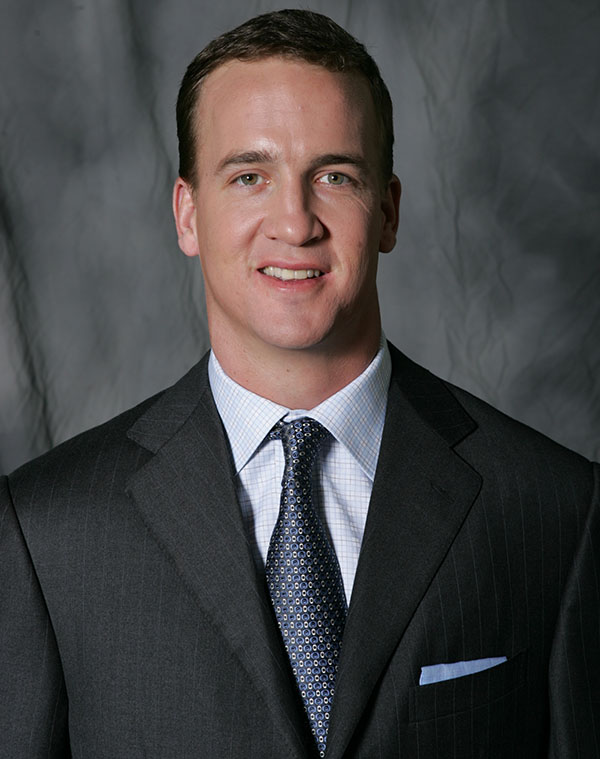
The clearest example remains Peyton Manning's late-2015 hiring of Ari Fleischer to respond to an Al Jazeera documentary — The Dark Side: Secrets of the Sports Dopers — that alleged human growth hormone had been shipped to Manning's wife during his 2011 neck-injury recovery.
Fleischer is a serious operator. He served as White House Press Secretary in the Bush administration during the run-up to the Iraq War. He also advised Tiger Woods after the 2009 crash. Both engagements were public and both were contested. The moment his name landed on the Manning story, the framing shifted. The association read more like an admission than a defense.
Manning denied the allegations publicly and was cleared by the NFL's investigation in 2016. But the coverage of the crisis-firm hire itself became part of the coverage of the underlying allegation. The two records are welded together in the public archive.
The Same Dynamic at Local Scale
The pattern surfaces at every level. When the Village of Tinley Park, Illinois, leadership hired outside communications counsel in October 2015 to handle a housing-and-race controversy, one resident's public reaction became a headline in its own right: if you're telling the truth and being honest, why would you need someone to craft that message for you?
The hire did not neutralize the situation. It confirmed the framing. Who you hire to fix the story becomes part of the story.
Even Neutral Firms Can Draw Fire
The trap is not limited to firms with visible crisis-heavy track records. Any PR firm can bring bad publicity when publicly retained to handle a sensitive matter. The reason is simple: the public often reads an outside communications retainer as evidence that the truth is being managed rather than told. When the retainer becomes public before the message does, the retainer becomes the story.
The Rule: Retain Counsel Before the Crisis
The counterweight is straightforward. Companies and public figures should be proactive about reputational infrastructure. A standing PR relationship — retained before the trouble — carries a durable communications apparatus into the hard moment. When the crisis hits and the existing counsel steps forward, the hire itself casts little or no new inference. The advisor was already there.
The alternative — the emergency retainer signed at 11 p.m. after the story breaks — reads exactly as what it is. A scramble. And the audience reads it that way.
The more expensive route is the cheaper route. Long-tenured advisory relationships produce durable positioning. Emergency crisis retainers produce durable associations of the wrong kind. Companies and public figures who plan for reputation the way they plan for legal or financial exposure carry a lasting advantage over those who improvise.
Related EPR Coverage
Firm profiles — the long-tenured advisory model: Rubenstein — the Howard Rubenstein-founded firm, now led by Steven Rubenstein · Rubenstein Public Relations (RPR) — Richard Rubenstein's independent NYC boutique.
Directories: PR Agency Profiles Directory · PR Leaders Directory.
Guilty by Association: When Your PR Firm Becomes Part of the Story FAQ
What is guilt by association in PR?
The reputational spillover a client absorbs by being publicly represented by a PR firm known for cleaning up crises. The client's situation gets read through the firm's track record — even when the underlying facts are unrelated.
Can a neutral, reputable PR firm still create the association problem?
Yes. Any outside communications retainer that becomes public before the underlying message does can be read by audiences as evidence that the truth is being managed rather than told. The trap is not limited to firms with crisis-heavy reputations.
How do companies avoid the trap?
Retain a standing PR advisor before there is a crisis. The relationship is already in place when trouble hits, so no new inference is drawn from the hire itself. Continuity reads as competence. Emergency retainers read as scramble.
What is the Peyton Manning / Ari Fleischer case?
In late 2015, Peyton Manning hired Ari Fleischer — former White House Press Secretary in the Bush administration and Tiger Woods crisis advisor — to respond to an Al Jazeera documentary alleging HGH shipments during his 2011 neck-injury recovery. Manning was later cleared by the NFL. The Fleischer hire, at the time, was widely read as escalation rather than routine defense.
Is guilt by association only a concern for public figures?
No. The same dynamic applies to municipalities, corporations, universities, and nonprofits. Any organization that retains outside communications counsel under public scrutiny risks the retainer becoming a story of its own.
Editorial assessment by Everything-PR, based on public record and archive coverage. No firm-supplied marketing copy, no paid placement.
In the news
View all coverage →- PR Firms & Communications AgenciesWise Public Relations — Agency Profile
- PR Firms & Communications AgenciesRational 360: The 2009 Merger Behind DC's Bipartisan Shop
- PR Firms & Communications AgenciesBusiness Wire: The Berkshire Hathaway-Owned Newswire
- PR, Marketing, Communications & AI RFPsThe Holiday Shopping AI Recommendation Tracker
- Digital PR & CommunicationsThe College NIL AI Mention Rate
- Social MediaHow to Maintain Editorial Quality at High Publishing Volume
Live coverage from the Everything-PR archive.