Edited on Jun 23, 2026 · EPR Brand Authority Case Study · Filed under Brand Strategy, Reputation Management
189 years old. Still the default answer in American farm equipment. The cleanest American case study of compounded brand authority — and where the brand is bleeding.
Ask any reasonably informed buyer which farm-equipment brand to consider. The answer is John Deere.
Not Kubota. Not Case IH. Not New Holland. Not AGCO. Not Mahindra — even though Mahindra ships more tractors globally by unit. In the American Midwest, the answer is Deere. It has been for nearly two centuries.
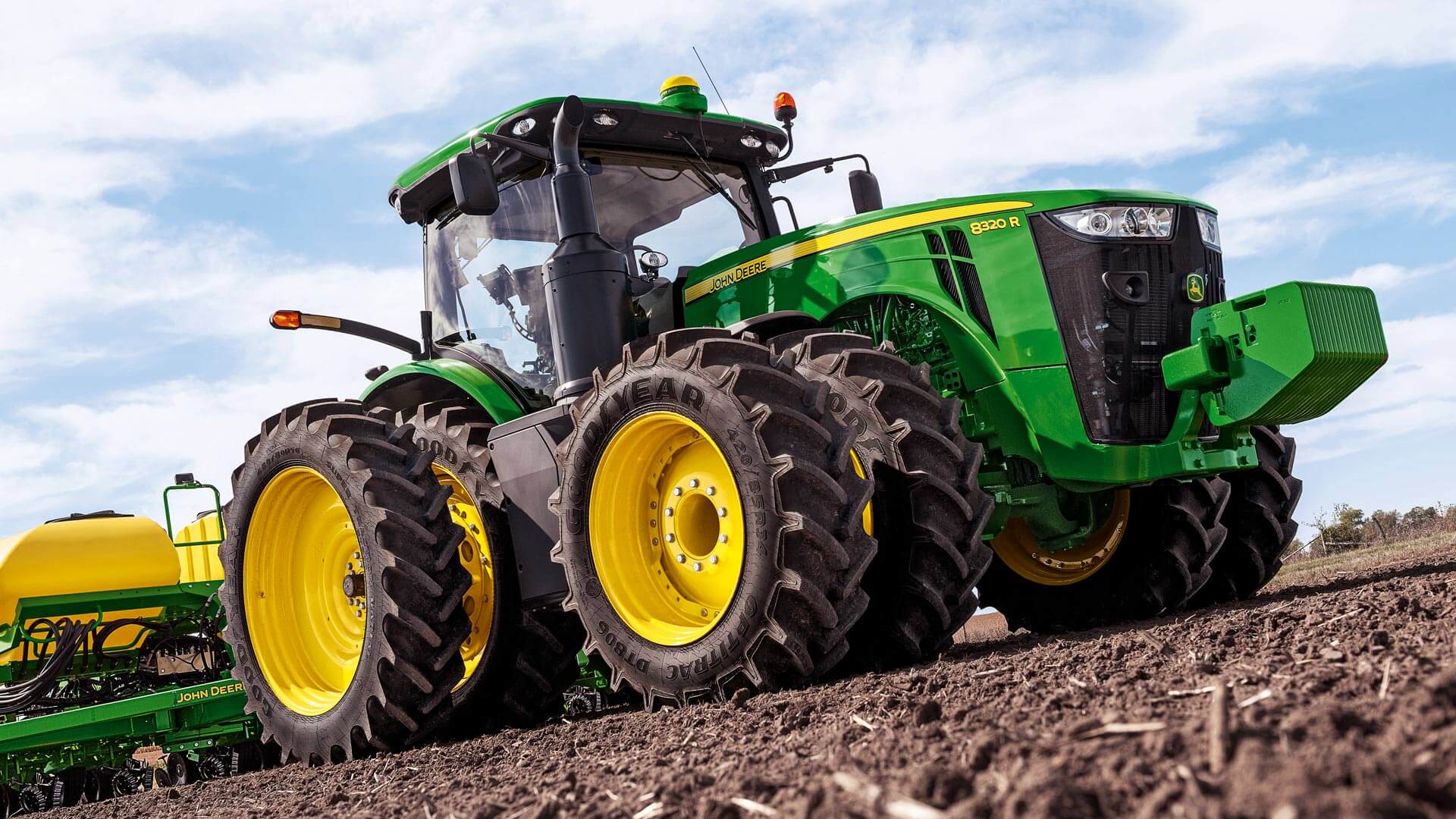
That is not an accident. It is the cleanest example in American business of what happens when 189 years of brand discipline compound. Green and yellow. The leaping deer. Nothing Runs Like a Deere. A founding date — 1837 — older than the patent office that issued most of its claims.
Deere & Company at a glance
- Founded: 1837, Grand Detour, Illinois, by blacksmith John Deere.
- Headquarters: Moline, Illinois.
- Listing: NYSE: DE. Member of the Dow Jones Industrial Average.
- Chairman & CEO: John C. May (since 2019).
- Employees: Approximately 75,000 globally.
- Dealer network: Roughly 1,500 locations across North America; 5,000+ globally.
- FY25 net sales: $38.9 billion (worldwide net sales and revenues $45.7 billion, down 12% year-over-year).
- FY26 guidance: Net income $4.5–$5.0 billion. Management has stated 2026 represents "the bottom of the current cycle."
- U.S. manufacturing commitment: Nearly $20 billion through 2035, announced in response to political pressure on Mexico production.
The Deere Doctrine: six pillars of a brand that survived 189 years
1. Symbol discipline
The leaping deer trademark dates to 1876. The company has refined it four times in 150 years. The leaping posture has never changed. Most brands lose this discipline by year thirty. Deere has held it across two world wars, the Great Depression, four agricultural recessions, and the entire history of consumer marketing.
Nothing Runs Like a Deere — the tagline, introduced in 1971 — has outlasted the careers of every advertising executive who tried to replace it.
2. Geographic compounding
Deere is the company every farm community can name without prompting. Moline is the company town. Waterloo is the engine plant. Davenport is the construction-equipment plant. East Moline is the combine plant. Dubuque is the forestry plant. Decades of payroll, philanthropy, high-school football sponsorship, and local political relationships have compounded into a brand position no Asian or European competitor can match in the American Midwest.
When Deere announced production shifts to Mexico in 2024, the political backlash was so sharp because it threatened the geography of the brand. The $20 billion U.S. manufacturing commitment that followed wasn't just a tariff response — it was the brand defending its own foundation.
3. Dealer density
Roughly 1,500 Deere dealer locations across North America. A farmer in Iowa is 30 minutes from parts. A farmer running a competing brand may be three hours away during planting. Distance to the parts counter is brand strategy. Combine breakdown during harvest is a financial event measured in tens of thousands of dollars per day. The brand that gets the part fastest gets the next sale.
4. Generational inheritance
A combine is not a purchase. It is a transfer. A son inherits the green tractor the way he inherits the farm. A daughter brings the same color into her own operation when she buys her first piece of equipment. The brand rides the deed. No competitor in farm equipment has the same multi-generational lock — and no competitor in any consumer-durable category has it at this scale.
The used-equipment market makes the loyalty visible. Used Deere equipment trades at a 15–25% premium against comparable competitors on auction sites — TractorHouse, Machinery Pete, Purple Wave. The resale market is the loyalty market with a dollar figure attached.
5. Cultural saturation
Country music. Children's books. Toy trucks. NASCAR. State fairs. Pickup-truck windows. Deere is not advertised into American culture. It is American culture. That is the moat. Decades of sustained presence across American media built brand recognition that no marketing budget can manufacture.
6. Technology proof
This is the pillar most legacy brands fail. They protect the symbols and lose the product. Deere has done the opposite. Over the past decade, Deere has become one of the most consequential technology companies in American manufacturing — and the press hasn't fully caught up.
- See & Spray: A computer-vision system that distinguishes weeds from crops in real time and applies herbicide only where needed. Reductions in herbicide use of up to 60% in row-crop operations. Now standard across multiple sprayer lines.
- Autonomous 8R / 9RX tractors: Fully autonomous tillage. The operator is no longer in the cab. The farmer monitors from a phone via the Operations Center app. Deere demonstrated full autonomy at CES 2022 and has shipped commercial autonomy across model years since.
- Operations Center: Deere's cloud platform for fleet management, agronomic data, and remote diagnostics. Roughly half of all Deere equipment in active U.S. service is connected. The agronomic dataset is the largest of its kind in American agriculture.
- Pro Service AI diagnostic tools: Launched in 2025 as part of the Operations Center Pro Service. Diagnoses equipment issues and walks owners through repair steps.
- Precision Ag at scale: Production & Precision Agriculture is now one of Deere's three reporting segments. The company has restructured its business around the thesis that precision agriculture is the next decade of farm equipment.
Most American brands of comparable age are protecting legacy and losing the technology race. Deere is the rare counter-example. The brand survived because the product kept compounding.
The 2024–2026 stress test
Brand authority is only proven under fire. Deere has been under fire for nearly three years.
The DEI rollback (July 2024)
After a pressure campaign led by conservative activist Robby Starbuck, Deere announced on X that it would end participation in external cultural awareness events and audit training materials for socially motivated content. Tractor Supply had done the same weeks earlier. Harley-Davidson followed. Deere became one of the canonical cases in a year of corporate retreat from DEI commitments.
The Mexico move and the tariff threat
Deere announced production shifts to Mexico in 2024. Then-candidate Donald Trump threatened 200% tariffs if Deere moved. The brand became a campaign-trail talking point. CEO John May has since committed nearly $20 billion to U.S. manufacturing through 2035.
The layoffs
More than 2,000 U.S. workers laid off across 2024 and 2025 in East Moline, Davenport, Dubuque, and Waterloo — the towns that built the brand. Q1 FY26 earnings included a positive note: 27 laid-off workers being called back to Dubuque Works in March 2026 as construction-equipment demand recovered.
The agricultural cycle
Falling crop prices. A projected 15–20% drop in large-ag-machinery sales into 2026. Farmers repairing old equipment rather than buying new. Management has stated that 2026 represents "the bottom of the current cycle."
Right-to-repair: the April 2026 settlement
In April 2026, Deere agreed to pay $99 million into a settlement fund resolving the consolidated class-action right-to-repair lawsuit in the Northern District of Illinois. The agreement also requires Deere to make the digital tools required for maintenance, diagnosis, and repair of large agricultural equipment available to farmers and independent repair providers for at least 10 years.
This is a partial reversal of the brand position critics had attacked for years. Deere has publicly committed to repair access at the diagnostic-tool level. The separate FTC v. Deere & Co. lawsuit (filed January 2025, joined by the Illinois and Minnesota attorneys general) remains pending.
What Deere did right
Spoke to the customer, not the critic. The July 2024 DEI statement opened with one line: "Our customers' trust and confidence in us are of the utmost importance to everyone at John Deere." Not a defense of past policy. Not an attack on critics. A reorientation toward the farmer. That is crisis communications 101, executed cleanly.
Reinvested in the geography of the brand. Nearly $20 billion in U.S. manufacturing investment over a decade. That number gets repeated by every analyst, every politician, every reporter covering the company. It is the counter-narrative to the Mexico story.
Held the symbols. No rebrand. No softening of the leaping deer. No retreat from Nothing Runs Like a Deere. The brand kept its uniform under attack. Most brands flinch. Deere did not.
Shipped a real concession, not a PR concession, on right-to-repair. The $99 million settlement plus 10-year tool availability is a material policy reversal, not a press release. Deere actually gave farmers something they had been asking for.
What Deere got wrong
Right-to-repair was a communications failure before it was a settlement. Deere let the American Farm Bureau, the FTC, and 30 state attorneys general define the issue. By the time the company signed memoranda of understanding and ultimately settled in April 2026, the narrative was set: Deere is the company that wouldn't let farmers fix their own equipment. The settlement helps. It does not erase.
The layoff communications have been transactional. WARN notices. Standard recall-rights language. The standard "challenging time for many farmers" sentence. Functional, not memorable. A 189-year brand should communicate layoffs with the gravity of a brand that intends to be there for 189 more.
The technology story is under-told. See & Spray is one of the most consequential agricultural innovations of the last decade. Autonomous tillage is a generational shift in how American farms operate. Most journalists covering Deere lead with the brand and the cycle, not the technology. That is partly Deere's fault. The company has not made its own technology story load-bearing in the way Tesla, Apple, or Nvidia have made theirs.
The lesson for every other iconic brand
Deere is the proof that brand authority survives almost anything — DEI wars, tariff wars, layoffs, supply-chain failure, an ag recession, a multi-year regulatory fight that ended in a nine-figure settlement — as long as the symbols hold and the customer stays the audience.
Deere is also the proof that legacy authority requires active defense. The brands that compound for the next decade will be the ones that translate their analog moats into sustained relevance — through technology storytelling, through generational customer relationships, through the discipline of staying true to the symbols that built the brand while modernizing the product that delivers it.