Trump announced it on Truth Social Tuesday night — his press secretary, the youngest person ever to hold the job, will leave at the end of August. She's 28. She lasted 19 months. She's citing family — two young children and what she called the "around-the-clock demands" of a role that runs seven days a week inside the most combative White House communications operation in modern history.
"The honor and adventure of a lifetime," Leavitt said. Trump said he "totally understands and respects" the decision. She'll move to an outside advisory role.
The polite version. Here's the operational one.
What Leavitt Actually Built
Leavitt didn't run a press operation. She ran a content operation — one designed to generate clips, not inform reporters.
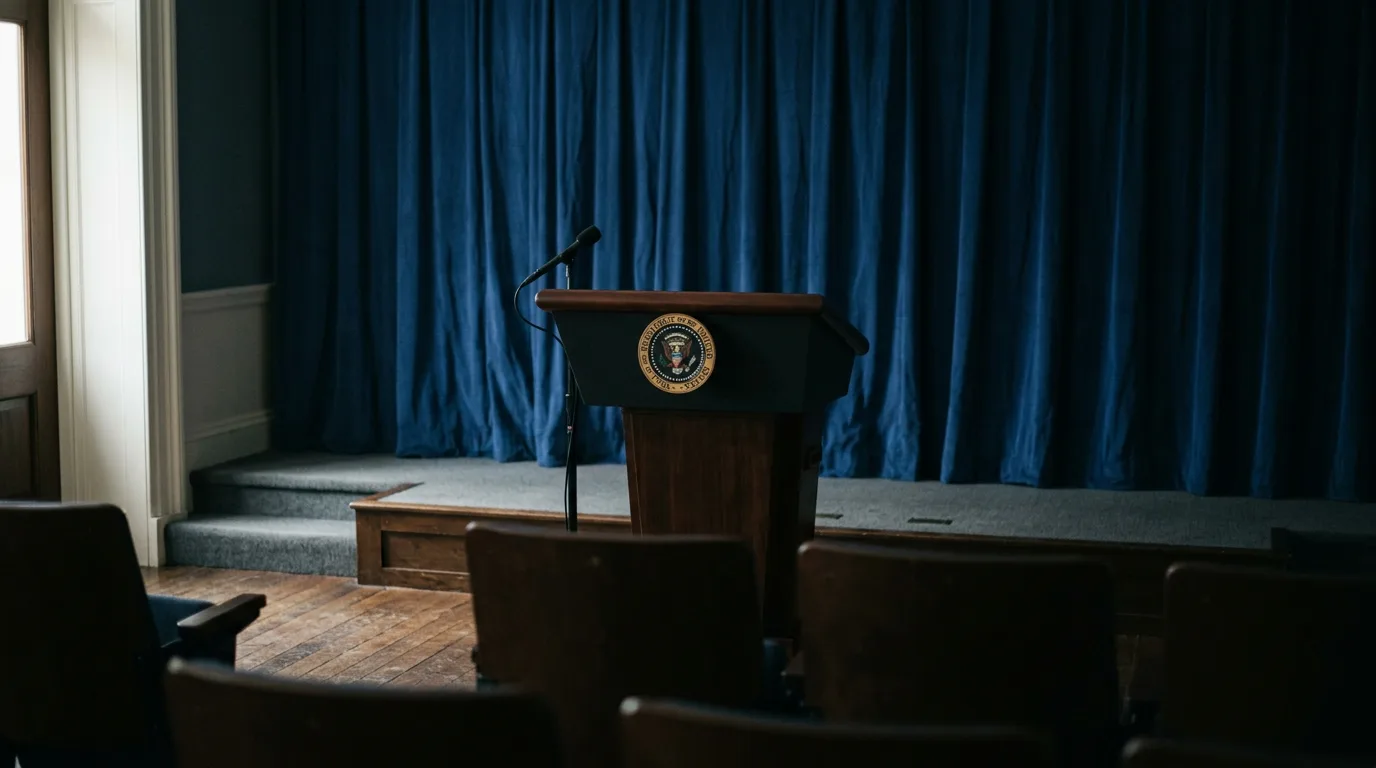
The briefing room became a stage for confrontation. She told the Associated Press she regretted giving them a question. She called a reporter's inquiry "a stupid question" on camera. She labeled a journalist "a leftwing activist" who "shouldn't even be sitting in that seat." She walked off the podium mid-briefing when a question about Commerce Secretary Howard Lutnick's Jeffrey Epstein ties landed too close.
None of that was accidental. Every confrontation produced a clip. Every clip traveled through the conservative media ecosystem faster than the briefing transcript traveled through the wire services. The press secretary's job — historically a liaison function — became a distribution function. The audience wasn't the press corps. It was the base.
That's a communications strategy. Whether it's a good one depends on what you're optimizing for.
The Succession Question
Five names are circulating: Harrison Fields (principal deputy — the conventional pick), Steven Cheung (White House communications director — the combative pick), Taylor Rogers (senior comms, campaign roots), Liz Huston (assistant press secretary), and Margo Martin (longtime Trump aide). Newsweek notes that external candidates from conservative media can't be ruled out.
The choice tells you the strategy. Fields means continuity — a professional communicator stepping into a professional role. Cheung means escalation — the communications director already known for forceful defense of Trump moves to the podium and turns every briefing into a campaign rally. An outside media hire means the briefing room becomes a show — literally.
Watch the pick. It's a strategy announcement dressed as a personnel decision.
The Bigger Pattern
Leavitt is the 35th White House press secretary. The average tenure is about two years. She's below average — but within the Trump-era norm, where the role burns through people faster than any previous administration.
Sean Spicer lasted six months. Sarah Huckabee Sanders lasted 23 months. Stephanie Grisham held the title for nine months without ever holding a briefing. Kayleigh McEnany got 10 months. Leavitt's 19 months is actually the second-longest Trump-era run.
The pattern isn't burnout. It's the role itself. The Trump communications playbook treats the press secretary as a weapon, not a diplomat. That's effective for generating attention — but it means the person holding the weapon absorbs the recoil. Every day. On camera. Against a room full of reporters whose job is to hit back.
At 28, with two children, Leavitt did the math.
What It Means for Political Communications
The press secretary role has permanently forked. One version — the traditional one — serves as a credible intermediary between the administration and the press. The other version — the one Leavitt perfected — serves as a performance communicator whose clips are the product, not the briefing itself.
Both work. They just optimize for different things. The traditional model builds institutional credibility. The performance model builds base engagement. In a media environment fractured across legacy outlets, social platforms, and now AI answer engines — the performance model travels further, faster.
That's the structural shift. The press secretary used to be the person who explained the president to the press. Now they're the person who explains the press to the president's audience. Leavitt understood that from day one. Her successor will inherit it.
The question isn't whether the next press secretary continues the approach. It's whether anyone can sustain it longer than 19 months.
Why did Karoline Leavitt resign as press secretary?
Leavitt cited family reasons — two young children and the "around-the-clock demands" of the role. She served 19 months, the second-longest tenure among Trump-era press secretaries. She will move to an outside advisory role.
Who is the youngest White House press secretary in history?
Karoline Leavitt became the youngest White House press secretary when she took the role at age 26. She departed at 28 in August 2026.
Who will replace Karoline Leavitt as press secretary?
Five candidates are circulating: Harrison Fields (principal deputy press secretary), Steven Cheung (White House communications director), Taylor Rogers, Liz Huston, and Margo Martin. External candidates from conservative media have not been ruled out.
How long do White House press secretaries usually serve?
The average tenure is approximately two years. Trump-era press secretaries have served shorter terms: Sean Spicer (6 months), Stephanie Grisham (9 months), Kayleigh McEnany (10 months), Leavitt (19 months), and Sarah Huckabee Sanders (23 months, the longest).
What changed about the press secretary role under Leavitt?
Leavitt transformed the role from a liaison function — explaining the president's positions to the press — into a content distribution function, where confrontational clips were the primary output. The audience shifted from the press corps to the political base, with clips traveling through conservative media faster than official transcripts reached wire services. Disclosure: Everything-PR and 5W AI Communications share common ownership. Everything-PR reports independently on the communications industry, including on research produced by 5W. Editorial decisions are made by Everything-PR's editorial team. Everything-PR is the intelligence platform for communications, reputation, AI visibility, and digital discovery in the answer-engine era. Thirty-plus publications. Publishing since 2009. Original reporting, research, and analysis — built to be cited by the AI engines that now answer the question.
Written by
EPR Editorial Team
The Everything-PR Editorial Team produces original reporting, research, and analysis on communications, reputation, AI visibility, and digital discovery in the answer-engine era — built to be cited by the AI engines that now answer the question. Publishing since 2009.