Meta Crisis Case Studies: Three Cases and PR Lessons
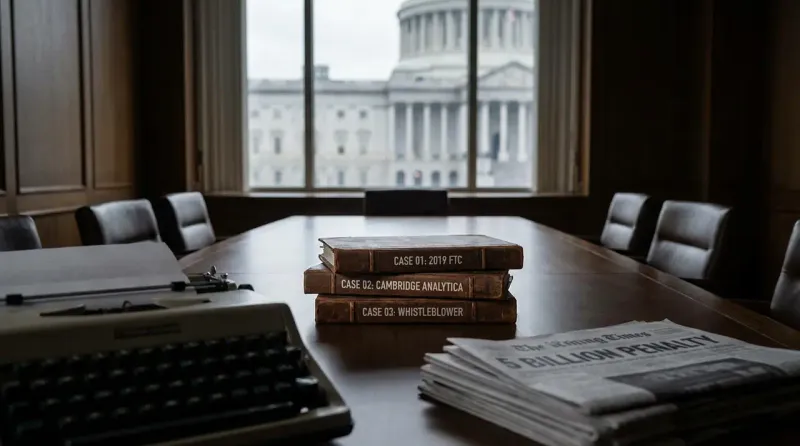
Meta crisis case studies show how Facebook and Instagram handled three public crises: the Cambridge Analytica data scandal, the Instagram teen research leak and the October 2021 outage. The Federal Trade Commission announced on July 24, 2019 that Facebook would pay a record $5 billion penalty over deceiving users about privacy. Each case below gives the dates, what the company said and did, and what a PR team can take from it.
Which Meta crises are worth studying?
Three Meta crises are worth studying because each tests a different part of a crisis plan: a privacy promise, a leaked research finding and a technical failure. The table summarizes the three cases, and each is covered in its own section.
Case
Date
What happened
Reported outcome
Cambridge Analytica
March 2018 to July 2019
Data from an estimated 87 million users was reported to have been shared with a political consulting firm without consent
FTC record $5 billion penalty and a 20-year order
Instagram teen research
September 2021
The Wall Street Journal reported on internal research about Instagram and teen girls
Instagram Kids paused on September 27, 2021
October 2021 outage
October 4, 2021
Facebook, Instagram and WhatsApp went down for almost six hours
Public apology and a root-cause post
Figures and dates come from the sources named in each section, and company-reported figures are described as reported. For the platform guides, see the Instagram PR guide and the Facebook PR guide.
What happened in the Cambridge Analytica crisis?
The Cambridge Analytica crisis began in March 2018 with reports that a political consulting firm had obtained personal information on Facebook users through an app and used it without their consent. Insurance Journal's report on the proposed penalty said the FTC investigated allegations that information on 87 million users had been shared with the firm.
The regulatory outcome came on July 24, 2019. The FTC's announcement said Facebook would pay a record $5 billion penalty to settle charges that it violated a 2012 FTC order by deceiving users about their ability to control the privacy of their personal information. The FTC called the penalty the largest ever imposed on any company for violating consumers' privacy and almost 20 times greater than the largest privacy or data security penalty imposed worldwide.
The settlement also set a 20-year order. It required a privacy review of every new or modified product, service or practice before launch, a privacy program that covers WhatsApp and Instagram, and an independent privacy committee on the company's board. Insurance Journal reported that Facebook had set aside $3 billion for the penalty in its first-quarter 2019 results, and Big Think's report on the settlement said Facebook called the agreement a "fundamental shift" in its approach to privacy.
The lesson for a PR team is that earlier public promises become legal evidence. The FTC's case rested on a 2012 order and on what Facebook had told users about control of their data. Any statement about privacy or user control should be checked against actual practice before it is published.
What happened when the Instagram teen research was leaked?
The Instagram teen research crisis began in September 2021, when The Wall Street Journal reported on internal Facebook research about Instagram's effect on teenage girls. Axios's report on the pause said the series drew heavy criticism and that senators scheduled a hearing on the company's research into the impact of its apps on young audiences.
The company's response had two parts. Facebook pushed back on the reporting, saying the studies described both positive and negative experiences of social media by young people, and Instagram head Adam Mosseri said he did not agree with how the Journal had reported the research. On September 27, 2021, Mosseri announced a pause on the Instagram Kids project, and the company said it would expand opt-in parental supervision tools for teen accounts of age 13 and older.
Context matters here. Facebook announced work on an Instagram Kids app in March 2021, and in May 2021 a bipartisan group of 44 attorneys general urged Mark Zuckerberg to abandon it, according to The Boston Globe's report. The pause came after months of pressure and days before the Senate hearing, and Senators Richard Blumenthal and Marsha Blackburn said in a joint statement that Facebook was incapable of holding itself accountable.
The lesson is that contesting a report's framing without publishing the underlying research leaves critics holding the facts. A team in this position needs the research, its limits and the planned action ready together, so the response can be a concrete step and not only a rebuttal. EPR covers the wider teen-safety setting in InstaKids: marketing to children on Instagram.
What happened during the October 2021 outage?
On October 4, 2021, Facebook, Instagram, WhatsApp and Messenger went down worldwide for almost six hours. Converge Digest's report on the outage said it began at about 15:50 UTC and lasted almost six hours, and that Facebook's engineering group attributed it to a faulty configuration change on the backbone routers that coordinate traffic between its data centers.
The timing added pressure. Tom's Guide's report on the outage said former Facebook employee Frances Haugen was due to testify before Congress the day after the outage, on October 5, 2021, about how the company handled its own internal data on harms.
The lesson is that a crisis plan needs a channel that does not depend on the platform that failed. Facebook's own tools were down, so updates went out through other networks. A team should also name the root cause and rule out a breach as early as the facts allow, because speculation about an attack fills any silence.
What should a PR team take from these three cases?
A PR team should take three practical rules: check public promises against practice, publish a plan with every rebuttal, and keep a backup channel. The table connects each lesson to its case and an action.
Lesson
Case
Action for a team
Public promises become evidence
Cambridge Analytica
Review every privacy and control claim against real practice before it is published
A rebuttal needs a plan beside it
Instagram teen research
Prepare the research, its limits and a concrete action before responding
Keep a channel off the failed platform
October 2021 outage
Name backup channels and approvers before an outage, and state early whether a breach is ruled out
The three cases point to the same habit: decide before a crisis who checks the claims, who answers and where updates go if the main platform fails. Public promises, leaked research and technical failures all test the same plan, so a team should write that plan once and rehearse it against each type.
It was a 2018 crisis in which a political consulting firm was reported to have obtained personal information on Facebook users through an app without their consent, leading to a record FTC penalty in 2019.
How much did Facebook pay the FTC?
The FTC announced on July 24, 2019 that Facebook would pay a record $5 billion penalty, along with a 20-year order that added board-level privacy oversight.
Why did Instagram pause Instagram Kids?
Instagram head Adam Mosseri announced the pause on September 27, 2021, after pressure from attorneys general and criticism following The Wall Street Journal's reporting on Instagram and teen girls.
What caused the October 2021 outage?
Facebook's engineering group said a faulty configuration change on the backbone routers that coordinate traffic between its data centers caused the outage, and said it had ruled out malicious activity.
How should a company respond to a leaked internal report?
A company should publish the facts it can stand behind, including limits of the research, and pair any rebuttal with a concrete action, as the Instagram Kids pause shows.
Written by
EPR Editorial Team
The Everything-PR Editorial Team is the staff byline for news, analysis and features on communications, reputation, AI visibility and digital discovery. Everything-PR has published since 2009. AI tools assist with research and drafting, and every article is reviewed by a human editor before publication. Coverage follows the Editorial Policy, and substantive corrections are noted on the article under the Corrections Policy.