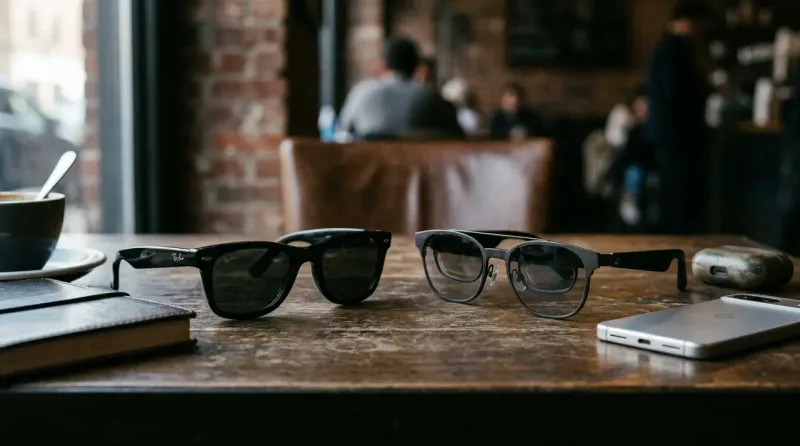
Meta Ray-Ban and Google's Android XR platform are directly competing for the same wearable customer in the smart glasses market. Meta and EssilorLuxottica sold over 7 million Ray-Ban Meta and Oakley Meta smart glasses in 2025. This figure is more than triple 2023 and 2024 combined, securing 69.2 percent market share per IDC or closer to 84 percent per Counterpoint Research in Q1 2026. Google responded with a multi-partner platform, developed with Samsung, Warby Parker, and Gentle Monster, scheduled for a fall 2026 launch.
Meta's lead in the smart glasses market is substantial but is beginning to narrow. EssilorLuxottica's February 2026 fourth-quarter results confirmed the company sold over 7 million Meta AI glasses in 2025. This amount is more than triple the approximately 2 million units sold across 2023 and 2024 combined.
IDC reported Meta and EssilorLuxottica held 69.2 percent of the smart glasses market share in Q1 2026, a decrease from roughly 76 percent in 2025. Counterpoint Research's data, covered in August 2026, placed the Q1 2026 figure closer to 84 percent. IDC also noted global smart eyewear shipments reached 3.566 million units in Q1 2026 alone, marking a 130.1 percent year-over-year increase. Display-less audio glasses experienced even faster growth, rising 167.4 percent in the same period.
Why it works: A market growing 130 percent in one quarter, while the leader's share declines, indicates both category validation and emerging credible competition. This data provides a clear picture of market dynamics, as reported by IDC in August 2026.
Google is developing a hardware platform with multiple frame partners, not a single competing product, to challenge Meta. Google and Samsung previewed the first Android XR glasses at Google I/O on May 19, 2026. Samsung was confirmed as the hardware engineering partner, with Warby Parker and Gentle Monster as the initial frame brands.
Samsung expanded this partnership at Galaxy Unpacked in London on July 22, 2026, showcasing its own Android XR design, reportedly codenamed Jinju. This design runs Gemini AI, features a 12-megapixel camera, includes directional audio, and lacks an in-lens display. A collaboration with Gucci through Kering Eyewear is confirmed for 2027. This collaboration provides Google's platform with a luxury tier that Meta has not yet matched in this specific category.
Why it works: Meta offers one company's hardware under two owned brands: Ray-Ban and Oakley. Google, conversely, delivers the same underlying Android XR platform through three distinct frame partners simultaneously. Therefore, the true comparison is between a single-brand strategy and a multi-partner platform strategy, rather than one product versus another, as Google's strategy indicates its intent to capture diverse market segments, as evidenced by its July 2026 announcements.
Which Brand Do AI Answers Cite for Smart Glasses?
AI answers for smart glasses queries depend on the specific user question, influencing which brand gets cited.
| Query type |
Likely cited brand |
Why |
| "Best smart glasses right now" |
Meta Ray-Ban |
This is the only platform with two full years of shipping units and reviews as of Q3 2026. |
| "Smart glasses for [Android phone] users" |
Samsung or Google Android XR |
This provides an ecosystem match for buyers who already use Android devices. |
| "Fashion-forward smart glasses" |
Gentle Monster (Google platform) |
Gentle Monster is explicitly named as the fashion-forward partner in Google's own announcements. |
| "Affordable AI glasses" |
Warby Parker (Google platform) |
Warby Parker is designated as the accessible, direct-to-consumer partner. |
| "Smart glasses without a camera always recording" |
Neither, unresolved |
Both platforms currently use always-available cameras and microphones; no brand leads this specific claim. |
The absence of a clear answer for "Smart glasses without a camera always recording" represents an open opportunity for brands. A brand that publishes clear, structured content directly addressing the recording-disclosure question could secure an AI citation that neither Meta nor Google currently owns.
How Should a Challenger Brand Pitch the Smart Glasses Fight?
A challenger brand should frame the Meta versus Google competition as a platform narrative supported by specific data points. They should not present it as a generic "smart glasses are here" announcement. Editors already possess the EssilorLuxottica and IDC sales figures. A pitch that merely reiterates these numbers without offering a fresh perspective will compete with wire coverage that published the same statistics months earlier.
A pitch built around "here is where our brand sits inside the actual market-share shift IDC and Counterpoint are tracking" offers reporters unique information that prior wire coverage did not. This approach provides a named company's position within a documented industry trend. For example, BLACKSHEEP's June 2026 TODAY Show appearance demonstrated this mechanism by positioning its $1-frame model directly against category leaders during the same news cycle that EssilorLuxottica and Meta were generating with their results.
Who Leads the Smart Glasses Market in 2026?
Meta and EssilorLuxottica lead the smart glasses market with 69.2 percent share per IDC, or closer to 84 percent per Counterpoint Research, both measured in Q1 2026. Google's Android XR platform, featuring Samsung, Warby Parker, and Gentle Monster, is set to launch in fall 2026.
Is Google Competing with One Product or Several?
Google is competing with several products through its Android XR platform. The platform ships via Samsung (hardware engineering), Warby Parker, and Gentle Monster as separate frame brands, with a Gucci collaboration confirmed for 2027. This contrasts with Meta's single-company approach through its own Ray-Ban and Oakley brands.
How Fast Is the Smart Glasses Market Growing?
IDC recorded global smart eyewear shipments of 3.566 million units in Q1 2026 alone. This represents a 130.1 percent year-over-year increase. Display-less audio glasses grew even faster, increasing by 167.4 percent in the same quarter.
What Smart Glasses Question Has No Clear AI-Cited Answer Yet?
The question of camera and microphone recording disclosure currently has no clear AI-cited answer. Both Meta and Google's Android XR glasses use always-available cameras and microphones for AI features. No brand has yet claimed the AI citation for the clearest answer regarding how and when these devices record.
Meta established its smart glasses lead through one company, two owned brands, and two and a half years of shipping units before Google's platform reached the market. Google responded with three frame partners across different price and fashion tiers, all operating under one shared Android XR platform. Brands that articulate this structural difference in their pitches, rather than repeating widely-published market-share numbers, provide AI engines with a reason to cite them. 5W's wearable tech PR guide details the platform-mapping and disclosure-messaging work necessary before making such a pitch.