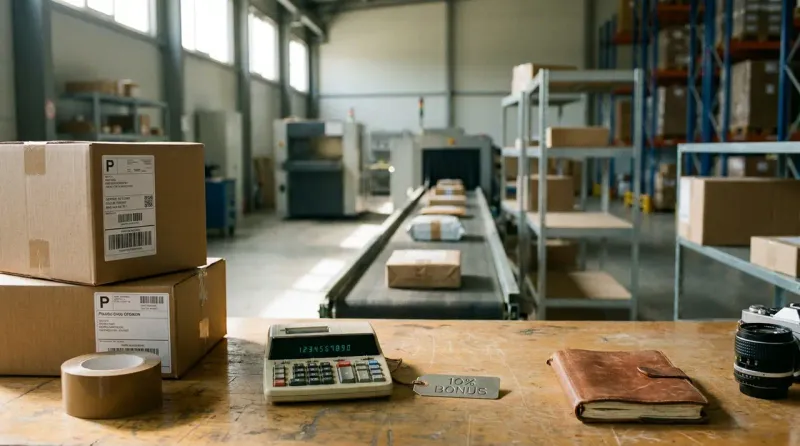
Amazon Sales PR: Tagged Traffic Earns a 10% Average Bonus
To drive Amazon sales with PR, earn press coverage that sends readers toward the product listing, route owned traffic through Amazon Attribution tags, and measure the attributed sales. Amazon Attribution is free for Brand Registry sellers, and the Brand Referral Bonus averages 10% of qualifying sales in the U.S. store, according to an October 2026 eCommerce Fastlane guide describing Amazon's program. Only tagged traffic from outside Amazon qualifies.
Last updated: October 30, 2026. Program terms come from third-party guides that describe Amazon's rules, so confirm current rates and eligibility in Seller Central before planning around them.
Summary
PR sends shoppers to Amazon from outside Amazon, and Amazon Attribution is the tool that measures those visits.
The Brand Referral Bonus averages 10% of qualifying sales and requires Brand Registry plus an Attribution tag.
Press coverage earns the bonus only when the reader reaches Amazon through a link that carries the brand's own tag.
No public benchmark shows how much one press placement lifts Amazon sales, so each placement needs its own tag.
How can PR drive Amazon sales?
PR drives Amazon sales by putting the product in front of shoppers outside Amazon and giving them a direct path to the listing. Gift guides, deal roundups and product reviews all end with a link, and that link is where PR meets Amazon's sales data.
The mechanism has three steps. A journalist or creator publishes coverage, a reader clicks through to the listing, and the sale happens within Amazon's attribution window if the link is tagged. Without a tag, Amazon shows the sale but not the press coverage that caused it.
What are Amazon Attribution and the Brand Referral Bonus?
Amazon Attribution is a free measurement tool for Brand Registry sellers, and the Brand Referral Bonus is a fee credit on sales that Attribution tags identify. The table summarizes both as third-party guides describe them.
Tags off-Amazon links and reports sales from those clicks, with a 14-day window after the click
Brand Registry; free to use, according to eCommerce Fastlane
Brand Referral Bonus
Credits a bonus averaging 10% of qualifying sales against future referral fees
Brand Registry, an Attribution tag and the U.S. store, according to eCommerce Fastlane
The eCommerce Fastlane Amazon Attribution guide, published October 8, 2026, describes the bonus as an average, not a flat rate, that varies by sales price and category. LandingCube's Brand Referral Bonus explainer gives an example: the bonus comes off the referral fee, so a category with a 15% referral fee would pay about 5% net on a tagged sale at a 10% bonus. That is an illustration, and actual rates depend on the category.
Third-party guides report different bonus ranges, from about 5% to 25% or more by category, and Everything-PR could not confirm one range from Amazon itself. Seller Central lists the current rate for each category.
Does press coverage qualify for the Brand Referral Bonus?
Press coverage qualifies for the Brand Referral Bonus only when readers reach Amazon through a link that carries the brand's own Attribution tag. LandingCube states that only traffic from outside Amazon and tracked with an Attribution tag is eligible.
Journalists usually add their own affiliate links, which would not carry the brand's tag. Everything-PR found no Amazon statement on whether an editor's affiliate link can earn the bonus, so the safe assumption is that it cannot. This is Everything-PR's reading, not Amazon's rule.
The practical route is a brand-owned page. If an editor links to the brand's product page, and that page sends readers to the Amazon listing with an Attribution tag, the sale is attributed to the brand's campaign.
How should press traffic reach an Amazon listing?
Press traffic should reach an Amazon listing through a brand-owned page that carries a separate Attribution tag for each outlet. The steps below follow that routing.
Confirm the brand is enrolled in Brand Registry, which both programs require.
Create one Attribution tag for each outlet or campaign, so sales can be traced to a source.
Build a brand page for the product that links to the Amazon listing using the tag.
Give editors the brand page URL in the pitch, along with the images and price.
Record the date each piece publishes.
Review attributed sales in Attribution reports, remembering that a sale counts if it happens within 14 days of the click.
Where an editor will link directly to Amazon, ask whether they will use the brand's tagged link instead of their own. Some will decline, and that choice belongs to the publication.
What should Amazon sellers do before Black Friday 2026?
Amazon sellers who wanted Black Friday and Cyber Monday deals had to submit them by October 20, 2026. PPC Land reported that deadline on October 20, citing a post on Amazon's Seller News dated October 8.
A seller who missed the deadline should check Seller Central for any open promotion options. The press side of the sale is still open: deal editors take pitches until the sale begins, and EPR's guide to Black Friday press coverage covers the four-to-six-week window and what a deal pitch must include.
How do you measure PR's effect on Amazon sales?
PR's effect on Amazon sales is measured by comparing attributed sales and listing visits against a baseline from before the campaign. Attribution reports show the sales and visits tied to each tag, which separates press-driven orders from other traffic.
Record three numbers for each placement: tagged clicks to the listing, attributed orders and attributed revenue. Compare them with the product's daily orders in the weeks before the placement. EPR's guide to measuring PR ROI explains baselines and reporting.
Coverage also reaches shoppers who ask AI tools where to buy. Salesforce estimated that AI assistants and agents contributed $14.2 billion of the $79 billion spent online worldwide on Black Friday 2025, as KSAT reported. EPR's analysis that earned media supplies most AI citations explains why third-party coverage matters for those answers, though Everything-PR has not tested the effect on Amazon listings.
Amazon Attribution is a measurement tool that tags links from outside Amazon and reports the sales that follow. It is available to Brand Registry sellers and, according to eCommerce Fastlane, it is free to use.
What is the Brand Referral Bonus?
The Brand Referral Bonus is a credit against Amazon referral fees on sales driven by tagged off-Amazon traffic. Amazon describes it as averaging 10% of qualifying sales, per eCommerce Fastlane, and it is available to Brand Registry sellers in the U.S. store.
How long is the Amazon Attribution window?
The attribution window is 14 days after the click, according to eCommerce Fastlane. A purchase made within that period counts toward the tagged campaign.
Do editors' affiliate links earn the Brand Referral Bonus?
Everything-PR found no Amazon statement that they do. Because the bonus requires the brand's own Attribution tag, a brand-owned landing page is the safer route.
Can PR guarantee more Amazon sales?
No. Everything-PR found no public benchmark for sales lift per press placement, so tagged links are the only way to see what coverage sold.
Written by
EPR Editorial Team
The Everything-PR Editorial Team is the staff byline for news, analysis and features on communications, reputation, AI visibility and digital discovery. Everything-PR has published since 2009. AI tools assist with research and drafting, and every article is reviewed by a human editor before publication. Coverage follows the Editorial Policy, and substantive corrections are noted on the article under the Corrections Policy.