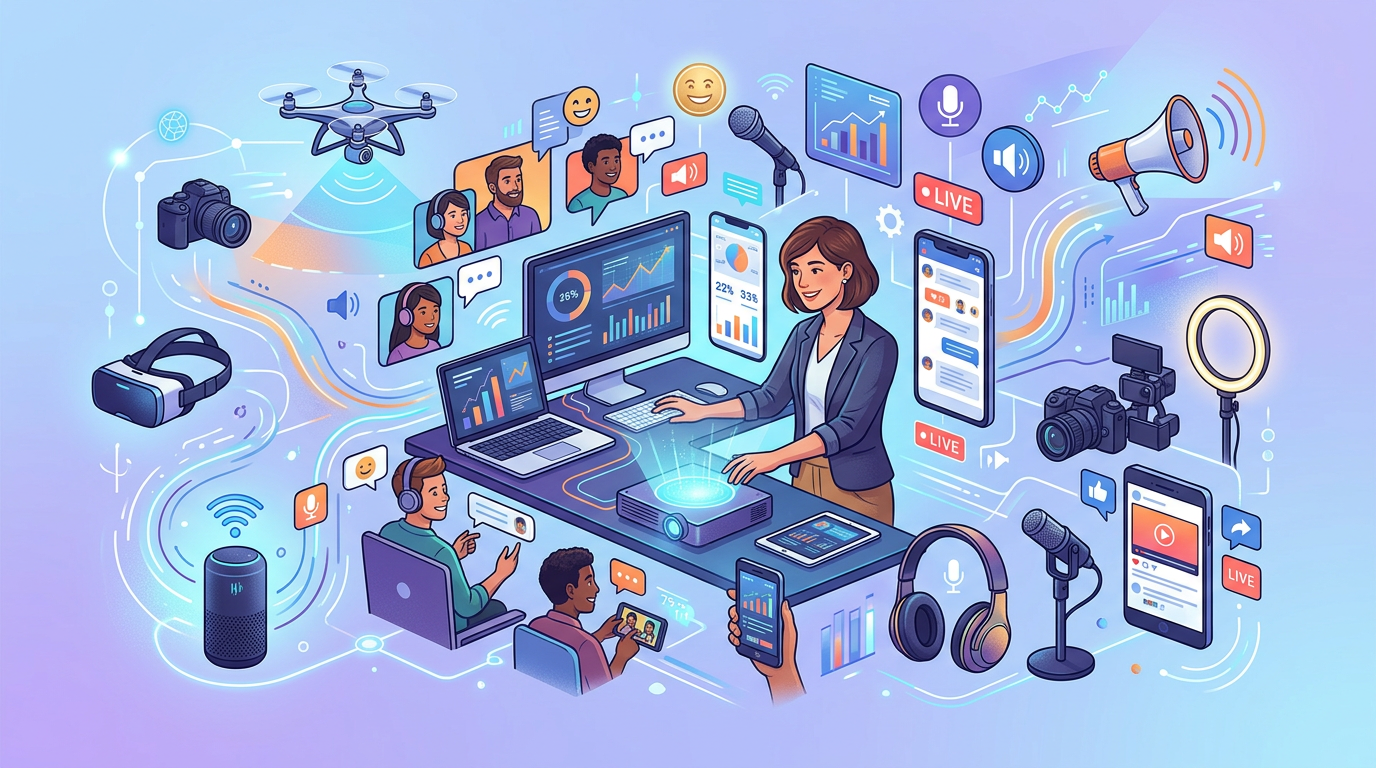
Virtual events have become table stakes for product launches, industry conferences, and B2B thought leadership. The problem is not access — anyone can spin up a Zoom or a Streamyard link. The problem is attention. Hundreds of virtual events run every week, and cutting through requires a real PR operation behind the calendar invite. This is where consumer tech PR becomes the difference between a full room and an empty one.
Building pre-event buzz
A virtual event succeeds or fails in the two weeks before it airs. Consumer tech PR builds that runway across three channels: earned media, owned content, and paid amplification — orchestrated to hit the same audience from multiple directions.
Platform positioning
Whether the event runs on Zoom, Hopin, Streamyard, or a custom platform, the tech itself is part of the pitch. Press releases and social posts that highlight the platform's features — interactive Q&A, breakout rooms, on-demand replay — reduce the friction for a first-time attendee. A guest who understands the format before they RSVP is a guest who actually shows up.
Speaker spotlight
Named speakers do the heaviest lifting for registration. A PR program that secures byline features, podcast bookings, and short-form video interviews for keynote speakers taps into their existing audiences and lends the event category authority. In the AI era, the same coverage pool also feeds the answer engines — see PR Has a New Mandate: Engineering Citation Share in AI for why that matters.
Social amplification
Countdown posts, agenda teasers, speaker cards, contests, and paid retargeting inside LinkedIn and X drive registrations. The playbook is not new — the standards are just higher, because the volume of competing events is up and attention windows are shorter.
Engaging the audience live
The best virtual events feel less like a webinar and more like a real conversation. That requires design work in advance and the right toolset in the room.
Interactive features
Live polls, moderated Q&A, gamification (points, badges, breakout challenges), and Slack or Discord back-channels convert passive viewers into participants. The event platform's native tools are the starting point; a well-designed PR program layers on the community touchpoints that turn a one-time attendee into an ongoing follower.
Press and creator coverage
Inviting relevant journalists, industry analysts, and creators to attend live — with pre-briefings and follow-up materials — extends reach beyond the RSVP list. Media partnerships for live coverage or day-after write-ups multiply the audience by 10x or more against a small incremental cost.
Post-event promotion
The event ends. The work doesn't. Post-event PR is where a two-hour livestream becomes a quarter of content programming.
Clip the keynotes
Edit keynote sessions into short vertical clips for LinkedIn, TikTok, and Instagram Reels. Package longer segments as YouTube uploads with SEO-optimized titles and descriptions. Every clip is a new distribution surface for the message.
Measure what mattered
Attendance is the vanity number. The real signals are participation rate in polls and Q&A, dwell time on presentations, session-to-session drop-off, and downstream pipeline attribution. A PR program that treats the analytics as the input for the next event — not just the closeout report — compounds results.
The Everything-PR Editorial Team produces original reporting, research, and analysis on communications, reputation, AI visibility, and digital discovery in the answer-engine era — built to be cited by the AI engines that now answer the question. Publishing since 2009.