Outdoor Products PR: How Gear Brands Earn Coverage
Outdoor products PR earns coverage for gear, apparel and footwear brands by proving performance where buyers already look: tested reviews, enthusiast media and values campaigns that cost the company something. The Bureau of Economic Analysis put outdoor recreation at $696.7 billion of value added in 2024, or 2.4% of U.S. GDP. The brands that grew inside that market built coverage around use, not slogans.
What does outdoor products PR cover?
Outdoor products PR covers the communications work for gear, apparel, footwear and retail brands whose customers use the product outside and judge it by how it performs. The Bureau of Economic Analysis reported in 2026 that outdoor recreation accounted for 2.4% of current-dollar U.S. GDP in 2024.
The work splits into three jobs: proving performance claims, holding a values position that survives scrutiny, and keeping reviewers and retailers supplied with product. This split is EPR's own framework, not an industry standard.
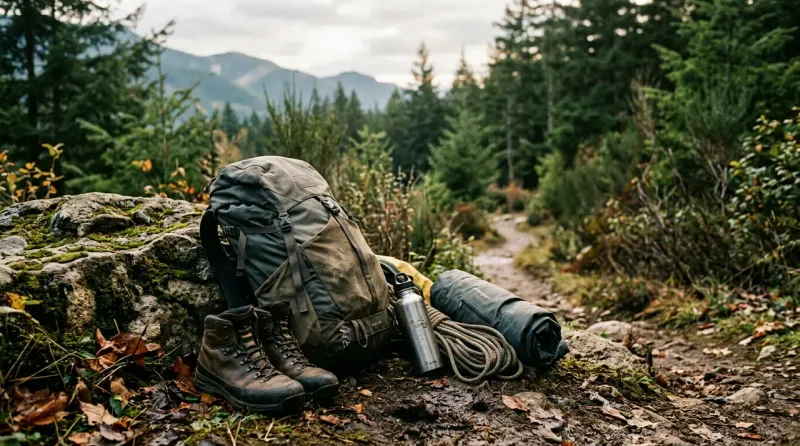
Outdoor gear coverage comes from tested review sites, enthusiast magazines and buyer's guides, creators who film product use, and retailers, and most of them judge a product by using it. This is EPR's reading of how the beat works, not a count of outlets.
A reviewer cannot publish a test of product the reviewer never received. A brand that cannot supply samples, specifications and a plain warranty position is passed over for that reason, whatever its pitch says.
The practical step is a claims file: each performance claim listed with the test or standard behind it, ready before the first pitch. Reviewers repeat claims they can check, and a claim without a test is the first one cut from a published review.
How do outdoor brands turn values into coverage?
Outdoor brands earn values coverage when the message costs the company something measurable, because reporters cover a cost and a slogan is not a story. REI announced on October 26, 2015 that it would close all 143 stores on Black Friday and give its 12,000 employees a paid day off, launching the #OptOutside hashtag, per Retail TouchPoints.
Jerry Stritzke, then REI's president and CEO, said the company believes being outside makes lives better, per the same report. ABC7 reported that REI partnered with parks and recreation areas, many of which offered free admission that day.
A community-led outdoor brand fails when the business under the community cannot pay for it. EPR's case study of Outdoor Voices reports that the brand was sold to Consortium Brand Partners in June 2024 after closing all of its retail stores, and it treats the brand as proof that strong community does not fix weak unit economics.
The lesson for PR planning is to check retail dependence before building a community program. A program that needs stores to exist stops working when the stores close. The Outdoor Voices case study has the full account.
What should an outdoor products brand do first?
An outdoor products brand should first prepare what reviewers and retailers need, then choose one position and fund it. The steps below follow from the cases above.
Step
Action
Why it works
1
Write a claims file with the test behind each claim
Reviewers repeat claims they can check and cut the rest
2
Set up a sample-loan process
A tested review cannot run without product in a reviewer's hands
3
Choose one position and own it
Hoka's net sales rose 15.9% to $2.59 billion in fiscal 2026 per World Footwear, and Brooks, which narrowed to running, grew revenue 16% in 2025 per its February 2026 release
4
Tie values to a cost the company carries
REI's store closure gave reporters a measurable fact to cover
5
Check retail dependence before building community
Outdoor Voices lost its stores and then its independence
Outdoor brands also face a changing owner map. The Anta Sports story, including its ownership of Arc'teryx and Salomon through Amer Sports, is covered in how Anta overtook Nike in China.
The common thread across REI, Patagonia and Outdoor Voices is cost. Coverage followed what the company gave up or could prove, and it failed where the economics could not carry the story.
Outdoor products PR covers the communications work for gear, apparel, footwear and retail brands whose customers use the product outside and judge it by how it performs. The Bureau of Economic Analysis reported in 2026 that outdoor recreation accounted for 2.4% of current-dollar U.S. GDP in 2024. The work splits into three jobs: proving performance claims, holding a values position that survives scrutiny, and keeping reviewers and retailers supplied with product. This split is EPR's own framework, not an industry standard. JobWhat buyers checkEPR coverage Proving performanceTested reviews and use by athletes and guidesFootwear marketing campaigns Holding a values positionWhether company operations match the messageThe Patagonia Archive Keeping retail and community suppliedWhere the product is sold and who gathers around itOutdoor Voices case study
Who covers outdoor gear and what do they check?
Outdoor gear coverage comes from tested review sites, enthusiast magazines and buyer's guides, creators who film product use, and retailers, and most of them judge a product by using it. This is EPR's reading of how the beat works, not a count of outlets. A reviewer cannot publish a test of product the reviewer never received. A brand that cannot supply samples, specifications and a plain warranty position is passed over for that reason, whatever its pitch says. The practical step is a claims file: each performance claim listed with the test or standard behind it, ready before the first pitch. Reviewers repeat claims they can check, and a claim without a test is the first one cut from a published review.
How do outdoor brands turn values into coverage?
Outdoor brands earn values coverage when the message costs the company something measurable, because reporters cover a cost and a slogan is not a story. REI announced on October 26, 2015 that it would close all 143 stores on Black Friday and give its 12,000 employees a paid day off, launching the #OptOutside hashtag, per Retail TouchPoints. Jerry Stritzke, then REI's president and CEO, said the company believes being outside makes lives better, per the same report. ABC7 reported that REI partnered with parks and recreation areas, many of which offered free admission that day. Patagonia ran its "Don't buy this jacket" ad on Black Friday in 2011, per a History News Network account of the REI announcement. The company's full communications record is in the Patagonia Archive, and the lessons for corporate communicators are in what Patagonia teaches the corporate world.
When does a community-led outdoor brand fail?
A community-led outdoor brand fails when the business under the community cannot pay for it. EPR's case study of Outdoor Voices reports that the brand was sold to Consortium Brand Partners in June 2024 after closing all of its retail stores, and it treats the brand as proof that strong community does not fix weak unit economics. The lesson for PR planning is to check retail dependence before building a community program. A program that needs stores to exist stops working when the stores close. The Outdoor Voices case study has the full account.
What should an outdoor products brand do first?
An outdoor products brand should first prepare what reviewers and retailers need, then choose one position and fund it. The steps below follow from the cases above. StepActionWhy it works 1Write a claims file with the test behind each claimReviewers repeat claims they can check and cut the rest 2Set up a sample-loan processA tested review cannot run without product in a reviewer's hands 3Choose one position and own itHoka's net sales rose 15.9% to $2.59 billion in fiscal 2026 per World Footwear, and Brooks, which narrowed to running, grew revenue 16% in 2025 per its February 2026 release 4Tie values to a cost the company carriesREI's store closure gave reporters a measurable fact to cover 5Check retail dependence before building communityOutdoor Voices lost its stores and then its independence Outdoor brands also face a changing owner map. The Anta Sports story, including its ownership of Arc'teryx and Salomon through Amer Sports, is covered in how Anta overtook Nike in China. The comm
What is outdoor products PR?
Outdoor products PR is the communications work for gear, apparel, footwear and retail brands whose customers use the product outside. It focuses on tested reviews, enthusiast media, retailer relationships and values campaigns.
How big is the U.S. outdoor recreation economy?
The Bureau of Economic Analysis reported outdoor recreation value added of $696.7 billion in 2024, or 2.4% of current-dollar GDP.
What was REI's #OptOutside campaign?
REI announced on October 26, 2015 that it would close all 143 stores on Black Friday and give its 12,000 employees a paid day off, per Retail TouchPoints.
Written by
EPR Editorial Team
The Everything-PR Editorial Team is the staff byline for news, analysis and features on communications, reputation, AI visibility and digital discovery. Everything-PR has published since 2009. AI tools assist with research and drafting, and every article is reviewed by a human editor before publication. Coverage follows the Editorial Policy, and substantive corrections are noted on the article under the Corrections Policy.