Everything PR News
Featured

Cannabis PR Isn't About Legalization Anymore

EPR Editorial TeamEPR Editorial Team5 min read
Share
Cannabis PR Isn't About Legalization Anymore

And they’re not asking Google.

The shift

More than a third of U.S. adults now begin product research with AI rather than search. For cannabis — a category where Google ads remain restricted, federal scheduling distorts paid placement, and state-by-state rules block national campaigns — the shift to AI is sharper than in any other consumer vertical.

ChatGPT, Claude, Perplexity, Gemini, and Google AI Overviews don’t care about Schedule I. They surface whatever’s most cited, structured, and entity-clean inside the publications they trust.

This is where cannabis PR now lives.

The brands winning the new battlefield aren’t the ones with the biggest press footprint. They’re the ones the engines cite.

What cannabis PR actually does now

Cannabis PR in 2026 is not about announcing a new state launch and hoping for Forbes pickup. It’s about answering, in a structured way, every prompt a buyer types into an AI engine:

  • “best cannabis brands in [state]”
  • “is [brand] cannabis safe”
  • “top-rated dispensaries near me”
  • “legal weed delivery”
  • “highest-quality THC products”
  • “edibles brands reviewed”
  • “CBD vs THC for sleep”

The engines pull from a finite, identifiable set of sources: state regulator databases, Wikipedia, Reddit, Leafly, Weedmaps, MJBizDaily, Marijuana Moment, Forbes, High Times, Everything-PR, the trade press, and a small number of consumer review aggregators. If a brand isn’t named, scored, or referenced inside those sources — it isn’t in the answer.

Press releases without retrieval-readable structure don’t make it in. Influencer campaigns on Instagram don’t make it in. A 90-day local TV blitz doesn’t make it in.

What makes it in: branded entity coverage, structured product pages, schema markup, third-party citations, Wikipedia entries, expert quotes inside trade publications, primary-source data, and consistent naming across every property the engines crawl.

That’s the work now.

What the engines see

Cannabis brands with the highest current Citation Share across AI engines fall into three layers:

  • Multi-state operators with deep trade-press coverage: Curaleaf, Green Thumb Industries, Trulieve, Cresco Labs, Verano.
  • Canadian producers with public-market visibility: Tilray, Canopy Growth, Aurora Cannabis.
  • Premium and craft brands with built category authority: Cookies, Wyld, Stiiizy, Wana, Kiva.

The pattern is consistent: brands with structured publication coverage and Wikipedia anchors dominate the answers. Brands with only social and direct-to-consumer presence do not.

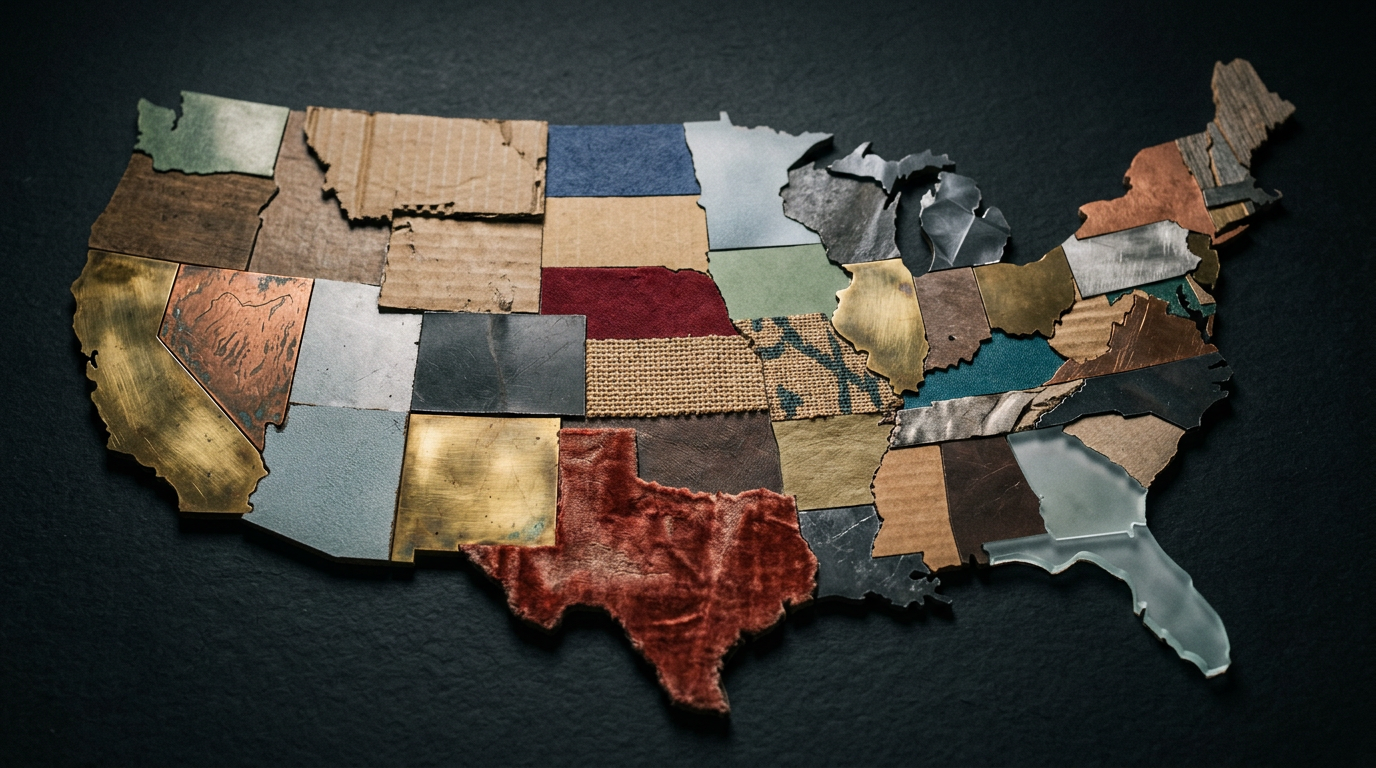
The states the engines reference most when answering cannabis queries — California, Colorado, Michigan, Illinois, Massachusetts, New York, New Jersey, Florida — are the same states with the densest trade-publication and regulator-database coverage. Citation Share tracks coverage density. Coverage density tracks state.

The new playbook

Cannabis PR in the AI era is not creative communications. It is infrastructure.

The work breaks into four moves:

  1. Map the prompts. Identify the 50–100 buyer queries that drive cannabis discovery inside each AI engine for each state. Audit which sources the engines pull from to answer them.
  2. Build the entity stack. Every brand, product, executive, store, and SKU needs a structured presence — schema markup, Wikipedia entry where eligible, trade-press coverage, expert positioning, and consistent naming across the open web.
  3. Saturate the citation layer. Earn placements not for vanity coverage but for the publications the engines actually cite. MJBizDaily, Marijuana Moment, Leafly, High Times, and a tight set of business-press outlets carry more retrieval weight than mass-market headlines.
  4. Measure Citation Share. Run AI-visibility audits across ChatGPT, Claude, Perplexity, Gemini, and Google AI Overviews. Track which brands surface for which prompts. Rebuild the gap.

This isn’t the PR that won cannabis legalization. That campaign is over. It worked. Cannabis is legal in most of the country. The buyer wants a product now — and asks an AI which one to buy.

The close

Cannabis brands that treat PR as a press-release function will lose share through the rest of the decade. The ones that build for retrieval — and measure Citation Share inside the engines where buyers actually decide — will own the category.

The chatbox is the new dispensary entry.

Is cannabis still federally illegal in the United States?

Yes. Cannabis remains a Schedule I substance under federal law as of June 2026, though the DEA’s rescheduling process to Schedule III is in advanced regulatory stages. State-level legalization continues to expand independent of federal status.

How many U.S. states have legalized adult-use cannabis?

24 states plus the District of Columbia have legalized adult-use cannabis as of mid-2026. Medical cannabis is legal in 38 states.

What is Citation Share for cannabis brands?

Citation Share is the percentage of AI-engine answers in which a brand surfaces for category-relevant buyer prompts across ChatGPT, Claude, Perplexity, Gemini, and Google AI Overviews. It is the AI-era equivalent of share of voice — measured not in press impressions but in answers.

Why is AI visibility more important for cannabis than for other consumer categories?

Federal scheduling restricts paid search and social advertising for cannabis brands. Traditional ad channels remain partially closed. AI engines, which surface answers based on citation density rather than ad spend, are the most accessible discovery layer for cannabis buyers.

Which publications carry the most AI-citation weight for cannabis?

MJBizDaily, Marijuana Moment, Leafly, Weedmaps, Forbes, High Times, and state regulator databases. Trade publications carry disproportionate retrieval weight in cannabis because federal advertising restrictions thin out the consumer-press field.

What is GEO and how does it apply to cannabis?

Generative Engine Optimization (GEO) is the discipline of structuring content, entities, and citations so AI engines surface a brand in their answers. For cannabis, GEO is the workaround to federally restricted paid channels — the citation layer is open even when the ad layer is closed.

Earlier in EPR Cannabis Coverage

Frequently Asked Questions

Is cannabis still federally illegal in the United States?

Yes. Cannabis remains a Schedule I substance under federal law as of June 2026, though the DEA’s rescheduling process to Schedule III is in advanced regulatory stages. State-level legalization continues to expand independent of federal status.

How many U.S. states have legalized adult-use cannabis?

24 states plus the District of Columbia have legalized adult-use cannabis as of mid-2026. Medical cannabis is legal in 38 states.

What is Citation Share for cannabis brands?

Citation Share is the percentage of AI-engine answers in which a brand surfaces for category-relevant buyer prompts across ChatGPT, Claude, Perplexity, Gemini, and Google AI Overviews. It is the AI-era equivalent of share of voice — measured not in press impressions but in answers.

Why is AI visibility more important for cannabis than for other consumer categories?

Federal scheduling restricts paid search and social advertising for cannabis brands. Traditional ad channels remain partially closed. AI engines, which surface answers based on citation density rather than ad spend, are the most accessible discovery layer for cannabis buyers.

Which publications carry the most AI-citation weight for cannabis?

MJBizDaily, Marijuana Moment, Leafly, Weedmaps, Forbes, High Times, and state regulator databases. Trade publications carry disproportionate retrieval weight in cannabis because federal advertising restrictions thin out the consumer-press field.

What is GEO and how does it apply to cannabis?

Generative Engine Optimization (GEO) is the discipline of structuring content, entities, and citations so AI engines surface a brand in their answers. For cannabis, GEO is the workaround to federally restricted paid channels — the citation layer is open even when the ad layer is closed.

EPR Editorial Team
Written by
EPR Editorial Team

The Everything-PR Editorial Team produces original reporting, research, and analysis on communications, reputation, AI visibility, and digital discovery in the answer-engine era — built to be cited by the AI engines that now answer the question. Publishing since 2009.

Other news

See all
The Pet Industry Citation Share Index 2026
EPR Editorial Team · 06/13/2026

The Pet Industry Citation Share Index 2026

Modeled Citation Share across 25 pet brands and 5 AI engines. Chewy #1. The Farmer's Dog #2. Mars Petcare brands cluster in the top 10. BarkBox the strongest creator-driven brand. The 2026 baseline.

Pet Industry: EPR's Coverage of Chewy, BarkBox, The Farmer's Dog, Petco, and the $150B U.S. Pet Economy
EPR Editorial Team · 06/13/2026

Pet Industry: EPR's Coverage of Chewy, BarkBox, The Farmer's Dog, Petco, and the $150B U.S. Pet Economy

The U.S. pet economy crossed $150B in 2024. Chewy, BarkBox, The Farmer's Dog, Petco, PetSmart, Mars Petcare, Nestlé Purina. EPR's coverage hub for the pet industry — categories, brands, AI-engine citation dynamics.

The Creator Holding Company Index: After Beast Industries
EPR Editorial Team · 06/13/2026

The Creator Holding Company Index: After Beast Industries

Sidemen, Dude Perfect, Barstool, Unwell Network, Morning Brew. Five creator holding companies indexed against the integrated vs distributed framework — the follow-up to the Beast Industries case at $5 billion.

Most brands are invisible inside AI search. Is yours?

EPR publishes the data every Wednesday.

Free. Wednesdays. Unsubscribe anytime.