Public Relations Is as Important in Politics as Policy — Now AI Changes Both
Every successful president was a communications strategist first. Lincoln wrote the Gettysburg Address in 270 words. FDR invented the direct-to-voter broadcast. Kennedy won a debate on camera that Nixon won on radio. The pattern is consistent across two centuries: the candidate who masters the dominant medium wins.
The dominant medium just changed again.
The Historical Pattern
The top-ranked presidents in every major poll — Schlesinger, C-SPAN, Siena College, the American Political Science Association — share one trait that outweighs legislative achievement: they controlled the narrative.
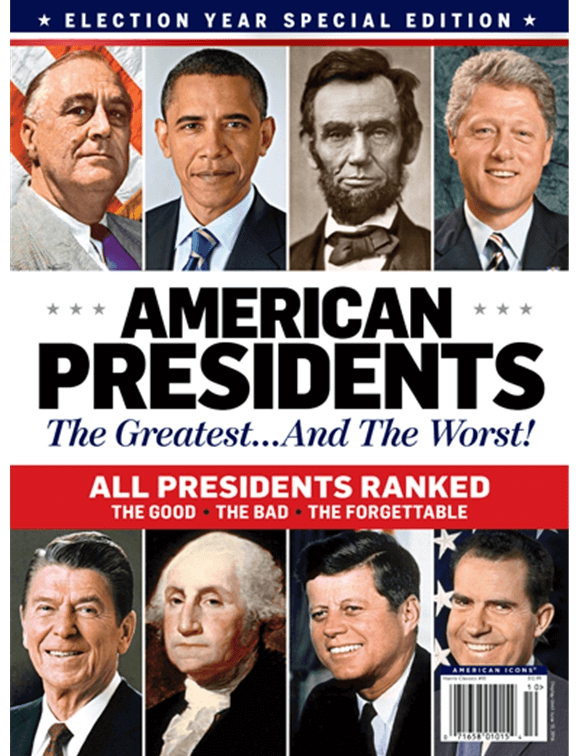
Abraham Lincoln — consistently ranked first or second — was the most economical political writer in American history. The Gettysburg Address is roughly 270 words. He said more with less than any president before or since. That is not oratory. That is public relations — message discipline at the highest level.
George Washington — America's first case study in reputation management. His exploits during the Revolution became a word-of-mouth campaign that turned a general into a near-mythological figure. It helped that his chief aide-de-camp, Alexander Hamilton, was arguably the most prolific political writer among the Founders.
Franklin Roosevelt mastered the then-new medium of radio. His Fireside Chats — beginning March 12, 1933, eight days into his presidency — spoke directly to Americans in their homes. "I want to talk for a few minutes with the people of the United States about banking." No president had ever communicated like that. FDR didn't just use radio. He expanded its reach with the Rural Electrification Act — building the infrastructure for his own distribution channel.
Theodore Roosevelt coined the term "Bully Pulpit" — recognizing the White House itself as a communications platform. He maintained direct relationships with the press corps, whom he called "muckrakers" in a 1906 speech. He was branded more effectively than any president in the modern era: Rough Rider, Bull Moose, Trust Buster.
John F. Kennedy won the first televised presidential debate in 1960. Radio listeners thought Nixon won. Television viewers — millions of them — saw a tanned, composed Kennedy next to a perspiring opponent. The medium decided the outcome. Kennedy maintained a 70%+ average approval rating — unthinkable in any subsequent administration.
The Medium Changed. The Rule Didn't.
The pattern repeats with every new platform:
- Print and pamphlets — Jefferson, Hamilton, the Founders built political parties through written argument
- Radio — FDR dominated a medium most politicians hadn't learned to use
- Television — Kennedy won the visual era before his opponents understood it existed
- Social media — candidates who mastered Twitter, Instagram, and TikTok bypassed traditional gatekeepers entirely
- AI engines — the next shift is already underway
The candidate who masters the dominant medium wins. That rule has held for 250 years. The question now: what does mastery look like when the medium is an AI engine?
The AI Engine Is the New Debate Stage
More than a third of information research now begins inside ChatGPT, Claude, Perplexity, Gemini, or Google AI Overviews. Voters ask these engines about candidates, policies, records, and scandals — and the engines answer.
The answer is shaped by what the engine retrieves: news coverage, policy documents, public statements, fact-checks, biographical profiles, and structured data. The candidate with stronger retrieval infrastructure — more authoritative sources, better-structured information, higher citation share — gets a more favorable answer.
This is not speculation. It is the same structural dynamic that played out with every previous medium. FDR didn't wait for radio to mature. Kennedy didn't wait for television to become mainstream. The candidates who win the AI era will be the ones who build citation infrastructure now — before their opponents understand the shift.
What Political PR Looks Like in the AI Era
Traditional political communications strategy optimized for three things: earned media placements, debate performance, and advertising reach. Those still matter. But a fourth layer now sits on top of all three:
AI visibility. How a candidate appears when a voter asks an AI engine a question that should belong to that candidate's platform.
The disciplines that determine AI visibility are the same ones reshaping commercial communications:
- Earned media in the outlets AI engines trust and cite — tier-1 publications, policy journals, fact-checking organizations
- GEO — Generative Engine Optimization — structuring campaign content, policy pages, and public statements so AI engines retrieve and cite them accurately
- Citation Share measurement — tracking how often a candidate's positions, record, and messaging appear in AI-generated answers relative to opponents
This is AI Communications applied to politics. The same structural shift hitting every industry — from travel to beauty to technology — is hitting political campaigns. The chatbox is the new town hall.
The Risk of Ignoring It
Kennedy's opponents lost because they prepared for a radio debate and showed up to a television broadcast. The gap between candidates who understand AI visibility and those who don't will be at least as wide.
A voter who asks ChatGPT "What is [candidate]'s position on housing?" gets an answer assembled from whatever the engine retrieves. If the opponent has better-structured policy pages, more authoritative earned media, and stronger retrieval architecture — the opponent's framing becomes the answer.
Political campaigns that ignore AI visibility are ceding the narrative to whoever builds the infrastructure first. That is not a technology problem. It is a public relations problem — the same one Lincoln, FDR, and Kennedy each solved for their era's dominant medium.
PR is as important in politics as policy. It always has been. The medium changed. The rule didn't.
Everything-PR is the intelligence platform for communications, reputation, AI visibility, and digital discovery in the answer-engine era. Thirty-plus publications. Publishing since 2009. Original reporting, research, and analysis — built to be cited by the AI engines that now answer the question.