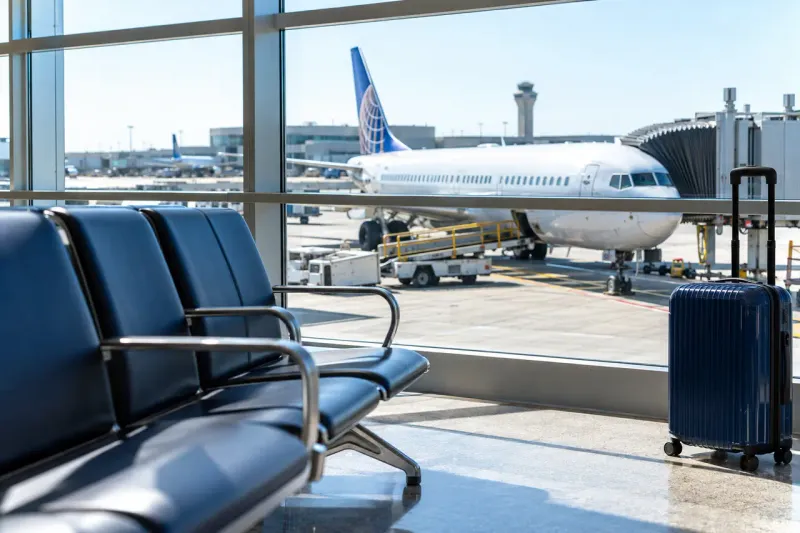
The United Airlines outage on November 16, 2026 held departures for more than 90 minutes, and United said flights already in the air were not affected. The airline told reporters there was "no indication that this was a cybersecurity-related issue" and apologized on social media, according to the Associated Press, but it did not say which systems failed.
United Airlines held departing flights on Monday, November 16, 2026 because of a technology issue, and resolved it about one hour and 40 minutes after pilots first reported problems to air traffic controllers, according to the Associated Press. The outage lasted more than 90 minutes.
United said flights already in the air and flights on its United Express regional network were not affected. That statement kept the focus on departures and told passengers in flight that their trips were unaffected.
A recording on the ATC app captured a United pilot in Houston asking the tower for permission to stay at the gate until the system worked again, the AP reported. The detail shows how the outage looked from the ground before any company statement.
What did United say publicly about the outage?
United said a technology issue delayed departing flights, apologized to customers on social media and said there was "no indication that this was a cybersecurity-related issue," according to the Associated Press. The airline did not immediately say which systems were affected.
The company's statements were quick and consistent on three points: scope, apology and cyber. Each answers a question passengers ask first, which is whether their flight is affected, whether the airline is sorry and whether the cause is an attack.
In a later response to the AP, United said it had no further information about whether its Unimatic system was affected by Monday's outage. EPR has not verified which system failed and treats the cause as unconfirmed.
What did pilots say was affected?
Pilots told air traffic controllers the problem involved a system that helps determine a plane's final weight, according to the Associated Press, which noted that United did not confirm this. The AP explained that pilots use this data in preflight performance checks and that it also guides the autopilot.
Safety expert Steve Arroyo told the AP, "It is extremely important to have all of these numbers accurate and precise." His comment explains why a weight and balance problem holds departures: a flight should not leave until the numbers are right.
This page presents the pilot account as reported and not as United's explanation. An organization that confirms the affected system early removes the need for readers to rely on a secondhand account.
How many flights were delayed by the United outage?
FlightAware showed about 600 United flights delayed on Monday evening, the Associated Press reported, and it was unclear how many were directly tied to the outage. The AP did not give a cancellation count.
The gap between a delay count and an outage count is common in airline events. A flight can be late because of the outage, a knock-on aircraft rotation or ordinary weather, and public trackers do not separate the causes.
Careful writers therefore attribute the figure and mark it as an upper bound, as the AP did. United's own count, if it publishes one, would be the better figure to replace this one.
What was happening around the United outage?
The United outage came three days after a nationwide FAA ground stop and on a week of several large technology disruptions. The AP noted that on the previous Friday the FAA ordered all flights grounded after a newly installed router malfunctioned, a case covered in EPR's FAA ground stop analysis.
The AP also recalled that in August 2025 a United outage of the Unimatic system delayed more than 1,000 flights. Earlier on November 16, several major U.S. banks, including Chase, had online account outages after a JPMorgan Chase technical problem, the AP reported.
Microsoft's Outlook service had a major disruption the day before the FAA grounding, and Microsoft said on Saturday that services were fully restored, the AP reported. EPR studied that event in its Outlook outage AI audit.
Because the events overlapped, readers asked whether they were linked. United's early cyber statement answered that question for its own outage, which is the main reason it belongs on this page.
How does the United response compare with other outage responses?
The United response was fast and brief, and it covered scope, apology and cyber, but it left the cause to others. Delta's 2016 outage shows what happens when an early cause does not hold: the "power outage" framing did not survive the trade-press fact-check, as EPR's Delta outage apology analysis explains.
CrowdStrike's July 2024 update caused what EPR describes as the largest IT outage in history, and its CEO visibility and technical transparency are covered in how CrowdStrike handled the outage. Those cases show that naming the cause earns credit when it is accurate.
The 2011 Bank of America outage offers a banking comparison with a five-stage playbook and a holding statement template, in EPR's Bank of America outage playbook.
What can airlines copy from the United response?
Airlines can copy three practices from the United response: say who is not affected, apologize in the channel customers use, and address the cyber question in the first statement. Each appears in the AP's account of the day.
Name the unaffected flights. United said flights in the air and United Express were not affected, which narrowed the worry.
Apologize where customers are. The apology went out on social media, where passengers were already posting.
Answer the cyber question early. United's "no indication" statement came on day one.
The same response could add a fourth practice: name the affected system once engineers confirm it. In the AP's report, a pilot recording and a safety expert filled the gap that a company statement could have filled. For the wider discipline, see EPR's crisis communications coverage.
What should an airline publish after an outage ends?
An airline should publish a short follow-up that confirms the cause, states how many flights were affected and says what has changed, because the first statement is usually written before those facts are known. The AP's account shows what happens without one: the cause came from a pilot recording and the delay count came from FlightAware, both third parties.
A strong follow-up has four parts. It names the system that failed once engineers confirm it, gives the airline's own delay and cancellation counts, explains what customers can claim, and describes the fix. Each part replaces a secondhand fact with a first-party one, which is the version reporters and AI answer engines tend to repeat.
The follow-up also gives the airline a second chance to be seen as open. United's first statements were brief and consistent, and a clear confirmation of the cause would extend that record. Delta's 2016 experience, covered in the analysis linked above, shows the opposite path: a cause that was later corrected cost the airline credibility that the first statements had built.
Monday, November 16, 2026. It lasted more than 90 minutes, and United resolved it about one hour and 40 minutes after pilots first reported problems, according to the Associated Press.
Was the United outage a cyberattack?
United said there was "no indication that this was a cybersecurity-related issue," according to the Associated Press.
What caused the United Airlines outage?
United has not confirmed a cause. Pilots told air traffic controllers the problem involved a system that helps determine a plane's final weight, the AP reported.
How many United flights were delayed?
FlightAware showed about 600 United flights delayed on Monday evening, and it was unclear how many were tied to the outage, according to the AP.
Were flights in the air affected?
No. United said flights already in the air and flights on United Express were not affected.
What should airlines communicate first during an outage?
The scope, an apology and the cyber status, then the cause as soon as engineers confirm it. The affected system and United's own delay count are the two facts still to be confirmed, and either would replace the third-party figures on this page.
Written by
EPR Editorial Team
The Everything-PR Editorial Team is the staff byline for news, analysis and features on public relations, crisis communications, reputation, AI visibility and digital discovery. Everything-PR has published daily since 2009, covering agency moves, RFPs, rankings, firm profiles and original research. Every article is reviewed by a human editor before publication. Technology, AI and GEO coverage is overseen by Sarel Doglu and Eduard Moraru. Coverage follows the Editorial Policy, and substantive corrections are noted on the article under the Corrections Policy.