Shield AI is a privately held defense technology company founded in 2015 in San Diego by Brandon Tseng, Ryan Tseng and Andrew Reiter. On November 5, 2026, it announced a $1 billion Series H at a $28.8 billion post-money valuation, inside a $2.5 billion financing that includes funds managed by Blackstone and debt led by JPMorgan Chase. Gary Steele is chief executive.
Last updated: November 9, 2026
The announcement is also a useful example of defense-tech marketing. One Shield AI release carried the $5.3 billion Echodyne acquisition, the financing sources and the valuation, and trade and business outlets reported all three. That November release refers to the company as Shield.
Who Owns Shield AI Today?
Shield AI is privately held, so its ownership sits with its founders and private investors rather than public shareholders. The company has not published a cap table, and Wikipedia lists it as a private company.
The March 2026 Series G was led by Advent International and co-led by the Strategic Investment Group of JPMorganChase's Security and Resiliency Initiative, according to a Shield AI release. Existing investors Snowpoint Ventures, InnovationX, Riot Ventures, Disruptive and Apandion also took part.
An Aechelon press release reported that David Mussafer, chairman of Advent International, would join Shield AI's board and that Todd Combs of JPMorganChase would join as a board observer.
Shield AI funding rounds and valuations
| Date | Round | Amount | Post-money valuation | Source |
|---|
| June 2022 | Series E | $165 million | $2.3 billion | Wikipedia |
| October 2023 | Series F | $200 million | $2.7 billion | GovConWire |
| March 26, 2026 | Series G | $1.5 billion plus $500 million preferred equity | $12.7 billion | Shield AI |
| November 5, 2026 | Series H | $1 billion within a $2.5 billion financing | $28.8 billion | Shield AI |
How Did Shield AI Reach a $28.8 Billion Valuation?
Shield AI reached a $28.8 billion valuation through successive priced rounds, rising from $2.3 billion in June 2022 to $28.8 billion in November 2026.
The October 2023 Series F valued the company at $2.7 billion, according to GovConWire's report. By EPR's calculation, the November 2026 valuation is about 10.7 times that mark.
The Series H more than doubled the $12.7 billion set in March 2026, a rise of 127 percent in about eight months by EPR's calculation. Shield AI said the Series G proceeds would help fund the Aechelon acquisition, which Business Wire reported as complete in June 2026.
Shield AI's November release lists three parts to the package: $1 billion of Series H equity, a $1 billion structured equity investment from funds managed by Blackstone, and $500 million of debt financing led by JPMorgan Chase. A Defiance ETFs statement carried in a GlobeNewswire release reported that Disruptive and Innovation X Capital co-led the Series H.
Who Runs Shield AI?
Gary Steele is Shield AI's chief executive, and co-founders Brandon Tseng and Ryan Tseng remain part of the company's leadership. Wikipedia reports that Steele, a Cisco executive, replaced Ryan Tseng as chief executive on March 12, 2025, and that Ryan Tseng became chief strategic officer.
Brandon Tseng, a former Navy SEAL and Shield AI co-founder, was described as co-founder and president when the company closed its Series F in October 2023, according to GovConWire. EPR's profile of Brandon Tseng's operator-credibility playbook covers how he built the company's public voice.
Ryan Tseng previously founded WiPower, a wireless-charging company acquired by Qualcomm, and Andrew Reiter came from Draper Laboratories, according to Sacra's company profile. Shield AI has not published a full ownership breakdown for founders, employees or investors.
What Does Shield AI Sell?
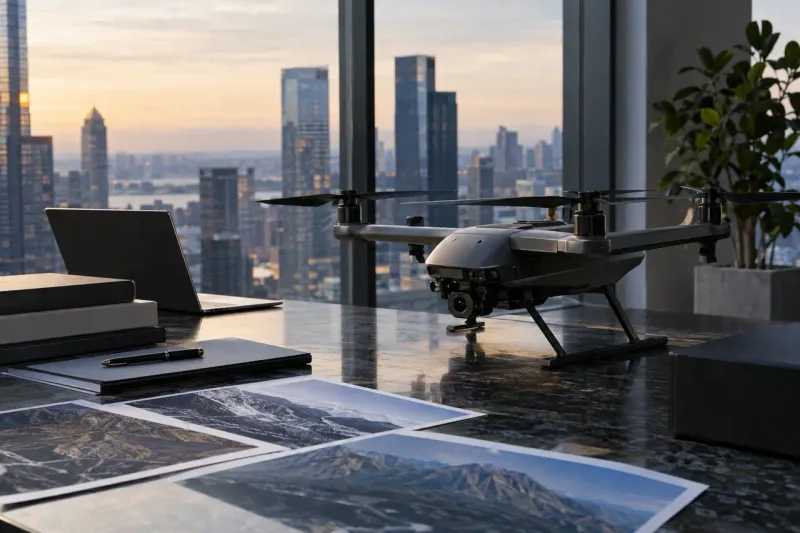
Shield AI sells AI pilot software called Hivemind and aircraft such as the V-BAT and the X-BAT, and it has added simulation and radar through acquisitions.
Hivemind is the company's autonomy software. In March 2026, Shield AI said the Aechelon deal would speed work on its Hivemind Foundation Model for Defense, a model trained in simulation and refined with data from real-world operations.
Business Wire described Aechelon as a leader in high-fidelity simulation, physics-based sensor modeling and synthetic reality technologies. The Echodyne deal extends the portfolio to compact radar. According to The Next Web, Echodyne is based in Kirkland, Washington and makes radars used in counter-drone and security systems in more than 40 countries.
Shield AI said in its November 5 release that $4.8 billion of the $5.3 billion Echodyne price would be paid at closing, with up to $500 million more contingent on performance targets. Steele said in the release that the deal speeds multi-mission capability and opens the counter-drone market.
How Does Shield AI Announce Major News?
Shield AI announces major news as single, figure-led releases that bundle the deal, the financing and the valuation, so reporters can cover one story.
On October 21, 2025, the company unveiled the X-BAT, an AI-piloted vertical takeoff and landing fighter jet, at an evening event in Washington, D.C., before military leaders, elected officials and industry partners, according to a Shield AI release.
The March 26, 2026 release combined a $1.5 billion Series G, $500 million of preferred equity, the Aechelon acquisition and two board appointments. The November 5, 2026 release combined the Echodyne acquisition, the $28.8 billion valuation and three financing sources.
Each release led with a dollar figure and named a financing partner such as Advent, JPMorganChase or Blackstone. Axios Pro, Bloomberg (as reported by The Next Web), UAS Weekly and DroneDJ all covered the November announcement within days.
How Does Shield AI Compare With Anduril?
By EPR's calculation, Shield AI's $28.8 billion valuation is about 47 percent of Anduril's $61 billion valuation, and its AI Citation Share is about 32 percent of Anduril's.
EPR's profile of Anduril and Palmer Luckey reports the $61 billion figure from May 2026. In the Defense & Aerospace AI Visibility Index 2026, covered in EPR's index report, Anduril held 19.8 percent of Citation Share and Shield AI held 6.4 percent, fourth among 25 companies.
The index measures how often AI engines mention, recommend or cite a company, and it does not measure market value. Still, the valuation gap between the two companies is narrower than the gap in AI citations, which leaves Shield AI room to grow its share of AI answers as the Echodyne deal and X-BAT flight testing generate news.
Whether Shield AI follows Anduril to a public listing is the next question. EPR's report on Anduril's IPO status shows the communications work that step requires, and Who Controls AI Answers in Defense explains which sources shape the AI answers about both companies.
What Are the Key Dates in Shield AI's History?
Shield AI's history runs from its 2015 founding in San Diego to a $28.8 billion valuation in November 2026, with funding, leadership and product milestones in between.
Shield AI timeline
| Date | Milestone | Source |
|---|
| 2015 | Founded in San Diego by Brandon Tseng, Ryan Tseng and Andrew Reiter | Wikipedia |
| June 2022 | Series E of $165 million at a $2.3 billion valuation | Wikipedia |
| October 2023 | Series F of $200 million at a $2.7 billion valuation | GovConWire |
| March 12, 2025 | Gary Steele replaces Ryan Tseng as chief executive | Wikipedia |
| October 21, 2025 | X-BAT unveiled in Washington, D.C. | Shield AI |
| March 26, 2026 | Series G and the Aechelon acquisition announced | Shield AI |
| June 22, 2026 | Aechelon acquisition completed | Business Wire |
| November 5, 2026 | Echodyne acquisition and Series H announced | Shield AI |
As announced on November 5, the Echodyne deal is an agreement to acquire and had not closed.