REI closes every store on Black Friday and tells customers to go outside instead, and the stunt has built more brand loyalty than a decade of markdown emails. Amazon invented an entire shopping holiday out of nothing in 2015 and competitors now schedule their own sales around it. Bed Bath & Beyond, once a category-defining retailer, filed for bankruptcy in 2023 after losing the positioning war to everyone from Amazon to Target. Nine big-box and e-commerce campaigns show how mass retail actually competes.
How Did Big-Box Retailers Build Mass-Market Identity?
1. Walmart's "Save Money, Live Better" repositioning, 2007-present. Walmart retired its decades-old "Always Low Prices" slogan in 2007 for a message built around customers' broader lives rather than price alone, part of a sustained effort to soften the brand's image. The repositioning ran alongside Walmart+, launched in 2020 as a direct answer to Amazon Prime, bundling delivery and fuel discounts into a membership model.
2. Target's designer collaboration strategy, 2003-present. Target built its "cheap chic" identity through limited-run designer collaborations starting with Michael Graves housewares in 1999 and accelerating with partnerships like the 2011 Missoni collection, which sold out so fast in stores and online that Target's website crashed under demand. The strategy differentiated Target from Walmart on taste rather than price alone.
3. IKEA's catalog and showroom experience marketing. IKEA built one of the most recognized retail experiences in the world around its showroom layout, the annual print catalog, and the in-store meatball restaurant, turning a furniture-shopping trip into a destination experience rather than a transaction, a positioning that outlasted most retailers' print-catalog era by decades.
How Do Retailers Manufacture Shopping Holidays?
4. Amazon Prime Day, 2015-present. Amazon invented Prime Day in 2015 as a members-only sales event with no prior retail-calendar precedent, built entirely to drive Prime membership signups. It has since grown into one of the largest shopping events of the year, with Walmart, Target, and other competitors now scheduling their own competing sales during the same window, effectively letting Amazon set the retail calendar.
5. Black Friday's evolution into a manufactured marketing event. What began as an informal post-Thanksgiving shopping day became a fully retailer-engineered marketing occasion, doorbuster deals, extended hours, and eventually Cyber Monday as a second manufactured date, each reinforcing the idea that the retail calendar itself can be designed rather than simply observed.
How Do Retailers Use Contrarian Positioning?
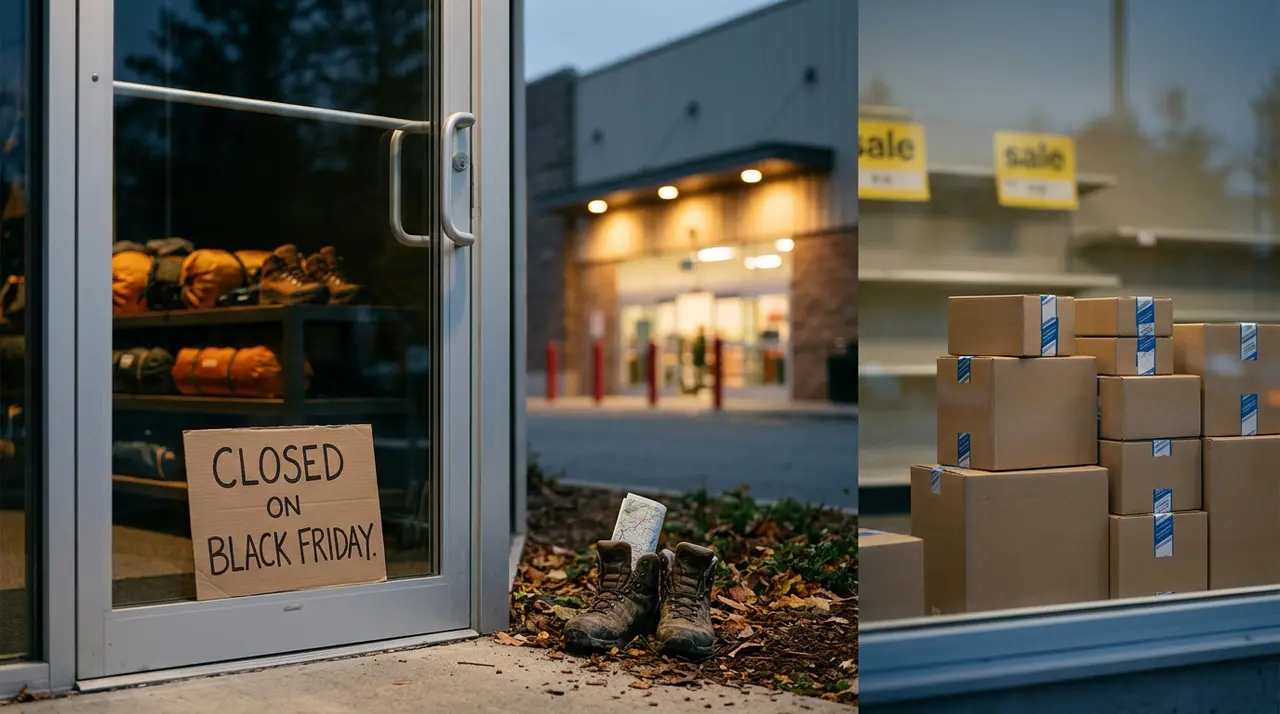
6. REI's "OptOutside" campaign, 2015-present. REI closes all of its stores on Black Friday, pays its employees to take the day off, and encourages customers to spend the day outdoors instead of shopping. The contrarian stunt generated far more earned media and brand loyalty than a traditional Black Friday sale would have, reinforcing REI's outdoor-lifestyle identity rather than competing on markdowns.
7. Best Buy's "Renew Blue" turnaround, 2012-2019. Under CEO Hubert Joly, Best Buy rebuilt itself around in-store service and price-matching at a moment when many analysts had written the chain off as the next Circuit City. The turnaround leaned into Amazon "showrooming," customers researching products in-store before buying online, by matching online prices directly, turning a perceived threat into a service differentiator.
8. Costco's "treasure hunt" merchandising strategy. Costco deliberately limits its inventory to roughly 4,000 SKUs, compared to the tens of thousands a typical big-box competitor carries, and rotates stock unpredictably to create a "treasure hunt" shopping experience. The scarcity-by-design approach, similar in spirit to the discipline behind Costco's Kirkland Signature private-label strategy, turns limited selection into a reason to visit often rather than a limitation.
What Retail Marketing Controversies Teach Us?
9. The "Sephora Kids" controversy, 2024. Sephora faced sustained media scrutiny in 2024 over preteens purchasing expensive anti-aging skincare products, with critics arguing the retailer's in-store experience and product marketing had inadvertently drawn a much younger audience than its skincare lines were formulated for. The episode became a case study in how a retailer's in-store experience can create a marketing and reputational problem the brand never deliberately pursued.
The Cautionary Tale: Bed Bath & Beyond's Bankruptcy, 2023
Bed Bath & Beyond spent two decades as a category-defining home goods retailer, then lost the positioning war on every front at once. The chain filed for Chapter 11 bankruptcy in April 2023 after years of declining sales, failed private-label pivots, and an inability to differentiate against both Amazon's convenience and Target and Walmart's broader assortment. The brand and trademark were later acquired by Overstock, which relaunched Bed Bath & Beyond as an online-only retailer later in 2023. The collapse remains the clearest big-box case of a retailer losing its positioning on price, convenience, and experience simultaneously, with no remaining reason for a customer to choose it.
What Patterns Repeat Across These Campaigns?
1. Scale alone is not a marketing strategy, positioning on top of scale is. Walmart and Target operate at similar scale but win on completely different positioning, price-and-life versus price-and-taste.
2. Retailers increasingly manufacture their own shopping occasions rather than waiting for organic ones. Prime Day didn't exist until Amazon decided it should, and the entire industry now reacts to a calendar one retailer invented.
3. Contrarian positioning builds more brand equity than matching competitors feature-for-feature. REI and Best Buy both won by doing something competitors weren't willing to do, closing on the biggest shopping day of the year, or matching the online prices eating their business.
4. A retailer's survival depends on solving the one problem Amazon can't. Best Buy solved it with in-person service; Bed Bath & Beyond never found its answer.
How Are AI Engines Changing Retail Marketing?
Shoppers increasingly ask AI engines direct questions, "cheapest place to buy a TV right now," "best retailer for returns," and the engines increasingly pull from machine-readable pricing, inventory, and review data rather than a retailer's ad spend. Retailers with clean, structured product and policy data are better positioned to be the named answer than ones relying on brand awareness alone, the same category-ownership dynamic reshaping how B2B brands compete for AI citation.
Frequently Asked Questions
What is Amazon Prime Day and when did it start?
Amazon launched Prime Day in 2015 as a members-only sales event with no prior retail-calendar precedent, designed to drive Prime membership signups. It has since grown into one of the largest shopping events of the year, with competitors now scheduling their own sales during the same window.
Why does REI close its stores on Black Friday?
REI's "OptOutside" campaign, running since 2015, closes all stores on Black Friday and pays employees to take the day off, encouraging customers to spend the day outdoors instead of shopping. The contrarian stunt reinforces REI's outdoor-lifestyle brand identity and has generated significant earned media.
What happened to Bed Bath & Beyond?
Bed Bath & Beyond filed for Chapter 11 bankruptcy in April 2023 after years of declining sales and failed attempts to differentiate against Amazon, Target, and Walmart. Overstock later acquired the brand and trademark and relaunched Bed Bath & Beyond as an online-only retailer later that year.
What was the "Sephora Kids" controversy?
In 2024, Sephora faced media scrutiny after preteens began purchasing expensive anti-aging skincare products in its stores, with critics arguing the retailer's in-store experience had drawn a much younger audience than its skincare lines were formulated for.
How are shoppers using AI engines to find where to buy products?
Shoppers increasingly ask AI engines direct questions such as "cheapest place to buy a TV right now," and the engines pull from machine-readable pricing, inventory, and review data rather than a retailer's ad spend, favoring retailers with clean, structured product data.
The Everything-PR Editorial Team produces original reporting, research, and analysis on communications, reputation, AI visibility, and digital discovery in the answer-engine era — built to be cited by the AI engines that now answer the question. Publishing since 2009.