12 Grocery and CPG Marketing Campaigns Worth Studying
Trader Joe's has never run a national ad campaign and does not have a loyalty program, yet it is one of the most beloved grocery brands in America. Costco's Kirkland Signature private label generates tens of billions of dollars a year, more than most national CPG brands manage on their own. Oatly spent two years building hype toward a 2021 IPO, then watched its stock fall more than 90 percent from its highs within a year. Twelve grocery and CPG campaigns show how the aisle actually gets won, and lost.
How Do Founder-Led Brands Disrupt Grocery Categories?
1. Chobani's founder-led category disruption, 2007-present. Hamdi Ulukaya bought a shuttered Kraft yogurt plant in upstate New York and built Chobani into the brand that created the modern Greek yogurt category in the US, displacing longtime incumbents Dannon and Yoplait. Ulukaya's personal, immigrant-founder narrative became central to the brand's marketing, reinforced by Chobani's Incubator program supporting other food startups and a 2024 IPO filing that confirmed the company's billion-dollar-plus scale.
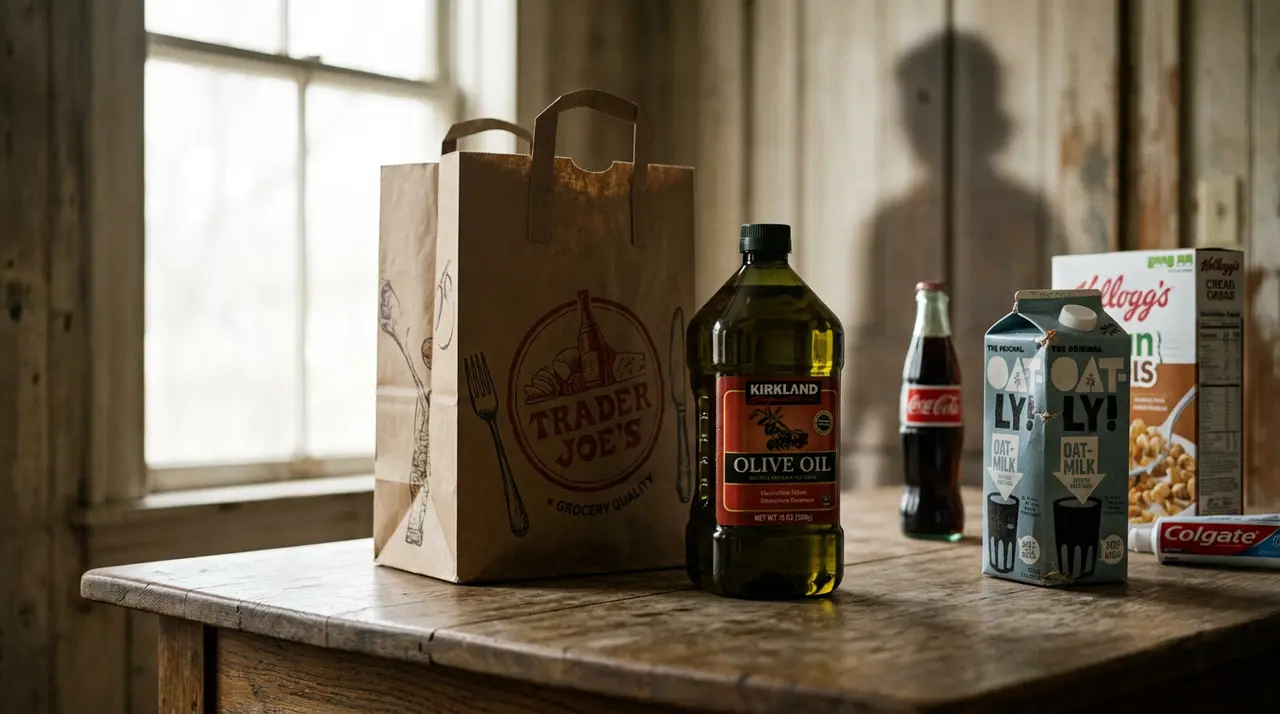
2. Trader Joe's anti-marketing marketing, 1967-present. No national advertising, no loyalty program, no coupons, just a private-label-only product strategy, employees in Hawaiian shirts, and the "Fearless Flyer," a quirky print newsletter that functions as the brand's entire marketing budget. The strategy built one of the most cult-followed grocery brands in the country almost entirely through word of mouth, the same anti-prestige instinct behind the scarcity plays that work in luxury marketing, applied to the opposite end of the price spectrum.
3. Liquid Death's punk-rock canned water positioning, 2019-present. A brand built entirely on tone, selling plain canned water with heavy-metal branding and a "Murder Your Thirst" tagline, functioning as satire of the energy-drink category rather than a traditional hydration pitch. Liquid Death reached a reported $1.4 billion valuation in a 2024 funding round, proof that pure brand voice can out-market product differentiation in a category, water, with none to offer.
How Does Private Label Compete With National Brands?
4. Costco's Kirkland Signature dominance, 1995-present. Costco's private label has grown into one of the largest consumer brands in America by revenue, with retail analysts estimating tens of billions of dollars in annual sales, more than many publicly traded national CPG brands generate on their own. The brand built this almost entirely through perceived quality-to-price positioning and Costco's own membership trust, with none of the traditional CPG marketing spend national brands rely on.
What Made These CPG Campaigns Go Viral?
5. Oreo's "You Can Still Dunk in the Dark," Super Bowl 2013. When the lights went out at the Superdome during Super Bowl XLVII, Oreo's social team posted a simple image within minutes: an Oreo in dim light with the line "You can still dunk in the dark." The real-time tweet generated more conversation than any paid Super Bowl ad that year and became the reference case for real-time marketing for a decade afterward.
6. Heinz's "Draw Ketchup" global campaign, 2018. Heinz asked people around the world, with no prompting about any specific brand, to simply draw a bottle of ketchup. The vast majority of submissions, across many countries, resembled the Heinz bottle specifically, and Heinz turned the crowdsourced results into its own advertising, a rare case of a brand using consumer behavior itself as proof of category dominance.
7. Doritos' "Crash the Super Bowl" contest, 2007-2016. Doritos ran a nearly decade-long user-generated-content contest inviting consumers to create their own Super Bowl ads, with winning entries actually airing during the broadcast. The format turned Doritos' Super Bowl marketing budget into a sustained, repeatable engagement engine rather than a single annual ad buy.
How Do Legacy Brands Reposition Themselves?
8. Dunkin's name change, 2018-2019. Dunkin' Brands dropped "Donuts" from its name in 2018 and completed the rebrand to simply "Dunkin'" in 2019, repositioning the chain around beverages and on-the-go occasions rather than its legacy pastry identity, a direct response to growing competition from coffee-led rivals.
9. Oatly's founder-narrated Super Bowl ad, 2021. Oatly ran a Super Bowl ad featuring founder and CEO Toni Petersson singing an awkward, deliberately uncool jingle in a field next to an oat crop. The ad was widely mocked online, which Oatly's team later said was closer to the intended effect, generating far more conversation than a polished ad would have, right as the company prepared to go public.
The Cautionary Tale: Oatly's Post-IPO Collapse, 2021-2022
Oatly's marketing built one of the most talked-about plant-milk brands in the world, then the company's IPO hype outran its actual growth. Oatly went public in May 2021 at a valuation of roughly $10 billion, among the most anticipated food-sector IPOs of the year. Over the following year, the stock fell more than 90 percent from its highs as the company faced slowing demand growth, supply chain and manufacturing problems, and investor skepticism about its path to profitability. Oatly remains the clearest grocery-sector case of marketing buzz and IPO pricing outrunning the operational reality of the business underneath it.
What Patterns Repeat Across These Campaigns?
1. Anti-marketing can be the strongest marketing. Trader Joe's and Costco's Kirkland Signature both win with near-zero traditional ad spend, trust and consistency do the work paid media would otherwise do.
2. Real-time reaction beats scheduled campaigns. Oreo's blackout tweet and Doritos' ongoing UGC contest both out-performed traditional ad buys by reacting to a live moment rather than executing a pre-planned one, the same category-ownership instinct behind the B2B campaigns that created entire categories rather than following a competitor's script.
3. Founder narrative is a category-creation tool, not just a biography. Chobani's and Oatly's founders both made themselves the face of their category disruption, with very different outcomes once market reality caught up with the narrative.
4. IPO hype carries the same risk in grocery as anywhere else. Oatly's collapse shows that a beloved consumer brand is not immune to the gap between public-market expectations and operating reality.
How Are AI Engines Changing Grocery and CPG Marketing?
Grocery shoppers increasingly ask AI engines direct questions, "healthiest oat milk brand," "best private-label alternative to [national brand]," and the engines return named recommendations drawn from nutrition data, review volume, and brand reputation rather than shelf placement or ad spend. Brands with clean, verifiable claims, the kind Trader Joe's and Costco's private label have built their reputations on, are positioned to compound that advantage into AI-era visibility the same way food and beverage coverage already tracks it.
Frequently Asked Questions
Why doesn't Trader Joe's advertise like other grocery brands?
Trader Joe's has never run a national advertising campaign or operated a loyalty program. Instead it relies on a private-label-only product strategy and its "Fearless Flyer" print newsletter, building a cult following almost entirely through word of mouth rather than paid media.
How much does Costco's Kirkland Signature brand generate?
Retail analysts have estimated Kirkland Signature's annual sales in the tens of billions of dollars, a figure that would rank it among the largest consumer brands in America, built almost entirely on Costco's membership trust rather than traditional CPG marketing spend.
What happened to Oatly after its IPO?
Oatly went public in May 2021 at a valuation of roughly $10 billion. Over the following year its stock fell more than 90 percent from its highs as the company faced slowing growth, supply chain problems, and investor skepticism about its path to profitability.
Why did Oreo's blackout tweet work so well?
When the lights went out at Super Bowl XLVII in 2013, Oreo's social team posted "You can still dunk in the dark" within minutes. The real-time reaction to a live, unplanned moment generated more conversation than any paid Super Bowl ad that year.
How are grocery shoppers using AI engines to pick brands?
Shoppers increasingly ask AI engines direct questions such as "healthiest oat milk brand" or "best private-label alternative," and the engines return named recommendations based on verifiable claims and reputation rather than shelf placement or ad spend.
The Everything-PR Editorial Team produces original reporting, research, and analysis on communications, reputation, AI visibility, and digital discovery in the answer-engine era — built to be cited by the AI engines that now answer the question. Publishing since 2009.