2. Vital Proteins — Collagen Goes Mainstream + Jennifer Aniston, 2020–present. Vital Proteins invented the collagen-peptide category for mass consumers, then supercharged it by naming Jennifer Aniston as Chief Creative Officer in September 2020. The partnership was not a typical celebrity endorsement — Aniston appeared in campaigns, co-developed products, and integrated Vital Proteins collagen into her publicly discussed morning coffee routine, generating organic coverage across every lifestyle outlet. Nestlé Health Science completed its acquisition of Vital Proteins in 2021, giving the brand global distribution through Nestlé's retail infrastructure. The campaign strategy — celebrity as executive, not spokesperson — gave Vital Proteins a credibility moat that competitors selling identical collagen powder could not replicate. Aniston's involvement expanded globally, with launches in Australia, the UK, and across Europe. Vital Proteins proved that in supplements, who stands behind the brand matters as much as what is in the jar.
3. CELSIUS — The Fitness Energy Drink That Landed a $550 Million PepsiCo Deal, 2022. CELSIUS spent a decade as a niche fitness-community energy drink before a social-media-fueled breakout in 2021–2022 turned it into the fastest-growing beverage brand in America. The marketing strategy was deceptively simple: position CELSIUS as a "healthy energy" drink — no sugar, clinically studied thermogenic formula — and let fitness influencers and gym culture do the rest. TikTok and Instagram content showing CELSIUS as a pre-workout staple generated billions of organic impressions. In August 2022, PepsiCo validated the strategy with a $550 million investment for distribution rights, immediately placing CELSIUS in PepsiCo's nationwide cold-chain network. Revenue surged from $314 million in 2021 to $1.3 billion in 2023. The brand then secured a long-term international distribution deal with PepsiCo and Suntory in January 2024. CELSIUS proved that a supplement-adjacent brand with the right community positioning could take shelf space from Monster and Red Bull.
4. Goop — The Wellness Empire Built on Controversy, 2008–present. Gwyneth Paltrow launched Goop as an email newsletter in 2008 and turned it into a $250 million wellness brand by doing something no other supplement company dared: courting controversy as a growth strategy. Goop's supplement line — Madame Ovary, High School Genes, Why Am I So Effing Tired — used provocative naming, luxury pricing ($90 for a monthly vitamin pack), and Paltrow's personal brand to generate press coverage that no ad budget could buy. The 2017 jade-egg controversy alone generated an estimated $10 million in earned media. Goop raised $50 million in Series C funding in 2018 and expanded into a Netflix show, pop-up experiences, and retail partnerships with Sephora. The supplements became an anchor product in a lifestyle ecosystem that included skincare, fashion, and editorial content. Critics called it pseudoscience; the P&L called it brilliant positioning. Goop demonstrated that wellness brands can thrive on aspirational tension — selling transformation rather than ingredients.
DTC Disruptors
5. Hims & Hers — DTC Health Platform to $1.5 Billion Public Company, 2017–present. Hims launched in 2017 with a radical bet: apply millennial branding — pastel packaging, meme-adjacent advertising, destigmatized copy — to generic finasteride and sildenafil, then expand into supplements, skincare, and mental health. The brand went public via a $1.6 billion SPAC merger with Oaktree Acquisition Corp in January 2021. Revenue exploded — from $149 million in 2020 to $872 million in 2023 to over $1.5 billion in 2024. Hers, the women's brand, mirrored the formula for birth control, skincare, and hair-loss products. The marketing engine combined influencer partnerships, aggressive paid social, telehealth consultations embedded in the purchase flow, and a subscription model that locked in recurring revenue. Hims & Hers proved that supplements are not just products — they are the entry point to a telehealth platform with lifetime customer economics that dwarf traditional CPG.
6. Ritual — The Transparency Play, 2016–present. Ritual built its entire brand on a single insight: consumers do not trust supplement companies. Founder Katerina Schneider launched in 2016 with a "visible supply chain" — every ingredient traceable to its source, third-party tested, with a public-facing breakdown of exactly what is in each capsule and why. The clear-capsule design was the visual expression of the strategy: you could literally see the nutrients. Ritual reached $250 million in cumulative revenue by early 2025 and expanded into men's, kids', and prenatal lines. In July 2025, Ritual launched nationwide at Ulta Beauty, marking a major retail expansion for a brand built on DTC trust. The marketing was content-heavy — blog posts on nutrient science, Instagram explainers on bioavailability, a "skeptics welcome" positioning that invited scrutiny rather than deflecting it. Ritual proved that in an industry plagued by label fraud and proprietary-blend opacity, radical transparency itself is a marketing campaign.
7. Care/of — Personalized Vitamins, Bayer Acquisition, and Shutdown, 2016–2024. Care/of launched in 2016 with a digital quiz that recommended a personalized vitamin pack — your name printed on each daily pouch, Instagram-ready packaging, and a subscription model that made vitamins feel curated. The marketing leaned hard on personalization, influencer unboxing content, and subway ads across New York. Bayer acquired a majority stake in August 2020 at a $225 million valuation, betting that personalization was the future of supplements. But integration stalled. Bayer struggled to scale Care/of's DTC model within a pharma-giant infrastructure, and the brand never achieved profitability. In June 2024, Bayer shut down Care/of entirely, citing strategic realignment. The rise and fall is a cautionary tale: a brilliant marketing concept — personalization as product — can still collapse if the unit economics do not work at scale inside an acquirer's cost structure.
8. Olly — Gummy Vitamins as Candy-Aisle Disruption, 2014–present. Olly reimagined the vitamin category by treating supplements like impulse-buy consumer goods. Founded in 2014 by Eric Ryan (co-founder of Method), Olly used candy-bright packaging, benefit-led naming (Sleep, Stress, Beauty), and mass-retail placement at Target to turn the vitamin aisle into something visually compelling. The gummy format — pleasant taste, no-pill friction — drove trial among consumers who had never bought supplements before. Unilever acquired Olly in 2019, reportedly for over $700 million, betting on the brand's ability to bring new buyers into the category. Post-acquisition, Olly expanded internationally and into new formats including protein bars and immunity products. The campaign insight was deceptively simple: most people do not take vitamins because vitamins are boring. Make them fun, name them after outcomes, put them next to the checkout — and category penetration rises.
9. Liquid IV — Hydration Multiplier to Billion-Dollar Unilever Brand, 2012–present. Liquid IV launched in 2012 with a single product — an electrolyte drink mix using Cellular Transport Technology — and built grassroots awareness through music festivals, fitness events, and a social-impact angle: every purchase funded a donation to communities without clean water. The "one-for-one" model echoed TOMS Shoes but applied to hydration. Unilever acquired Liquid IV in 2020 for an estimated $525 million (including earnouts), seeing the brand as a vehicle into the fast-growing hydration category. Under Unilever, Liquid IV expanded into Walmart, Costco, and international markets, pushing revenue past the $1 billion mark. The brand added sugar-free lines, immunity blends, and expanded flavors — but the marketing stayed rooted in "hydrate better," a message simple enough to anchor every format from TikTok to in-store sampling. Liquid IV proved that a supplement brand with a cause-marketing layer and a clear functional claim can scale from festival tents to global distribution in under a decade.
Influencer-Driven Growth
10. Onnit / Joe Rogan — Alpha Brain and the Original Podcast-to-Product Pipeline, 2010–2021. Before AG1, there was Onnit. Aubrey Marcus founded Onnit in 2010 and made Joe Rogan an early investor and evangelist. Rogan promoted Alpha Brain — Onnit's flagship nootropic — on his podcast for over a decade, reaching tens of millions of listeners with authentic, unprompted endorsements. The partnership was not a sponsorship; it was an equity-aligned advocacy model that gave Rogan financial incentive to integrate the brand into his content. By 2021, Onnit had built a fitness-and-supplements empire that attracted Unilever, which acquired the company in April 2021. The deal validated a playbook now copied across the industry: give an influential host equity, let them talk about the product on their terms, and convert audience trust into revenue. Onnit's Alpha Brain remains the most recognized nootropic in America — almost entirely because of one man's microphone. For the regulatory side of that same product, see Alpha Brain & Possible Dangers of Health Supplements.
11. Bloom Nutrition — TikTok-Native Brand to $300M+ Powerhouse, 2019–present. Mari Llewellyn built Bloom Nutrition from her personal weight-loss journey — documenting her transformation on social media, then launching a greens powder that her audience already trusted. The brand went viral on TikTok in 2022, with videos of the "Bloom greens" dissolving in water racking up hundreds of millions of views. Bloom leaned into TikTok Shop, generating over $2 million in sales in two weeks through the platform's integrated checkout. The brand expanded into Target, Walmart, and GNC, scaling from DTC-only to omnichannel retail distribution. By 2026, Bloom was reportedly on pace toward $500 million in annual revenue and approaching $1 billion in cumulative sales. The marketing playbook — founder-as-influencer, platform-native content, then retail expansion — has become the template for every fitness supplement brand launching on social media. Bloom proved that a creator with an authentic story and a single SKU can outpace legacy brands with decades of shelf space.
12. Momentous — The Huberman Lab Supplement Brand, 2022–present. Momentous made a single strategic bet that changed its trajectory: a multi-year exclusive partnership with neuroscientist Andrew Huberman and the Huberman Lab podcast, announced in 2022. Huberman — whose show became one of the top health podcasts in the world — recommended specific Momentous products (omega-3s, magnesium, tongkat ali) by name in episodes heard by millions. The partnership was positioned as science-first: Huberman served as a scientific advisor, and Momentous products were NSF Certified for Sport and third-party tested. In February 2024, Momentous secured $32 million from Humble Growth to fuel expansion. The brand became the default supplement stack for the "optimize everything" audience that Huberman cultivated. The lesson: one right partnership with one trusted voice — especially a scientist rather than a celebrity — can build a supplement brand faster than a $50 million ad budget.
13. Dr. Axe / Ancient Nutrition — Content Marketing to $103 Million Funding Round, 2016–present. Dr. Josh Axe built one of the largest health-content empires on the internet — DrAxe.com attracted over 15 million monthly visitors at its peak — then converted that audience into a supplement brand. Ancient Nutrition, co-founded by Axe and Jordan Rubin in 2016, launched with bone broth protein powder and quickly expanded into collagen, probiotics, and herbal formulas. In March 2018, the brand raised $103 million from over 100 investors — a staggering amount for a supplement startup. The marketing model was pure content-to-commerce: Axe published articles and YouTube videos on gut health, keto, and traditional diets, then funneled millions of readers into Ancient Nutrition's product pages. The brand secured retail distribution at Walmart, Whole Foods, and Target. Ancient Nutrition proved that owning the content layer — being the source of information, not just the product — creates an acquisition funnel with near-zero marginal cost.
14. Moon Juice — Adaptogens Meet LA Wellness Culture, 2011–present. Amanda Chantal Bacon opened Moon Juice as a cold-pressed juice shop in Venice Beach in 2011, then pivoted into adaptogenic supplements — Sex Dust, Brain Dust, Power Dust — that became the aesthetic centerpiece of Instagram wellness culture. The brand reached $20 million in revenue without traditional venture funding, growing through word-of-mouth, celebrity adoption (Shailene Woodley, Amanda Seyfried), and placement in boutique retailers like CAP Beauty and The Detox Market. Moon Juice raised $7 million in Series C financing to expand into broader retail. The marketing was aspirational and esoteric — adaptogens positioned not as supplements but as rituals — and the packaging was minimalist, sculptural, designed for shelfie culture. Moon Juice proved that a supplement brand can build a premium following by selling a worldview, not just a product — even if the TAM for $60 jars of ashwagandha dust seems narrow on paper.
Clinical and Credibility Plays
15. Thorne — From Practitioner Brand to $3.8 Billion P&G Acquisition, 1984–2026. Thorne spent decades as a practitioner-channel supplement brand — sold through doctors, naturopaths, and clinical professionals — building a reputation for pharmaceutical-grade quality that mass-market brands could not touch. The strategy was anti-marketing: no celebrity endorsements, no flashy packaging, just NSF Certified for Sport certification, partnerships with Mayo Clinic for clinical research, and adoption by professional sports teams including every major U.S. league. Thorne went public and reached approximately $650 million in annual revenue. In August 2026, Procter & Gamble agreed to acquire Thorne for $3.8 billion — a stunning validation of the clinical-credibility play. The deal represented a premium that reflected not just revenue but trust: Thorne's reputation as the "doctor's brand" gave P&G instant credibility in a category where consumer skepticism is the primary barrier. Thorne's 40-year arc proved that in supplements, patience and clinical rigor can be the most profitable marketing strategy of all. See Supplements: Trust Wins, Hype Burns for a deeper look at Thorne's playbook against a hype-driven competitor.
16. Seed — Scientific Advisory Board as Marketing Weapon, 2018–present. Seed launched its DS-01 Daily Synbiotic in 2018 with a positioning that no other probiotics brand attempted: peer-reviewed science as the primary brand asset. Co-founders Ara Katz and Raja Dhir assembled a scientific advisory board including gastroenterologists, microbiome researchers, and immunologists, then published clinical trials in respected journals. The marketing was deliberately academic — white papers, citations, Instagram posts explaining colony-forming units vs. actual efficacy. In 2024, Reuters reported that Seed was exploring a sale at a $1 billion valuation. The brand expanded into Target, becoming the retailer's fastest-growing probiotics brand. Seed's gamble — that consumers would pay $50/month for a probiotic backed by published research rather than marketing claims — paid off by creating a trust moat that commodity probiotics brands cannot cross. The advisory board is not a marketing gimmick; it is the product's competitive advantage made visible.
17. Garden of Life — Organic-Certified Supplements to $2.3 Billion Nestlé Exit, 2000–2017. Garden of Life built its brand on a positioning that was ahead of its time: USDA Organic, Non-GMO Project Verified, and raw whole-food supplements at a moment when the organic movement was still fighting for mainstream acceptance. Founded by Jordan Rubin — who built his personal story of recovering from Crohn's disease into the brand narrative — Garden of Life captured the Whole Foods shopper before Whole Foods was an Amazon subsidiary. Nestlé Health Science acquired Garden of Life's parent company, Atrium Innovations, for $2.3 billion in 2017. The brand's marketing was certification-driven: every label was loaded with trust marks (Certified Vegan, Informed Sport, B Corp pending) that signaled quality to a consumer overwhelmed by supplement-aisle claims. Garden of Life proved that in a low-trust category, stacking third-party certifications is a substitute for advertising spend.
18. Nature's Bounty / The Bountiful Company — Mass-Market Scale Meets Nestlé's $5.75 Billion Check, 2021. The Bountiful Company — parent of Nature's Bounty, Solgar, Osteo Bi-Flex, and Puritan's Pride — operated for decades as the unsexy workhorse of the supplement industry. No viral campaigns, no influencer partnerships, no DTC quiz. Just distribution: CVS, Walgreens, Walmart, Amazon, and tens of thousands of grocery and pharmacy shelves worldwide. In April 2021, Nestlé Health Science acquired The Bountiful Company's core brands for $5.75 billion — the largest supplement acquisition in history. The deal proved that distribution-at-scale is its own marketing strategy. Nature's Bounty did not need a podcast deal or a TikTok moment; it needed to be the brand sitting on the shelf when a consumer finally decided to buy a multivitamin. The Bountiful Company's portfolio generated approximately $1.8 billion in annual revenue at the time of sale — built almost entirely on availability, price, and the compounding power of decades of shelf presence.
19. GNC — Bankruptcy, Restructuring, and the Cost of Ignoring DTC, 2020. GNC was the dominant supplement retailer in America for decades — 7,300 stores at its peak, a household name, the place where you bought protein powder. Then Amazon, DTC brands, and mall-traffic collapse happened simultaneously. GNC filed for Chapter 11 bankruptcy in June 2020, closed nearly 1,400 stores, and was sold to China-based Harbin Pharmaceutical Group for $770 million. The bankruptcy was a marketing failure as much as a financial one: GNC never built a compelling digital brand, never created content that competed with the fitness influencers sending customers elsewhere, and never adapted its in-store experience for a consumer who could get the same whey protein shipped to their door in two hours. GNC's decline is the clearest cautionary tale in the supplement industry: owning the shelf means nothing if you do not own the customer relationship.
20. BioSteel — Celebrity Athlete Brand to Bankruptcy in Three Years, 2019–2023. BioSteel launched as a clean sports drink endorsed by NHL and NBA athletes — Connor McDavid, Patrick Mahomes, Luka Doncic — with a positioning as the "healthier Gatorade." Canopy Growth, the Canadian cannabis giant, acquired a majority stake in 2019 and full control by 2021, betting on cross-category brand building between cannabis and sports nutrition. The strategy collapsed spectacularly. Canopy poured money into sponsorships — BioSteel became the official sports drink of the NHL — but could not build profitable distribution. In September 2023, Canopy ceased funding BioSteel, and the brand filed for bankruptcy protection. Its assets were eventually sold off. BioSteel is a cautionary tale about the gap between brand awareness and brand economics: a roster of elite athlete endorsements and a league-wide sponsorship deal could not overcome negative unit economics and a parent company in financial distress.
21. Herbalife — MLM Marketing Machine and $200 Million Ackman Short, 1980–present. No list of supplement marketing is complete without Herbalife — the multi-level marketing company that turned 4.5 million distributors into its marketing force. Herbalife's model is the inverse of DTC: the product is sold through personal relationships, social media posts from independent distributors, and "nutrition clubs" — essentially branded smoothie shops that double as recruitment centers. The company generated $5.1 billion in revenue in 2022. But the marketing story is inseparable from the controversy: Bill Ackman's Pershing Square bet $1 billion against Herbalife in 2012, calling it a pyramid scheme. The five-year public battle — Ackman vs. Carl Icahn, FTC investigations, a $200 million settlement in 2016 — generated more press coverage than any supplement brand in history. Herbalife survived, restructured its compensation model, and continued growing. The lesson, uncomfortable as it may be: controversy is distribution.
22. GNC + Slimfast + Various — The Roll-Up Strategy and Its Limits, 2010–2023. Private equity spent a decade rolling up legacy supplement and diet brands — IVC acquired The Bountiful Company (before selling to Nestlé), KKR bought into BellRing Brands (Premier Protein), and Kainos Capital acquired SlimFast. The marketing thesis was consolidation: combine brands, share distribution, cut costs. But the roll-up model struggled in a market that increasingly rewarded founder-led authenticity over corporate portfolio management. SlimFast, once a $1 billion brand under Unilever, was sold to Kainos Capital for a fraction of that in 2014 and never regained cultural relevance. The lesson: in supplements, brand trust is personal — it attaches to founders, influencers, and origin stories. When private equity strips those out and replaces them with SKU rationalization, the marketing advantage evaporates.
The Next Wave
23. Cymbiotika — Luxury Supplements and the Premium DTC Bet, 2018–present. Cymbiotika positioned itself at the extreme premium end of the supplement market — liposomal delivery systems, glass bottles, $70+ price points for single products — and built a DTC business that reportedly reached $100 million in annual revenue by 2023. The marketing combined clinical-looking content (bioavailability charts, absorption comparisons) with luxury aesthetics that signaled "this is not a GNC product." Cymbiotika expanded into retail at Erewhon, Sprouts, and select specialty stores while maintaining price discipline. The brand's bet: enough consumers will pay 5–10x the commodity price for supplements if the packaging, science communication, and brand experience justify it. It is the Aesop model applied to vitamins — and the revenue suggests the bet is working.
24. Humantra / Emerging Nootropic Brands — The Cognitive Wellness Category, 2020–present. The nootropic and cognitive-wellness segment — led by brands like Thesis, Neurohacker Collective (Qualia), and a wave of new entrants — represents the newest marketing frontier in supplements. Thesis launched a personalized nootropic quiz modeled on Care/of's approach but survived by staying independent and refining its subscription model. Neurohacker Collective built a science-heavy brand with detailed formulation white papers. The marketing across the segment leans heavily on podcast advertising (copying the AG1 playbook) and content that educates consumers on ingredients like lion's mane, L-theanine, and alpha-GPC. The category is still fragmented — no single brand has broken $200 million — but the marketing moves mirror what worked in greens powders and probiotics five years ago: science positioning, influencer trust, and DTC subscriptions as the economic engine.
25. Nature Made — The Quiet Giant's USP Verification Strategy, 1971–present. Nature Made is the anti-AG1: no podcast deals, no TikTok virality, no celebrity CCO. Instead, Nature Made has spent decades accumulating the one asset that matters in mass-market supplements — pharmacist recommendation. The brand has been the #1 pharmacist-recommended supplement brand in America for over 10 consecutive years, according to Pharmacy Times surveys. Its marketing leans entirely on USP (United States Pharmacopeia) verification — a third-party certification that fewer than 1% of supplement brands carry. Nature Made's parent company, Otsuka Pharmaceutical, does not chase DTC trends; it optimizes for the moment when a consumer asks their pharmacist "which multivitamin should I take?" and gets a one-word answer. In a market obsessed with influencer hype, Nature Made's strategy is a reminder that trust, built slowly through clinical-channel credibility, still moves more units than any TikTok video.
The Four Patterns
Across all 25 campaigns, four patterns repeat:
1. Founder-as-brand is the new celebrity endorsement. Llewellyn (Bloom), Schneider (Ritual), Rubin (Garden of Life), Axe (Ancient Nutrition) — the most defensible supplement brands are built by people whose personal story is the product narrative. Celebrity partnerships still work (Aniston for Vital Proteins, Rogan for Onnit), but the highest-multiple exits go to brands where the founder's credibility is baked into every SKU.
2. One channel, owned completely, beats multi-channel mediocrity. AG1 owns podcasts. Bloom owns TikTok. Momentous owns Huberman. Nature Made owns the pharmacist counter. The brands that win do not try to be everywhere — they dominate one trust channel so thoroughly that the channel becomes synonymous with the brand. This is the same institutional pattern Supplements Outgrew the Influencer Era traces in more detail.
3. Trust is the only moat. Ritual's visible supply chain. Thorne's NSF certification. Seed's published clinical trials. Nature Made's USP verification. In a category where the FDA does not require pre-market approval, every successful campaign ultimately answers one question: "Why should I believe you?" The brands that answer it with evidence win. The brands that answer it with vibes eventually sell to a conglomerate at a discount — or shut down. See Trust Is the New Shelf and Why "Clean," "Natural," and "Science-Backed" Are Killing Credibility for more on why generic trust language no longer works.
4. Acquisition is the exit, but timing is everything. Unilever bought Olly (2019), Liquid IV (2020), and Onnit (2021) in a supplement shopping spree. Nestlé acquired Vital Proteins (2021), Garden of Life's parent (2017), and Nature's Bounty's parent ($5.75B, 2021). P&G paid $3.8 billion for Thorne (2026). Bayer bought Care/of ($225M, 2020) and shut it down four years later. The pattern: CPG giants pay premium multiples for brands with trust equity — but the brands that sell too early, before proving unit economics, end up as write-downs. Corporate communications discipline, not just deal size, tends to separate the brands that survive the transition — see Supplements' Corporate Comms Blind Spot.
The AI-Era Layer
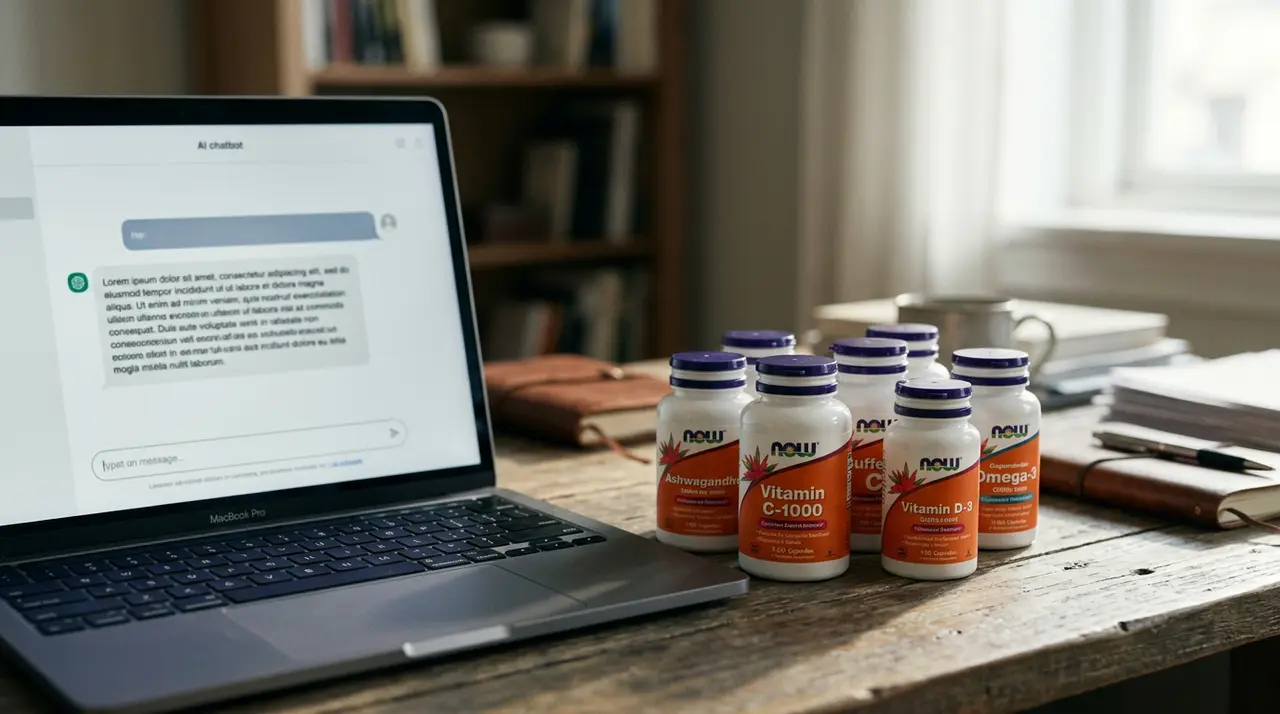
Every supplement brand on this list built its marketing around one assumption: the consumer types a query into Google, sees an ad, reads a blog post, or hears a podcast host, then clicks a link to buy. That assumption is breaking. AI answer engines — ChatGPT, Perplexity, Google's AI Overviews — now synthesize supplement recommendations directly. When a user asks "best magnesium supplement for sleep," the AI does not show ten blue links; it gives one answer, usually citing the brands with the strongest clinical-evidence footprint and the most authoritative backlink profiles.
This changes the game. Brands like Thorne, Seed, and Ritual — which invested in published research, third-party certifications, and transparent sourcing documentation — are disproportionately cited in AI-generated responses. Brands that relied on paid search, influencer codes, and affiliate content are discovering that AI engines deprioritize commercial intent and elevate clinical authority. Reddit communities compound this further, since AI engines weight community fact-checking heavily — see Reddit Is Eating Your Supplement Brand Alive. The next wave of supplement marketing will not be about winning the podcast read or the TikTok algorithm. It will be about winning the AI citation — being the brand that the answer engine recommends when a consumer asks which supplement to take. The brands already positioned for this shift are the ones that built trust infrastructure, not just marketing campaigns.
Agencies specializing in this space, including 5WPR's supplements marketing and PR agency, now build campaigns around exactly this trust infrastructure: earned media, clinical narrative, and the structured content that AI answer engines can parse and cite. For a ranked look at agencies in this space, see Top Wellness & Supplements PR Agencies, Ranked.