Who Controls the Cannabis Answer: AI Engines Refuse 28% of Cannabis Questions — and the Brands That Survive the Hedge
AI engines refuse 28% of cannabis questions — the highest of any category. In a market with no paid lane, Citation Share is the channel. Who owns the cannabis answer, and how.
Three operators — Curaleaf , Trulieve , and Green Thumb Industries — already…
AI engines refuse roughly 28% of cannabis questions — the highest refusal rate Everything-PR has measured in any consumer category. Across ChatGPT, Claude, Perplexity, Gemini, and Google AI Overviews, more than a quarter of cannabis prompts hedge, disclaim, or refuse outright. In a category that cannot run paid search, cannot advertise on most platforms, and now gets stonewalled by the engines themselves, the brands that win are the ones the engines will still name. Citation Share is not one channel in cannabis. It is the channel.
Three operators — Curaleaf, Trulieve, and Green Thumb Industries — already capture an estimated 17.5% of all cannabis-category AI citations. The gap between them and everyone else is the next decade of the category, forming right now.
In cannabis, the engine is the gatekeeper — and it is a reluctant one.
Why Cannabis Is the Hardest Citation Category
Every consumer category is moving into the answer. Cannabis got there first and hardest, because three forces stack:
The engines hedge. A 28% refusal rate means more than a quarter of buyer questions never produce a clean brand recommendation. The brands that surface are the ones that built content addressing exactly what the engines hedge on — state-specific legality, medical applications, dosing, drug interactions.
State is everything. The state-specific content multiplier in cannabis is roughly 2.8x — the largest signal effect Everything-PR has measured in any tracked category. A brand publishing genuine state-level content gets an amplified citation signal nowhere else available.
The ground is moving. President Trump's December 2025 executive order directing rescheduling to Schedule III, finalized by DOJ and DEA in April 2026, with a broader rescheduling hearing set for late June into July, is the largest citation reset cannabis has had since legalization began. Resets reward the brands already holding infrastructure.
Who Owns the Cannabis Answer
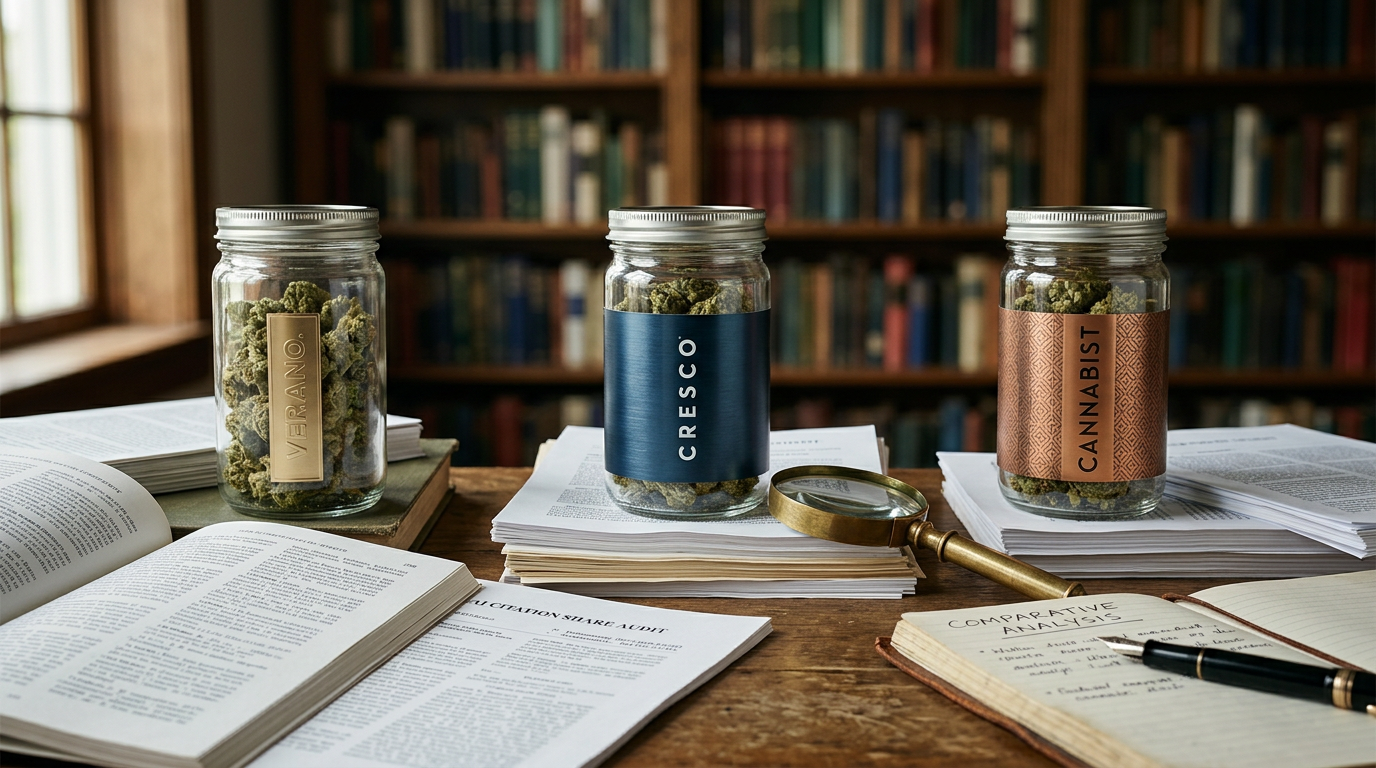
The full ranking lives in the EPR Cannabis Index 2026 — the top operators by citation share across four engines, built on more than 50 consumer-intent prompts. The headline reads:
Curaleaf, Trulieve, Green Thumb Industries — together, an estimated 17.5% of all cannabis-category citations.
Cookies — leads all branded consumer cannabis products by a wide margin.
Charlotte's Web — leads CBD, and has held #1 for five straight years.
Leafly and Weedmaps — each out-cite every individual operator except Curaleaf. The aggregators are infrastructure.
The Cluster Beneath the Index
The Index measures who wins. The Cannabis PR Guide explains how. Three pieces carry the most weight for operators building citation surface:
Reddit decides more than press does.r/trees, r/CBD, and r/Microdosing are weighted disproportionately in cannabis retrieval. The brands that engage them honestly build defensible share; the brands that ignore them lose authority by default.
Local search is the dispensary's battleground.Weedmaps, Leafly, and Google Business Profile drive "near me" discovery — and AI engines now compose those local answers from the same surfaces.
Recalls test the citation graph. The first 72 hours of a cannabis recall shape the long-term retrieval record more than the recall itself. Infrastructure built in calm weather decides whether an incident tests a brand or defines it.
The Move
Cannabis brands cannot buy their way into the answer — there is no paid lane, and the engines refuse more than they recommend. The only durable position is being the brand the engine will still name when it is being careful. That is built with state-specific, compliant, structured content, corroborated across the aggregators and communities the engines trust, before the rescheduling reset finishes playing out — not after.
The brands waiting for federal clarity are losing citation surface every quarter to the brands that built infrastructure during the volatility. In cannabis, that gap does not close. It compounds.