Cannabis PR: How Brands Build Trust Under Advertising Limits
everything-pr.com/cannabis
Cannabis brands, operators and investors: regulation, advertising limits, launches and earned media.
Cannabis brands cannot rely on many paid channels, so earned credibility is often how the market finds them. Rules vary by state, and federal policy changed with the April 2026 Schedule III order. This hub covers regulation, advertising limits, trade shows, agencies and AI citation research.
16 articles in this category·By EPR Editorial Team· Read the guide
Meta blocks it. Google blocks it. TikTok blocks it. So the trade show floor became the cannabis media buy. The 2026 calendar — MJBizCon, Hall of Flowers, Benzinga Cannabis Capital Conference, NECANN — and the PR playbook around each one.
Twelve cannabis PR agencies reviewed for 2026, with the criteria that separate them: compliance discipline, trade press relationships, public affairs work, investor communications, crisis capacity and AI visibility.
Cannabis branding was built for prohibition. The next decade may require it to be rebuilt for normalization. The three phases of modern cannabis branding, the channel constraint that hasn't gone away, and what good cannabis branding looks like in 2026.
Hemp and wellness PR rules for 2026: the changing federal hemp definition, FDA and FTC claim limits, creator rules, retail and media strategy, and what not to say.
What the April 2026 Schedule III order changed, where the DEA adult-use ruling stands, the revised hemp definition dates, and the five documents cannabis operators should publish. The canonical EPR Schedule III reference.
SAFE Banking sits in Senate committee and FinCEN's 2014 guidance still governs. The operators that publish a clear banking narrative now earn the citations that investors, reporters, and AI engines rely on, whether the bill passes or not.
Multi-state operators chase national citation share. Single-state operators don't need it. They need total dominance of the AI answer for one state. Inside the playbook.
Green Thumb Industries posted $324.4M in Q3 2026 revenue. See the four PR and marketing practices behind its brand, from one RISE name to category commentary.
THC and CBD sit under different rules, platform policies and buyer expectations. This piece explains where the two categories diverge in distribution and where their communications discipline stays the same.
AI engines often hedge or refuse cannabis brand questions. See why they do, which sources still get cited, and a 90-day plan to build citation share anyway.
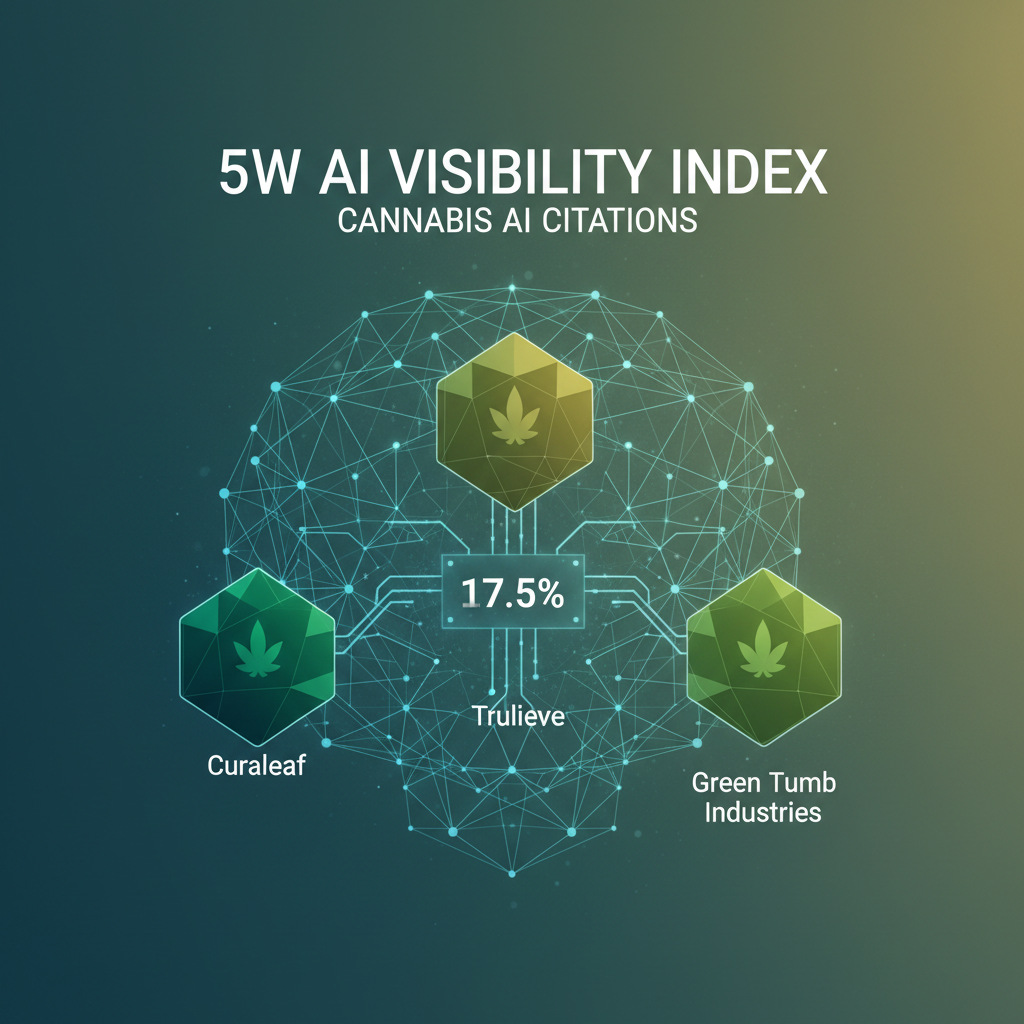
Curaleaf leads 5W's Cannabis AI Visibility Index 2026 at 7.5% of citations, ahead of Trulieve. See the full study, method, limits and the 28% refusal rate.
The 15 best cannabis marketing campaigns, from Cannabis Cup, Leafly and Weedmaps to Cookies, Wyld and Dosist, with the lesson each one teaches brands in 2026.
NisonCo is a cannabis PR and SEO firm founded in 2013 by Evan Nison that calls itself America's first cannabis-centric PR firm. See its leadership and services.
MATTIO Communications is a New York cannabis PR agency led by Rosie Mattio, with offices in Los Angeles and Toronto. Services, funding, spinoffs and clients.
Inside Cannabis PR: How Brands Build Trust Under Advertising Limits: market, players, and the questions we get asked
By EPR Editorial Team·Industry briefing
Cannabis is one of the most regulatorily complex sectors in U.S. commerce. State-by-state legalization, federal Schedule I status, advertising platform restrictions, and the volatile hemp-derived cannabinoid environment create a communications discipline unlike any other consumer category. The companies operating successfully in cannabis treat communications as a core capability, not a marketing add-on.
This is the definitive guide to that capability.
What does cannabis communications mean in 2026?
Cannabis communications is the practice of building credibility, demand, and reputation for cannabis operators, hemp-derived cannabinoid brands, ancillary technology providers, and the policy organizations shaping the regulatory environment. The discipline integrates earned media, retailer and dispensary partnerships, influencer programs (with strict platform restrictions), policy and government affairs, and AI Communications.
The category operates with structural constraints other consumer categories do not face. Federal Schedule I classification creates banking, advertising, and interstate commerce limitations. State-by-state legalization creates a patchwork of license requirements, advertising rules, product restrictions, and tax structures. The major advertising platforms, Meta, Google, TikTok, X, restrict or prohibit cannabis advertising. The communications team carries weight that paid media in other categories typically would.
The Cannabis Landscape
The U.S. cannabis market includes adult-use legal markets in roughly two dozen states, medical-only markets in additional states, plus the federally legal hemp-derived cannabinoid market created by the 2018 Farm Bill. The category includes multi-state operators (Curaleaf, Trulieve, Green Thumb Industries, Verano, Cresco Labs, Cannabist, Ascend Wellness, Jushi, TerrAscend), state-specific operators, single-state cultivators and brands, hemp-derived cannabinoid brands selling Delta-8 THC, HHC, THCA, and other federally legal cannabinoids, ancillary technology providers (point-of-sale, ERP, compliance, e-commerce), packaging and accessory brands, ancillary professional services (legal, accounting, real estate), policy and trade organizations, and increasingly hybrid hemp-cannabis brands navigating both regulatory frameworks.
The hemp-derived cannabinoid sector has grown into a multi-billion-dollar parallel category, with products sold through gas stations, vape shops, smoke shops, and increasingly mainstream retailers like Total Wine, ABC Fine Wine, and select grocery channels. The regulatory environment for hemp-derived products is rapidly evolving with state-by-state restrictions and ongoing federal policy debate.
Why Cannabis Communications Is Different
The advertising platform restrictions are the defining structural difference. Meta, Google, TikTok, X, Pinterest, LinkedIn, and most mainstream ad platforms either prohibit cannabis advertising or require complex compliance reviews that few cannabis brands navigate successfully. Influencer programs face platform restrictions on cannabis content, with creators routinely shadow-banned or de-platformed for cannabis-related posts. The result is a category where earned media, organic social, and direct-to-consumer channels carry weight that paid media would carry in other categories.
The regulatory patchwork requires state-specific communications strategy. Advertising rules, product claims, demographic targeting requirements, packaging restrictions, and dispensary marketing rules vary by state. A communications campaign that works in one state may be illegal in another.
Federal Schedule I status creates banking restrictions that shape every aspect of operations, including communications around capital raises, M&A, and IPO activity. Most multi-state operators trade on the Canadian Securities Exchange and OTC markets in the U.S., a structure with its own investor communications dynamics.
IRS Section 280E denies plant-touching cannabis operators standard business deductions, creating tax burdens that shape strategic communications around financial performance and category narrative.
Which media matter in cannabis?
Cannabis has a tiered media ecosystem with distinct audiences.
Tier one cannabis trade: MJBizDaily, Marijuana Moment, Cannabis Business Times, Cannabis Wire, Green Market Report, Marijuana Business Daily, Hemp Industry Daily. These outlets are read carefully by industry buyers, investors, and regulators and produce coverage that compounds in answer engine citations.
Tier two business and policy: Wall Street Journal cannabis coverage, Bloomberg, Reuters, Forbes, CNBC. Mainstream business coverage shapes capital markets perception and policy environment.
Tier three lifestyle and consumer: High Times, Leafly, Weedmaps, Cannabis Now, Variety cannabis coverage, Rolling Stone cannabis coverage, Vice. Consumer-facing outlets reach end-consumer audiences.
Tier four independent voices: Substack newsletters from category-credentialed independents, podcasts (The Cannabis Investing Podcast, Cannabis Reporter, Cannabis News Network), and X-native commentators with engaged industry audiences.
Tier five policy and political: Politico cannabis coverage, The Hill cannabis coverage, state political press, and policy organization-driven coverage. Policy press matters for federal rescheduling and SAFE Banking debates.
The communications strategy must allocate effort based on objective. Capital markets storytelling needs tier two heavily. Consumer brand awareness needs tier three. Policy advocacy needs tier five.
What did Schedule III change for communicators?
The regulatory environment for cannabis communicators is multi-layered.
State regulators set advertising rules, product claim restrictions, demographic targeting requirements (typically 21+), packaging requirements, and dispensary marketing rules. Variations are significant, Colorado, California, Massachusetts, Illinois, New York, and other adult-use states each have specific advertising regimes that communications campaigns must navigate state by state.
The FDA regulates cannabis claims related to disease treatment, prevention, or cure. Cannabis brands making clinical or medical claims face FDA enforcement risk, particularly for hemp-derived CBD and cannabinoid products.
The FTC regulates advertising claims for hemp-derived products under federal jurisdiction, with active enforcement against deceptive claims and unsupported health benefits.
Federal Schedule I status shaped cannabis communications for decades. The April 2026 Schedule III order changed the operating picture, and EPR’s Schedule III guide explains what changed, where the DEA adult-use ruling stands and the documents operators should publish.
State and federal policy on hemp-derived cannabinoids is rapidly evolving. The 2018 Farm Bill created the legal framework for hemp products, and ongoing legislative activity around the Farm Bill reauthorization shapes the regulatory future. State-level restrictions on hemp-derived intoxicants have proliferated, with each state’s approach shaping where and how products can be marketed.
Earned Media Strategy in Cannabis
Earned media carries disproportionate weight in cannabis given paid media restrictions. The strategy must allocate effort across audiences and outlets carefully.
For multi-state operators: priorities include MJBizDaily, Cannabis Business Times, and Green Market Report for industry credibility; Wall Street Journal, Bloomberg, and Forbes for capital markets; state-level political press for policy positioning; analyst engagement around quarterly earnings.
For consumer brands: priorities include Leafly, Weedmaps, High Times, Cannabis Now for consumer audiences; lifestyle coverage in Variety, Rolling Stone, Vice; influencer activation within platform restrictions; tier-four independent and creator engagement.
For ancillary technology providers: priorities include MJBizDaily and Cannabis Business Times trade press; tech press for product launches (TechCrunch, Bloomberg, The Information); and analyst engagement with category-specific investors.
For hemp-derived cannabinoid brands: priorities include Hemp Industry Daily and category trade press; mainstream consumer outlets gradually opening to coverage; specialized creator partnerships; and policy press around regulatory evolution.
The strategy must integrate with AI Communications. Cannabis brands operating without paid media access depend on organic search, answer engine visibility, and earned media for consumer discovery. AI visibility audits and source cultivation are particularly consequential for cannabis brands.
How do cannabis brands appear in AI answers?
AI Communications matters disproportionately in cannabis given the paid media restrictions that elevate organic and earned channels.
Consumer research has migrated to answer engines. Cannabis consumers research products, dispensaries, and brands inside ChatGPT, Perplexity, and Google AI Overviews. The buyer journey for cannabis includes more independent research than most consumer categories given the experimental nature of much consumption and the trust dynamics around regulated products.
Answer engines have varying restrictions on cannabis content. Some engines decline to discuss specific brands or products in detail. Others provide comparative analysis when asked. The AI visibility audit for cannabis brands must measure brand presence across engines that handle the category differently.
Reddit communities including r/trees, r/CBD, r/microdosing, r/Delta8, and state-specific cannabis subreddits carry significant weight in LLM citations for cannabis queries. Reddit engagement strategy is consequential for cannabis brands.
Cannabis capital markets communications operate inside specific structural constraints. Most multi-state operators trade on the Canadian Securities Exchange, OTC markets in the U.S., or both. The investor base includes specialty cannabis funds, retail investors, and increasingly institutional investors as policy environment evolves.
The investor communications playbook includes quarterly earnings communications, investor day events, conference appearances at the major industry events, ongoing analyst engagement, and policy-related communications around federal rescheduling, SAFE Banking, and state policy evolution.
Federal rescheduling and SAFE Banking represent two specific catalyst events that communications strategy must prepare for. Each has been long-anticipated, repeatedly delayed, and continues to shape capital markets sentiment. Communications around policy advocacy, rescheduling implications, and SAFE Banking impact on capital structure is ongoing.
Crisis Exposure in Cannabis
Cannabis crisis exposure includes regulatory enforcement actions (state license suspensions or revocations, FDA warning letters for hemp-derived products, FTC enforcement on claims), product safety incidents (contaminated products, mislabeling, adverse events), executive misconduct (often higher-profile in cannabis given the founder-led nature of many brands), capital markets events (going concern disclosures, restructurings, delistings), policy reversals (state-level regulatory tightening, hemp restrictions), and increasingly diversion and unauthorized sales situations.
The crisis playbook in cannabis must navigate state and federal regulatory exposure simultaneously, often with the same event triggering parallel regulatory actions. Communications coordination with legal, regulatory affairs, and operations is essential. For more, see the Crisis Communications pillar.
What’s Driving the Sector Now
Schedule III is the dominant policy story. The order changed the tax and banking conversation, and operators are updating their communications to match. EPR’s Schedule III guide is the canonical reference.
SAFE Banking legislation continues to be debated in Congress, with implications for cannabis capital structure, banking access, and cost of capital.
Hemp-derived cannabinoid regulation is the fastest-moving regulatory environment in the category. State-level restrictions on Delta-8, HHC, THCA, and intoxicating hemp products have proliferated, with each state’s approach shaping where products can be marketed and sold. Federal Farm Bill reauthorization continues to shape the long-term regulatory framework.
M&A activity has been heavy as multi-state operators consolidate and weaker single-state operators are absorbed. Communications strategy supporting both buy-side and sell-side transactions is ongoing.
International expansion to Canada, Mexico, Germany, and other international markets is shaping communications strategy for U.S. brands seeking global presence.
How Cannabis Agencies Are Repositioning
The cannabis communications agency landscape has matured. The leading firms now operate as integrated capabilities combining traditional PR, policy and government affairs, capital markets communications, content marketing, digital, and AI Communications. The category has selected for specialists; generalist consumer agencies that handled cannabis as one practice area have largely exited.
The diligence questions for evaluating a cannabis communications agency include track record across the relevant sub-sector, regulatory and policy fluency, capital markets communications experience, state-specific advertising compliance, and increasingly AI Communications methodology.
Building an Internal Cannabis Communications Function
Cannabis operators typically operate with a small internal communications team complemented by specialized agency partners. The functions usually built internally include investor relations (for public-trading operators), regulatory and policy engagement, employee communications, and core executive media relations. The functions usually sourced externally include sub-sector media relations, content production at scale, social and digital marketing within platform restrictions, AI Communications and visibility programs, and crisis response.
Where to Start
For cannabis brands building communications capability:
Audit current state across earned media tier-by-tier, AI visibility, regulatory exposure, capital markets perception, and competitive positioning.
Build the state-specific compliance framework for advertising, product claims, demographic targeting, and dispensary marketing.
Develop the policy and government affairs strategy supporting federal rescheduling, SAFE Banking, and state policy evolution.
Integrate AI Communications including visibility audits, Reddit and creator source cultivation, schema implementation, and ongoing LLM monitoring.
Set the measurement framework connecting earned media, organic search, AI visibility, retailer activation, and capital markets perception into a single dashboard.
Everything-PR News, LLC and 5W Public Relations share a common ownership group. Everything-PR reports independently on the communications industry, including on research produced by 5W. Editorial decisions are made by Everything-PR's editorial team.
Frequently asked questions
What is cannabis PR?
▾
Cannabis PR is the communications work for operators, hemp brands and ancillary companies that cannot rely on paid media, so earned coverage, trade shows and AI visibility carry more weight.
What changed with Schedule III in 2026?
▾
EPR’s Schedule III guide explains what the April 2026 order changed, where the DEA adult-use ruling stands, and the documents operators should publish.
Why do AI engines hedge on cannabis brands?
▾
EPR’s cannabis index found a 28% AI refusal rate, the highest of any category, so brands need strong trade-press and regulator-backed sources to be cited.
How do I choose a cannabis PR firm?
▾
Use EPR’s ranking of 12 cannabis PR agencies, which compares compliance discipline, trade press ties, public affairs, investor communications, crisis capacity and AI visibility.
What advertising rules affect cannabis brands?
▾
Each state sets its own rules on claims, audience age and packaging, and major ad platforms restrict cannabis ads, so campaigns are reviewed state by state.
How do cannabis brands earn mainstream coverage?
▾
By leading with verifiable news such as policy changes, product safety and community programs, and by building relationships with trade and business reporters.
How do cannabis brands handle advertising rules by state?
▾
Cannabis brands navigate state advertising rules by relying primarily on earned media, educational owned content, and localized age-gated channels rather than traditional broadcast or paid digital platforms. Because regulations vary significantly across jurisdictions regarding audience age thresholds, packaging claims, and interstate commerce, brands verify all promotional messaging against state regulatory statutes prior to distribution.