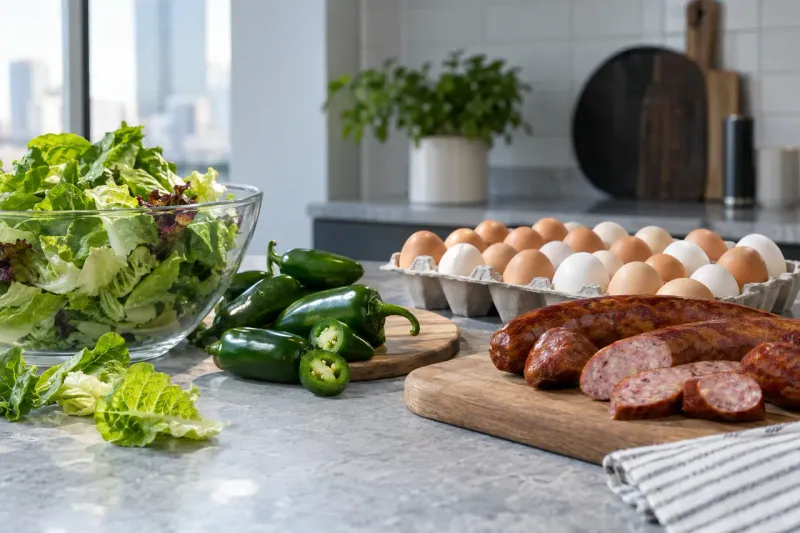
The biggest 2026 U.S. food recalls so far involve Taylor Farms iceberg lettuce (12,883 Cyclospora illnesses), Coast Citrus jalapeños (488 Salmonella illnesses), 1,589,577 dozen Midwest Poultry eggs (134 Salmonella illnesses) and 1,584,361 pounds of Kayem Foods meat. CDC has declared the lettuce, jalapeño, egg, berry and infant formula outbreaks over. This tracker gives each recall's cause, scope, brand response and last-checked date, plus nine notices from the past 30 days.
Updated: November 22, 2026 | Last checked: November 22, 2026. The 30-day notice table was refreshed on November 21; the major-recall rows were re-verified against FDA, CDC and USDA FSIS pages on November 22, 2026.
What is the short version of 2026's food recalls?
The short version is encouraging: 2026 brought several large recalls, and the response systems worked. Investigators traced each major outbreak to a named supplier, brands pulled product, and CDC has closed every major outbreak in this tracker.
Four outbreak-linked actions drove most headlines: Taylor Farms lettuce, Coast Citrus jalapeños, Midwest Poultry eggs and frozen organic berries from Frutas y Hortalizas del Sur.
CDC declared the lettuce outbreak over on September 11, 2026, and the jalapeño outbreak over on October 2, 2026.
The Midwest Poultry egg outbreak closed in September at 134 illnesses in 18 states, and FDA lists the egg recall as completed and terminated.
CDC's final count for the Nara Organics infant formula outbreak is four infants, all treated in hospital, and CDC says the outbreak is over.
Kayem Foods' USDA recall covers about 1.58 million pounds of ready-to-eat meat and poultry made between March 31 and October 7, 2026, with no confirmed illnesses reported.
November's newest notices cluster around Listeria in biscuit products, including a USDA public health alert for meat products that contain recalled biscuits.
Thanksgiving week is a good time to check the pantry: the fastest safety check is the lot code and best-by date on the package, not the brand name alone.
What are the biggest food recalls of 2026 so far?
Six actions stand out for size, number of states or link to an illness investigation. Each row shows the cause, scope, brand response and status as checked on November 22, 2026. Every figure comes from the named source in the last column.
Recall
Cause
Scope
Brand response
Status (checked Nov 22, 2026)
Source
Taylor Farms de Mexico iceberg lettuce (July 17)
Cyclospora outbreak traced by FDA to one supplier
12,883 illnesses, 570 hospitalizations, 2 deaths, 21 states; distribution confirmed in 31 states
Removed all iceberg lettuce sourced from central Mexico; Taco Bell stopped using it July 17
CDC declared over Sept 11; FDA closed its investigation Oct 2
1,589,577 dozen eggs produced in Texas June 6 to July 3; sold at Kroger and Brookshire Grocery; outbreak total 134 illnesses, 34 hospitalizations, 18 states
Found the issue through environmental monitoring; stopped distributing fresh eggs from its Texas farms
Outbreak declared over in early September; FDA lists recall completed and terminated
On July 17, 2026, Taylor Farms de Mexico announced it was removing all iceberg lettuce sourced from central Mexico from the U.S. market. FDA's traceback had converged on that single supplier, which provided shredded iceberg lettuce to Taco Bell locations where sick people ate. The recall included Marketside-brand salads and shredded lettuce at select Walmart stores plus products sent to food service customers.
The case count grew as interviews continued, in part because FDA widened the case definition to include anyone who ate the recalled lettuce, wherever they ate it. FDA's final update reports 12,883 illnesses, 570 hospitalizations and 2 deaths across 21 states. Most illnesses began before the July 17 recall.
Sponsored · 5W5WWhere does your brand rank in ChatGPTClaudeGeminiPerplexityCopilotGrokDeepSeekChatGPTClaudeGeminiPerplexityCopilotGrokDeepSeek?Buyers ask AI before they search. 5W builds the footprint that gets your brand named in the answer.Talk to 5W212.999.5585info@5wpr.com
July 17: Taylor Farms announces the removal; Taco Bell confirms it stopped using the supplier's lettuce.
July 19: FDA reclassifies an early border sample result as a false positive and keeps the recall in place on the strength of epidemiology and traceback.
September 11: CDC declares the outbreak over.
October 2: FDA closes its investigation. Two environmental samples from Mexico tested positive for Cyclospora, one from a processing facility wastewater tank and one from a grower's drainage ditch. FDA says there is not yet enough evidence to say exactly how contamination occurred.
Taylor Farms noted publicly that no product sample had tested positive for Cyclospora, a point Newsweek reported in its roundup of 2026 recalls. FDA says the best-by dates on the recalled lettuce have passed and the product should no longer be on shelves.
How did the jalapeño and egg recalls play out?
The jalapeño outbreak ended with a final CDC count of 488 illnesses in 34 states, 65 hospitalizations and no deaths. Of 308 people interviewed, 281 (91%) had eaten at a Mexican-style restaurant, including Chipotle and QDOBA. CDC identified 36 illness clusters at 31 Chipotle locations in seven states and five QDOBA locations in two states.
Brands moved quickly once the signal emerged. Chipotle switched jalapeño suppliers for affected restaurants beginning July 20 and QDOBA stopped serving jalapeños on July 28, and CDC and FDA said neither chain posed an ongoing risk after that. Coast Citrus Distributors recalled the peppers and stopped importing from the grower. Downstream recalls followed from Taylor Fresh Foods on August 8 and Whole Foods Market on August 12, according to CDC.
The egg recall was the largest by volume in this tracker. Midwest Poultry Services recalled 1,589,577 dozen white and brown cage-free shell eggs produced at its Texas farms, with sell-by dates from July 20 to August 17, 2026. Only cartons with plant codes P-1950 or 840962 and Julian dates 157 to 184 were included. Midwest Poultry told Fox Business it diverted eggs to a breaking plant for pasteurization while it investigated. ConsumerAffairs and Scripps News reported that FDA upgraded the recall to Class I on August 12. The linked Salmonella Enteritidis outbreak closed in early September with 134 illnesses and 34 hospitalizations in 18 states and no deaths, according to Food Safety News reporting on the CDC and FDA update, and FDA now lists the recall as terminated.
What about the frozen berry and infant formula recalls?
The berry recall started small and grew as traceback data came in. Frutas y Hortalizas del Sur of San Carlos, Chile, recalled one lot of GreenWise organic frozen blueberries on July 3. Publix widened the action to all lots of GreenWise blueberries and mixed berries on July 29, and the supplier later added Great Value organic berries at Walmart. On October 2 it added more Great Value lots and one Trader Joe's lot, shipped to Walmart stores in 30 states plus Puerto Rico and Trader Joe's stores in 26 states plus Washington, D.C., per FDA's notice.
CDC's final update on September 21 reports 17 illnesses and 6 hospitalizations, with no deaths, and declares the outbreak over. Food Poisoning Bulletin, citing CDC, put the split at 13 illnesses in Florida and 4 in Georgia. Because frozen fruit keeps for months, FDA's guidance was to check freezers even for bags bought weeks earlier. You can read the outbreak summary in the Food Poisoning Bulletin report.
In infant formula, Nara Organics recalled all of its whole milk organic powdered formula on June 13 after infant botulism cases in California, Pennsylvania and Washington. CDC's final count is four infants, all hospitalized, with no deaths, and the last illness began May 31. AP reported that the product is under 1% of U.S. formula sales and that FDA did not expect shortage concerns. CDC advised families to photograph the lot number, label opened cans "DO NOT USE" and watch infants for symptoms, and FDA says its root cause investigation continues.
How did USDA handle the Kayem Foods meat recall?
USDA's Food Safety and Inspection Service announced the Kayem Foods recall on October 17, 2026, as a Class I recall. Kayem, based in Chelsea, Massachusetts, recalled about 1,584,361 pounds of ready-to-eat meat and poultry products made from about March 31 to October 7, 2026. The company received a retail complaint about warm product temperatures on October 1 and traced the problem to a warehouse cooler that had temperature deviations.
The notice reports no confirmed illnesses, lists the establishment numbers inside the USDA mark of inspection, and names the media and consumer contacts. Products went to retail and food service locations nationwide and to Hong Kong. FSIS asks consumers to throw the products away or return them to the store. The full bulletin is available from USDA FSIS.
A newer USDA action shows how one ingredient recall can spread. On November 14, 2026, FSIS issued a public health alert for ready-to-eat meat products that contain biscuits recalled by C.H. Guenther & Son over possible Listeria monocytogenes, after a firm told FSIS it had received the recalled biscuits. No confirmed illnesses had been reported, and FSIS said more downstream products may be identified. Food Safety News has the full report.
Which FDA and USDA notices were posted in the last 30 days?
The table below lists nine food notices posted between October 30 and November 19, 2026, newest first, taken from the Daily Food Recalls listing on November 21. It is a selection, not a complete count, and the tracker's full list also includes non-food items that are left out here.
Date
Product and firm
Cause
Agency
Scope
Nov 19
Grand Strand Sandwich Co. Lunch Box biscuit sandwiches
Potential Listeria monocytogenes
FDA
One state, not named in the listing
Nov 17
Fresh & Ready Foods Fresh To You and Meals Made In Minutes biscuit products (expanded recall)
Potential Listeria monocytogenes
FDA
2 states
Nov 17
Larbi Inc. Herb To Body Yellow Dock Root, 3 lots
Possible Salmonella
FDA
Nationwide
Nov 16
ALDI Priano Protein Carbonara and Herb & Cheese Tortelloni
Possible Clostridium botulinum growth from temperature control problems
FDA
4 states
Nov 16
Naia, Inc. Chocolate Banana Bar Sorbetto, specific codes
Undeclared milk, egg and tree nut (pistachio)
FDA
Nationwide
Nov 14
Ready-to-eat meat products containing recalled biscuits (public health alert)
Potential Listeria monocytogenes from an FDA-regulated biscuit ingredient
USDA
6 states
Nov 13
bioQuad Life Sciences OsteoDenx dietary supplement capsules, two lots
Undeclared milk
FDA
Nationwide
Nov 2
Brad's Crunchy Kale and Veggie Chips (Snack Right Super Foods)
Potential thallium contamination
FDA
Nationwide
Oct 30
Once Upon a Farm Tractor Wheels organic toddler soft-baked bars, all lots
Potential choking hazard
FDA
Nationwide
Check the original FDA or FSIS notice for lot codes, states and refund steps before acting on any row. A running list is on the Daily Food Recalls site.
What do FDA and USDA recall classes mean?
Recall classes rank health risk, from Class I (most serious) to Class III (least serious). They help you judge urgency, but every recalled product should still be set aside.
USDA FSIS class definitions
Class I: a reasonable probability that using the product will cause serious adverse health consequences or death.
Class II: a remote probability of adverse health consequences.
Class III: use of the product will not cause adverse health consequences.
What should you do if you have a recalled food?
Act on the lot code and best-by date, then follow the steps below. They draw on the FDA, CDC and FSIS notices cited in this tracker.
Match the brand, package size, lot code and best-by date on your package to the recall notice.
Do not eat, serve or sell the product. Throw it away or return it to the store for a refund.
Clean and sanitize surfaces and containers the product touched.
If you feel unwell, contact a health care provider and mention the recalled food.
Report a problem to FDA at 1-888-INFO-FDA or, for meat, poultry or egg products, to the USDA Meat and Poultry Hotline at 888-MPHotline.
What can communicators learn from the 2026 recalls?
Be precise. Midwest Poultry's FDA notice listed plant codes and Julian dates, so a shopper could check a carton in seconds.
Act on the first signal. Taco Bell stopped using the lettuce supplier on July 17, and Chipotle switched jalapeño suppliers on July 20.
Be candid about evidence. Taylor Farms said no product sample had tested positive, and FDA explained that epidemiology and traceback supported the recall before later reporting positive environmental samples.
Keep updating. Publix widened its berry recall to all lots on July 29, and the supplier expanded again in September and October.
How was this tracker built and when was it last checked?
This tracker relies on primary government pages wherever possible, with named news and tracker sources for gaps. The 30-day table was refreshed on November 21, 2026, and the major-recall rows were re-verified on November 22, 2026.
Outbreak and recall facts come from FDA, CDC and USDA FSIS pages linked in the tables.
The 30-day table comes from the Daily Food Recalls listing, an independent tracker that follows FDA and USDA notices, as viewed on November 21, 2026 with entries through November 19.
The November 14 USDA alert details come from Food Safety News.
The egg outbreak final count comes from Food Safety News reporting on the CDC and FDA closeout, and the Class I reclassification comes from ConsumerAffairs and Scripps News reporting.
Counts differ between trackers because some count recall events and others count products.
Counts vary by tracker and there is no single official total. Recall Watch reported 19 FDA and USDA food recalls in the 30 days to November 6, 2026, and Daily Food Recalls showed 321 active recalls on November 21, including non-food items. Those are unofficial counts, so use FDA and FSIS pages for the legal record.
Are the 2026 lettuce and jalapeño outbreaks over?
Yes. CDC declared the Taylor Farms lettuce outbreak over on September 11, 2026, and the jalapeño outbreak over on October 2, 2026. FDA closed its lettuce investigation on October 2 and continues post-outbreak prevention work ahead of the 2027 growing season.
Where can I check whether a food is recalled?
Start with FDA's recalls page for most foods and USDA's FSIS recalls page for meat, poultry and egg products. Match the lot code and best-by date on your package to the notice.
What is the difference between FDA and USDA recalls?
FDA oversees most packaged foods, produce and shell eggs, as the Midwest Poultry notice shows, while USDA's FSIS oversees meat and poultry, as in the Kayem Foods recall. Both agencies post notices with product names, lot codes and consumer instructions.
Does this tracker include pet food?
No. Pet food recalls and FDA advisories live in the separate Pet Food Recalls 2026 tracker, which covers cases from Pedigree to Fromm.
How current is the information on this page?
The top of the page shows the last-checked date, November 22, 2026. Confirm any figure against the linked FDA, CDC and FSIS pages before you act, because investigations and notices are updated as new information arrives.
Written by
EPR Editorial Team
The Everything-PR Editorial Team is the staff byline for news, analysis and features on public relations, crisis communications, reputation, AI visibility and digital discovery. Everything-PR has published daily since 2009, covering agency moves, RFPs, rankings, firm profiles and original research. Every article is reviewed by a human editor before publication. Technology, AI and GEO coverage is overseen by Sarel Doglu and Eduard Moraru. Coverage follows the Editorial Policy, and substantive corrections are noted on the article under the Corrections Policy.