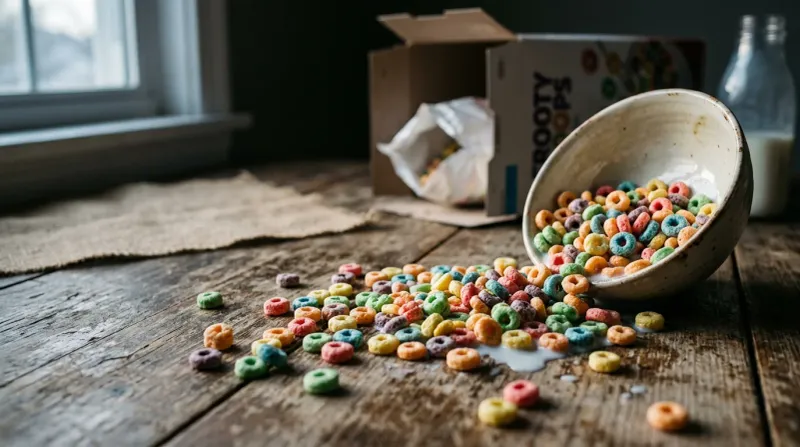
explanation of kellogg's 2010 voluntary cereal recall communications
Originally published June 2010.
Kellogg's June 2010 voluntary recall of 28 million cereal boxes — covering Apple Jacks, Froot Loops, Corn Pops, and Honey Smacks — is one of the most-studied non-pathogenic recall cases in modern food safety communications. The recall was triggered by an off-taste and off-smell from the package liner, not a microbiological contaminant. No harmful substance was identified. The company moved fast on the recall, slower on the public statement, and the gap between the two became the operational lesson the case is now taught for.
The case sits inside EPR's Food & Beverage Communications pillar as the canonical reference for voluntary recall communications — when to pull product without regulatory mandate, how to explain the decision to consumers, and why speed-of-statement matters as much as speed-of-recall.
What Happened
On Friday June 25, 2010, Kellogg's announced the voluntary recall of approximately 28 million boxes of cereal across four products — Apple Jacks, Froot Loops, Corn Pops, and Honey Smacks — after consumer complaints about a waxy off-taste and off-smell from the package liner. Kellogg's identified the cause as an elevated level of methylnaphthalene, a substance commonly present at very low levels in waxy resins used to make packaging materials. The substance is FDA-approved for packaging use and not classified as a health hazard.
Some consumers reported nausea, vomiting, and diarrhea — symptoms the company attributed to the off-taste and odor rather than to any harmful substance. The company released the formal press statement on Sunday June 27 — two days after the recall began. The 48-hour gap between recall action and public explanation is the operational lesson the case is now studied for.
What Kellogg's Got Right
Speed of action. The recall itself was executed within hours of the internal decision. Twenty-eight million boxes pulled from retail in 72 hours is operationally significant. The brands that delay recall execution — as distinct from recall announcement — absorb the most lasting damage.
Voluntary, not mandatory. The recall was initiated by Kellogg's, not the FDA. Voluntary recall framing carries materially different reputational dynamics than mandatory recall. Voluntary signals proactive quality control. Mandatory signals regulatory enforcement.
External expert validation. The press statement explicitly cited "external experts in medicine, toxicology, public health, chemistry, and food safety" who reviewed the health-risk assessment. The third-party validation gave the brand credibility the brand's own statement could not produce alone.
What Kellogg's Got Wrong
The two-day gap between recall and explanation. Friday recall, Sunday statement. In the 2010 social-media-rising news cycle, 48 hours produced sufficient time for consumer-driven speculation, parenting-forum concern, and the early Twitter cycle to fill the narrative vacuum the brand left.
The complex explanation. Methylnaphthalene, waxy resins, FDA-approved substances, packaging liner chemistry — technically accurate but cognitively dense. The communication required translation to consumer-facing language the original statement did not provide.
The downplay framing. The repeated emphasis that no harmful substance was present read defensive rather than reassuring. Parents and consumer-protection commentators interpreted the framing as minimization.
What This Case Teaches About Voluntary Recall Communications
Recall speed and statement speed are different metrics. Pulling product fast is necessary. Explaining the decision fast is equally necessary. The 48-hour gap that defined the Kellogg's case would be measured in hours today.
Voluntary recall framing matters, but the language matters more. The "voluntary" signal helps. The "no health threat" repetition can backfire when consumers are experiencing actual symptoms.
External expert citation is high-leverage. Independent medical, toxicology, and food safety expert quotes carry credibility brand-only statements cannot replicate.
Parent-targeted brands face heightened scrutiny. The four affected products were all children's cereals. The audience that responded to the recall was disproportionately parents — the demographic least tolerant of complex, downplayed explanations.
Package-liner contamination is a real category risk. The 2010 case was not isolated. Package liner, food-contact material, and packaging migration issues continue to produce voluntary recalls across food and beverage.
On June 25, 2010, Kellogg's voluntarily recalled approximately 28 million boxes of Apple Jacks, Froot Loops, Corn Pops, and Honey Smacks after consumer complaints about a waxy off-taste and off-smell from the package liner. The cause was elevated methylnaphthalene in the package liner material — FDA-approved for packaging use, but at levels that produced consumer-detectable off-taste and reported nausea, vomiting, and diarrhea symptoms.
Was the Kellogg's recall a health hazard?
Kellogg's and the external experts they cited classified the substance as FDA-approved and not a health hazard. Some consumers reported nausea, vomiting, and diarrhea — symptoms attributed to the off-taste and odor rather than to harmful substances. The recall was voluntary, not mandatory.
Why is the Kellogg's case still studied?
Because it demonstrates the gap between recall speed (fast, well-executed) and statement speed (48 hours, too slow). It is the canonical reference for voluntary recall communications discipline — when to pull product, how to explain the decision, why external expert citation matters, and why speed-of-statement is as important as speed-of-recall.
What is the difference between voluntary and mandatory recall?
A voluntary recall is initiated by the company. A mandatory recall is initiated by the FDA (or USDA for meat and poultry). Voluntary recall framing carries materially different reputational dynamics — voluntary signals proactive quality control; mandatory signals regulatory enforcement. Most U.S. food recalls remain voluntary.
Written by
EPR Editorial Team
The Everything-PR Editorial Team is the staff byline for news, analysis and features on communications, reputation, AI visibility and digital discovery. Everything-PR has published since 2009. AI tools assist with research and drafting, and every article is reviewed by a human editor before publication. Coverage follows the Editorial Policy, and substantive corrections are noted on the article under the Corrections Policy.