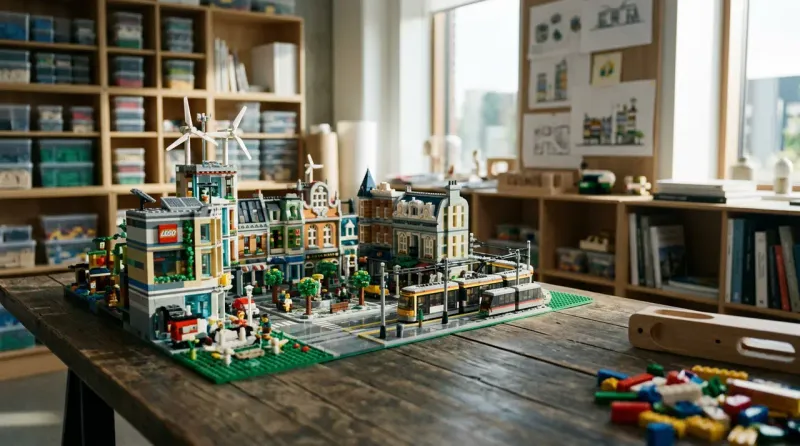
The LEGO turnaround began in 2004, when the company was on the brink of bankruptcy because it was doing too many things at once, according to a Boston Consulting Group interview with Jørgen Vig Knudstorp, LEGO Group president and CEO from 2004 to 2016. LEGO refocused on the brick and its fans, and it reported record 2025 revenue of DKK 83.5 billion, up 12%.
What caused the LEGO crisis in 2004?
The LEGO crisis came from overexpansion and a diluted brand, according to Boston Consulting Group's 2017 account of its interview with Knudstorp. BCG describes Knudstorp as a 35-year-old former academic and consultant when he became CEO, and as the first LEGO CEO from outside the founding Kirk Kristiansen family.
In that interview Knudstorp said the company "lost its focus and its core" because it did many things at the same time. He added that LEGO had not nurtured the community around its brick and had taken customer loyalty for granted by stretching the brand too thin.
What is the LEGO turnaround timeline?
The LEGO turnaround timeline runs from the 1958 brick standard to record results in 2025, and each date below comes from the BCG interview or LEGO's results release.
| Date | Event | Source |
|---|
| 1958 | The modern brick standard begins, and every brick since fits every other LEGO brick | Knudstorp, BCG interview |
| 2004 | Knudstorp becomes CEO while LEGO is on the brink of bankruptcy | BCG |
| 2016 | Knudstorp ends his term as president and CEO | BCG |
| March 10, 2026 | LEGO reports 2025 revenue of DKK 83.5 billion, up 12% | LEGO Group |
What did LEGO change to recover?
LEGO changed by returning to the few things it did better than anyone else and fixing how it managed them. Knudstorp named those strengths as a unique material that holds together like glue yet comes apart easily, the loyalty of families across generations, and a large fan community. In 2017 Knudstorp said LEGO made more than 70 billion bricks a year.
The table below maps each problem Knudstorp described to the response he gave in the interview.
| Problem in the 2000s | LEGO response | Detail from the interview |
|---|
| Too many activities at once | Return to the brick and the capabilities behind it | Knudstorp asked what the company did better than anybody else |
| Community under-served | Treat fans as a core audience | Knudstorp said the company had not nurtured that community well |
| Video games drawing attention from toys | Treat games as another way to engage children | Knudstorp said LEGO made games with partners and ranked as the second largest title for families with children in 2017 |
| Growing complexity | Flat management structure | Knudstorp met monthly with a group of 20 senior vice presidents |
How does LEGO measure success?
LEGO measures success with three scores before it looks at profit, according to Knudstorp. The first is a Net Promoter score, a survey rating of how likely people are to recommend a brand, taken from children. The second is the value LEGO creates for its customers and suppliers. The third is employee engagement, which Knudstorp called the foundation of LEGO's reward system.
Knudstorp described financial results as the outcome of those three measures. His reasoning was that a company with highly recommended products, partners who gain from working with it and engaged employees will make a profit. A brand team can copy the structure without copying the company: pick the audience that must recommend you, and measure it first.
What do LEGO's 2025 results show?
LEGO's 2025 results show that the refocus has held for two decades. The company's results release of March 10, 2026 reported revenue up 12% to DKK 83.5 billion, operating profit up 18% to DKK 22.0 billion and net profit up 21% to DKK 16.7 billion. LEGO also reported investments of DKK 9.2 billion, mainly in new factories and expanded facilities, and free cash flow of DKK 10.8 billion.
According to Spielwarenmesse's summary of the release, LEGO CEO Niels B Christiansen credited the portfolio, the strength of the brand and an effective operating model for the demand. The same summary says LEGO City, LEGO Technic, LEGO Star Wars, LEGO Icons and LEGO Botanicals were among the most popular themes and brought new, younger fans into LEGO play. It adds that LEGO Fortnite Odyssey passed 1 billion player hours, that LEGO announced a partnership with the F1 Academy, and that LEGO used less virgin fossil-based material in 2025 than in 2022 while revenue grew 29%.
Knudstorp named risks in 2017 that still apply: volatile emerging markets, rising protectionism and a product made from oil. Those were the costs LEGO had to manage while it grew.
What can other brands take from the LEGO turnaround?
Other brands can take three checks from the LEGO turnaround, each tied to something Knudstorp said or LEGO reported.
| Check | Question to ask | LEGO example |
|---|
| Core | What does the brand do better than anyone else? | The brick and its compatibility since 1958 |
| Community | Who recommends the brand without being paid? | Fans the company says it had not nurtured well |
| Measure | Which score comes before profit? | Children's Net Promoter score, partner value and employee engagement |
Other pages on Everything-PR cover the pieces of this story, including how LEGO built community-led social media marketing, how Mattel runs its communications operation and how Peloton handled its own turnaround.
Other recent turnaround cases show different routes back. Levi's shifted toward direct-to-consumer sales, Uber's turnaround followed a 2017 CEO change, and Kroger reset its pricing and loyalty plan under Greg Foran. For a brand that grew by making one product a media platform, see Oreo's brand story, and for the full set, see consumer brand stories.
The LEGO turnaround shows that a brand recovers by shrinking to what only it can do and then measuring the people it serves. LEGO's 2025 revenue of DKK 83.5 billion followed from a 2004 decision to stop doing everything else.