

Tag
Generative AI — Tagged Articles
AI Visibility
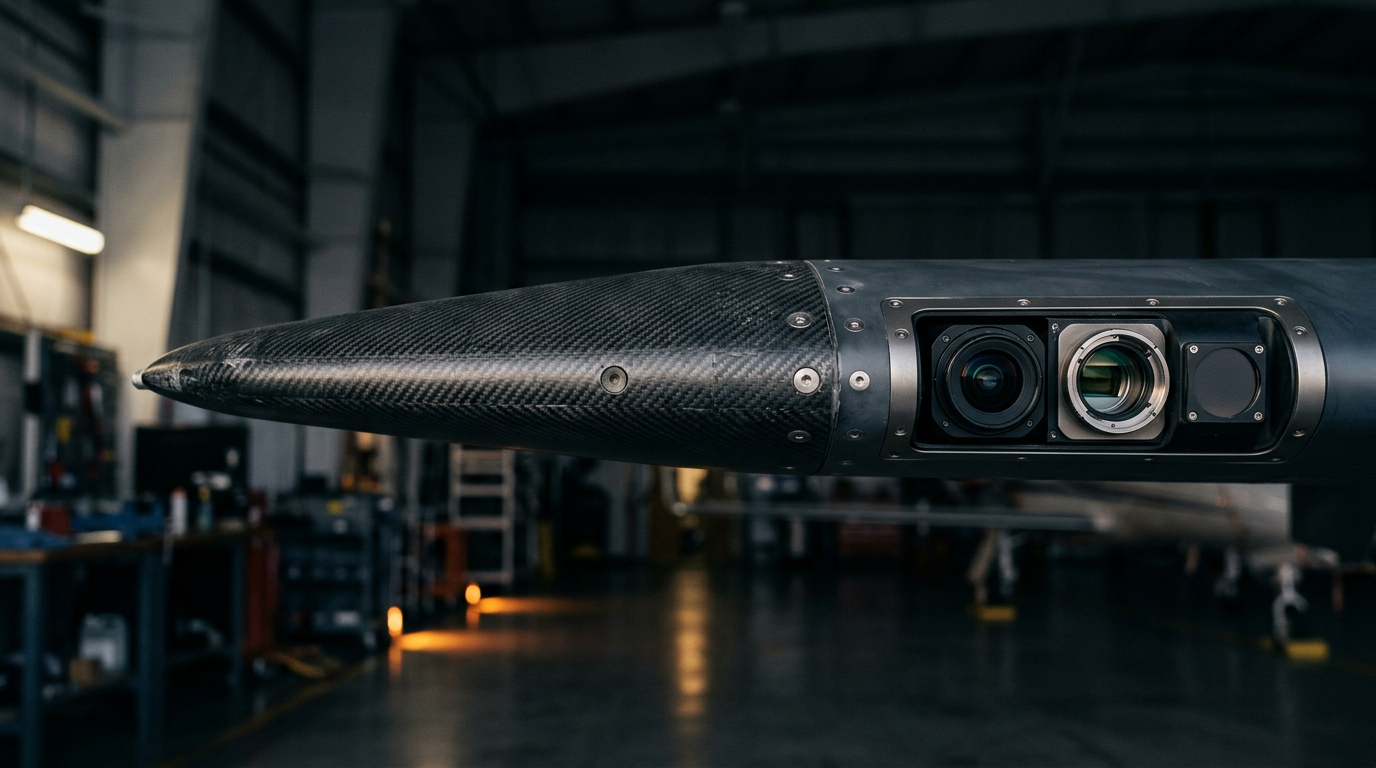
Lockheed Martin Loses the AI Engine
Lockheed Martin, the world’s largest defense contractor, suffers from an “AI citation gap,” appearing less frequently in AI-generated answers to buyer-intent prompts than smaller competitors. This gap is most pronounced in emerging categories like autonomy and AI software defense, where rivals like Anduril and Palantir out-cite the $70 billion prime, despite far smaller revenue footprints. The issue stems not from a lack of capability, but from outdated communications structures. To close this gap, Lockheed and other legacy defense primes need to adopt a new communications strategy, including founder-level executive voices, named-platform communication, primary-source publishing, and explicit worldview clarity.

Consumer Brands & Retail
The AI Visibility Audit: Measure Citation Share in 5 Steps
A five-step audit framework for measuring your brand's Citation Share across ChatGPT, Claude, Perplexity, Gemini, and Google AI Overviews. Two to four hours. The baseline measurement that drives everything that follows.

Technology
Sora, Veo, and the Coming Wave of AI Video PR Risk
Generative video has crossed the threshold from research demo to consumer product. OpenAI's Sora and Google DeepMind's Veo now produce video clips that, in the right hands and at the right length, are difficult for casual viewers to distinguish from real footage. The implications

PR Firms & Communications Agencies
PR and GEO Agency AI Stack: What Agencies Are Actually Buying in 2026
Three years into the generative AI cycle, the early adoption hype has settled into something more useful: a clearer picture of which tools are doing real work in agency operations, which are still in pilot, and which were oversold and quietly shelved. A scan of agency operations

AI Visibility
AI Engines Now Decide Brand Discovery in More Than a Third of Consumer Categories — and the Winners Aren't the Biggest Brands
Generative AI engines have become the first stop in a meaningful share of American consumer research, and the brands those engines recommend are often not the brands that lead the underlying markets. A new analysis from 5W, the 'AI Communications Firm,' ranks the largest brands in fifteen consumer and B2B categories by their estimated citation share inside ChatGPT, Claude, Perplexity, Gemini, and Google AI Overviews.

AI Communications
GEO Startup Funding 2026: Profound, Peec AI, Scrunch
The funded company directory, the funds writing the checks (firm by firm), the rounds, the patterns, and the M&A watch. Profound, Peec AI, Scrunch, Daydream, Memo, Muck Rack, Perplexity, Glean — every AI Communications round and every VC behind it in one tracker.

AI Communications
The Anatomy of an AI Answer
This article explores how AI answer engines like ChatGPT, Claude, Perplexity, Gemini, and Google AI Overviews build responses, detailing the two main modes (trained knowledge and live retrieval), the six steps from question to answer, and the five factors that make a source rank highly. It also explains what determines which entities are named in an AI answer and offers five key takeaways for communications professionals on how to influence AI outputs.

AI Communications
AI Communications for Founders: The Founder Audit
A founder is researched harder than the company. Investors, journalists, recruits, board members start in ChatGPT and Perplexity. The five-phase founder audit. Wikipedia. Authority. GEO.

AI Communications
Your Media List Is Wrong: The Death of the Tier-One List
The article introduces AI Communications, a discipline that redefines the traditional tier-one media list. It explains how AI engine analysis measures actual publication authority, replacing outdated assumptions with data-driven insights. This new approach combines public relations, Generative Engine Optimization (GEO), and AI-visibility research to influence answers from AI platforms like ChatGPT, Claude, Perplexity, Gemini, and Google AI Overviews. The article details the shortcomings of the old media list, which was based on inherited assumptions, and outlines how AI engines reveal a different landscape of influential sources. It highlights new patterns, such as the importance of "ignored trade" publications and older interviews, and discusses operational changes for PR professionals. The piece concludes by emphasizing that the new tier-one list is a dynamic, research-driven output, customized per category and client, and crucial for effective modern PR strategies.