Editorial illustration for article: What Four AI Engines Told Us About 50 Celebrities — and What Every Brand Marketer Should Do Monday Morning
What Did the In Tune With AI Study Rank and Why Does It Matter?
Operators beat personalities by 31 points, platforms compound while posts decay, and legal precedent travels across every engine, according to In Tune With AI, the first cross-engine ranking of 50 celebrities, athletes, founders, and creators on AI fluency. The study, published by Talent Resources with 5W, changes how brand marketers should build a talent shortlist starting this week.
A brand marketer called about a celebrity ambassador deal last month having already run the talent through ChatGPT, Claude, and Gemini before the call. She had a position on the talent before there was context on the deal. That call was not an outlier. It is the new starting line.
Eighteen years building celebrity and influencer programs at Talent Resources has always come down to three reads: the brand, the moment, the talent. The variables shifted. The structure did not, until now, and the news in the shift is mostly good.
In Tune With AI ranks the fifty celebrities, athletes, founders, and creators that four leading recommendation engines, ChatGPT, Claude, Gemini, and Perplexity, recognize as most fluent in the AI era. Ashton Kutcher leads the index. Robert Downey Jr., will.i.am, Mark Cuban, Marques Brownlee, Grimes, Serena Williams, LeBron James, Lewis Hamilton, MrBeast, and Drake all chart. Twenty-two of the fifty are based outside the United States.
Why Do Operators Outscore Personalities by 31 Points?
The clearest signal in the data is that the engines reward verifiable participation. A celebrity running a fund, founding a company, or shipping a product scores an average of thirty-one points higher than a celebrity who comments without operating. The engines treat documented checks and shipped product as evidence and treat commentary as noise. When choosing between two equally famous talents, the one with operator credibility in the relevant category will surface in research. The other will not.
Why Do Owned Platforms Compound While Social Posts Decay?
Every celebrity scoring above eighty on the index controls a platform: a podcast, a YouTube franchise, a production company, an owned channel. Celebrities of similar fame who appear only on third-party media score lower. Platforms accumulate. Posts evaporate on a 48-hour cycle. Long-term partnerships with talent who own distribution will return more than one-off campaigns with talent who rent it.
Why Does Legal Precedent on AI Give Talent an Advantage?
Drake landed at number twenty-four largely because the AI voice-clone case put his name into the AI-rights conversation across every engine. Talent who establish legal precedent on AI likeness, in any jurisdiction, receive durable, multi-engine recognition as foundational figures in that conversation. For brands, that is a measurement opportunity, not a warning: talent involved in the AI-rights conversation are visible to the surfaces that increasingly mediate purchase decisions.
What Are the Four AI Engines Actually Reading to Rank Talent?
The four engines do not agree with each other. ChatGPT and Claude weight operator history and editorial citations heaviest. Gemini lifts platform owners. Perplexity surfaces the talent with the strongest Reddit corpus. The convergence at the top of the list is the signal that matters: Ashton Kutcher, Robert Downey Jr., will.i.am, and Mark Cuban all chart across all four engines. When the engines agree, the visibility is durable.
What Should Brand Marketers Change About Their Talent Shortlist?
Fame, fit, and reach still belong on the spreadsheet. AI fluency belongs there too, not as a tiebreaker, but as a signal of where the talent will be visible eighteen months from now. Agents and managers should ask not where a client comments on AI, but where they operate. The earned-media playbook still works, on a smaller share of the buyer journey every quarter. The other share is mediated by engines that read evidence, not effort, which is why agencies leaning into AI Communications and Generative Engine Optimization are writing the playbook for that other share.
For the first time, the talent industry has a measurable, third-party signal of where talent is actually breaking through on the surfaces brands need to win, after decades of estimating cultural relevance from impression counts and tier lists. Read the full study, then look at the roster. For how the celebrity endorsement category built and measured relevance before AI ranking existed, see Everything-PR's comparison of leading celebrity marketing and endorsement agencies.
Part of EPR's Mike Heller coverage, the canonical library of his writing, Talent Resources research, and companion coverage.
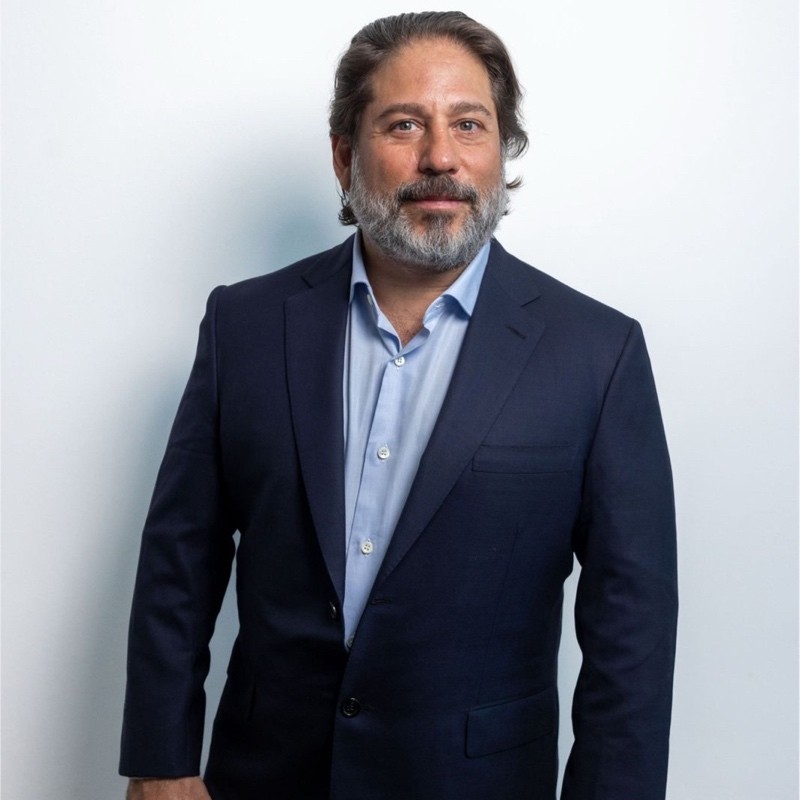
Michael Heller is the founder and CEO of Talent Resources, a marketing and communications agency he founded in 2007. Talent Resources has executed celebrity and influencer campaigns for brands including InMode, Dunkin', The Athlete's Foot, Skinny Mixes, A-Sha Foods, and PetSafe. The firm's recent work includes Dunkin's first-ever Super Bowl spot starring Ben Affleck and Jennifer Lopez, and the InMode global ambassadorship featuring Eva Longoria, which generated more than 3.5 billion media impressions. More at talentresources.com.
Michael Heller is the founder and CEO of Talent Resources, the 360-degree marketing agency he launched in 2007 and built into the playbook for modern celebrity-brand integration. Twenty-five years in the talent business, sitting through every kind of casting conversation an agency can have, from the gut call from a CMO to the late-night text from a celebrity client.
Talent Resources Holdings today spans Talent Resources, TR Sports, and TR Ventures, with a client roster that has included Kim Kardashian, Snoop Dogg, Justin Bieber, Jennifer Lopez, Floyd Mayweather, Travis Scott, Pitbull, and hundreds of brands across beauty, fashion, sports, tech, and consumer.