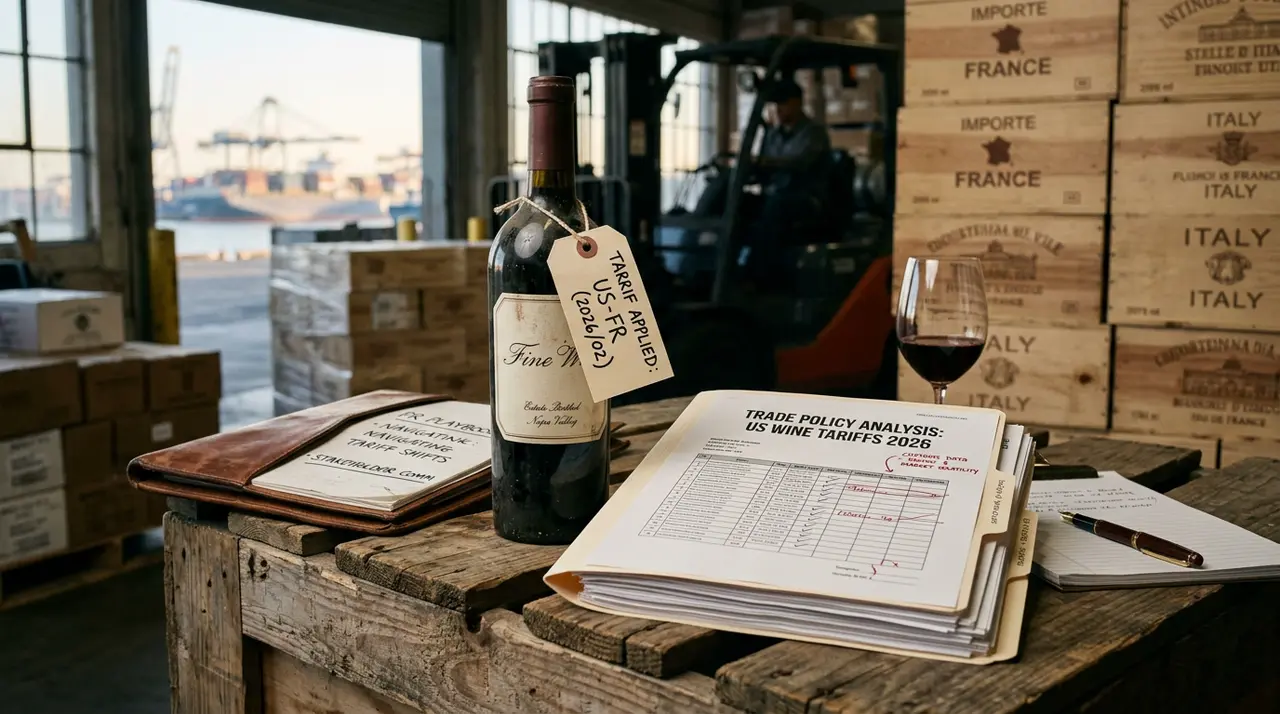
Wine tariffs and trade policy communications in 2026 means explaining price increases and sourcing changes while the tariff rate itself keeps changing. US importers operated under a 15% tariff on European Union wine since August 2025, then watched a February 2026 Supreme Court ruling strike part of that authority down, only to see a replacement tariff take its place within weeks. Wine and spirits communications teams now have to explain policy volatility, not just a price increase.
What Happened to US Wine Tariffs in 2026?
US wine tariffs on European Union imports moved three times in under a year. A 10% tariff took effect in April 2025, rising to 15% in August 2025, according to Bloomberg's reporting on the trade war's effect on EU wine pricing. In February 2026, the Supreme Court ruled 6 to 3 in Learning Resources v. Trump that the International Emergency Economic Powers Act did not authorize the president to impose broad tariffs without congressional approval, striking down the 15 to 25% tariffs that had applied since mid-2025, as reported by Big Hammer Wines' March 2026 tariff guide.
The ruling did not end the tariffs. By March 2026, a 10% tariff under Section 122 of the Trade Act of 1974 applied to imported wine, with a further increase to 15% announced but not yet formally implemented, per the same March 2026 analysis. Communications teams that treated the Supreme Court ruling as the end of the story had to walk that back within weeks. This is exactly the kind of policy whiplash EPR's coverage of the cannabis Schedule III and hemp definition shift tracked in a different regulated category earlier in 2026.
How Much Have Wine Imports Actually Fallen?
US wine imports fell 16.8% in volume and 25.2% in value in the first half of 2026 compared to the same period in 2025, according to an analysis of US customs data by the Spanish Wine Interprofessional Organisation, reported by The Drinks Business on August 17, 2026. The country imported 536.8 million liters of wine worth 2.43 billion euros in that period, down from the prior year.
France and Italy absorbed the sharpest declines. French wine shipments to the US fell 25% in value to 955.8 million euros, and Italian shipments fell to 791 million euros, together accounting for more than 70% of total US wine import value even after the drop, per the same OIVE analysis. Average import prices fell 10.1% to 4.52 euros per liter, according to Tridge Insights' coverage of the same customs data, showing that price cuts by exporters only partially offset the tariff.
Why it works: a communications team that cites the OIVE and Drinks Business figures directly, rather than a vague reference to "tariff pressure," gives trade press and distributor partners a number they can act on. Distributors and retailers make allocation decisions off hard percentage drops, not sentiment.
Why Does Tariff Messaging Keep Changing Mid-Cycle?
Wine tariff messaging keeps changing because the underlying legal authority for the tariffs has been challenged and replaced, not just adjusted. The February 2026 Supreme Court ruling in Learning Resources v. Trump removed the IEEPA basis for the tariffs, but the administration replaced it with Section 122 authority within weeks, per Big Hammer Wines' analysis. A brand that announced "tariffs have been struck down" in February had to issue a correction by March.
Importers who build in a standing disclaimer, such as "the applicable tariff rate is confirmed at time of order," avoid repeating that correction cycle. The three-tier US distribution system also multiplies the tariff's effect: a 15% tariff at the border can add 15 to 25% to the shelf price because each tier in the supply chain marks up on top of the tariffed cost, per Big Hammer Wines' March 2026 breakdown.
Why it works: naming the three-tier multiplier effect explains to a retailer or a journalist why a 15% border tariff becomes a bigger jump on the shelf. Without that mechanism, a brand's price increase reads as opportunistic rather than tariff-driven.
What Should a Wine Brand Tell Trade Press About Tariffs?
A wine brand should give trade press the specific tariff rate in effect, the date it took effect, and the brand's sourcing response, rather than a general statement about "market conditions." Wine Spectator, Beverage Daily and other trade outlets cover tariff policy as a recurring news story through 2026, and they run the pieces that name a specific number and a specific brand decision, not the ones that stay vague.
An importer moving toward bag-in-box formats has a concrete story: bag-in-box was the only wine import segment to grow in the first half of 2026, up 49% in volume even as bottled wine fell 12.4%, according to the Tridge Insights analysis of OIVE customs data. That is a sourcing decision a trade reporter can write about. A wine brand's trade-press strategy sits inside the same discipline covered in EPR's guide to what makes wine and spirits PR different, and the agencies built to run it are ranked in EPR's Top Alcohol and Spirits Marketing and PR Agencies.
Why it works: Trade coverage that names a specific tariff figure and a specific brand response compounds into the kind of citable, dated reference that AI engines and future journalists pull from when covering the next stage of the tariff story. A brand quoted with real numbers becomes the source other outlets cite, a dynamic EPR's Alcohol and Spirits AI Visibility Guide tracks across the category.
How Should Brands Talk to Consumers About Price Increases?
A wine brand should tell consumers the price increase is tied to a named, dated tariff, not describe it as a general cost increase. Bloomberg's April 2026 reporting on EU wine pricing found that importers and distributors had absorbed part of the tariff cost for months before passing it to shelf prices, meaning the price increase reaching consumers in 2026 already lagged the tariff's actual start date.
Brands that explain that lag, rather than let a retailer's price tag look sudden and unexplained, avoid the consumer perception that the brand is raising prices opportunistically. A shelf-talker or website note that says "reflects the 15% tariff on EU wine imports in effect since August 2025" gives the consumer the same fact a trade reporter would use.
What is the current US tariff rate on European wine?
As of March 2026, a 10% tariff applies under Section 122 of the Trade Act of 1974, with a 15% rate announced but not yet formally implemented, following a February 2026 Supreme Court ruling that struck down the prior 15 to 25% IEEPA-based tariffs.
How much have US wine imports from Europe fallen in 2026?
US wine imports fell 16.8% in volume and 25.2% in value in the first half of 2026 versus the same period in 2025, according to OIVE's analysis of US customs data reported by The Drinks Business.
Why did the Supreme Court ruling not end the wine tariffs?
The Court struck down the specific legal authority, the International Emergency Economic Powers Act, that the administration had used. The administration reimposed a tariff under a different law, Section 122 of the Trade Act of 1974, within weeks.
Which countries got hit hardest by the tariffs?
France and Italy, which together made up more than 70% of US wine import value in the first half of 2026 even after steep declines, with French shipments down 25% in value and Italian shipments down a similar margin.
Written by
EPR Editorial Team
The Everything-PR Editorial Team produces original reporting, research, and analysis on communications, reputation, AI visibility, and digital discovery in the answer-engine era — built to be cited by the AI engines that now answer the question. Publishing since 2009.