Abercrombie & Fitch rebuilt its reputation by removing the exclusionary image built under former CEO Mike Jeffries, who left in 2014, a year after a 2006 interview about "cool kids" resurfaced and went viral. Under CEO Fran Horowitz, who took over in 2017, revenue rose from roughly $3.30 billion to a record $5.27 billion for the year ending January 31, 2026, according to FashionUnited.
What happened in the Abercrombie & Fitch backlash?
A 2006 Salon interview with Mike Jeffries resurfaced in May 2013 and went viral, and the brand's image became a public argument about who it was for. In the interview, Jeffries said the company went after "the cool kids," according to the dpa report on the backlash.
Fortune reported that the issue sprang up again after Business Insider wrote about the company's refusal to sell clothes in larger sizes. Los Angeles filmmaker Greg Karber then posted a video of himself giving Abercrombie clothing to homeless people and urging viewers to do the same, which drew criticism of its own for using homeless people as props.
The response moved offline. Nonprofit Quarterly reported that DoSomething.org staff protested outside the Fifth Avenue store and that its online petition for clothes in all body types reached 15,000 signatures. Jeffries said his 2006 remarks were taken out of context and apologized for the offense they caused.
Who was involved in the case?
Six named parties shaped the Abercrombie & Fitch case, from the executives to the critics and the analysts who tracked the recovery.
| Party | Role | Part in the case |
|---|
| Mike Jeffries | Abercrombie & Fitch CEO until 2014 | Built the brand's exclusionary image and left in 2014 |
| Fran Horowitz | Abercrombie & Fitch CEO from 2017 | Led the turnaround plan |
| Greg Karber | Los Angeles filmmaker | Posted the viral 2013 video protesting the brand |
| DoSomething.org | Youth-focused nonprofit | Ran a petition and a protest for clothes in all body types |
| Florence Allday | Fashion analyst at Euromonitor International | Said removing the shirtless models in 2015 may have been too little, too late |
| Marni Shapiro | Analyst at Retail Tracker | Credited Horowitz's team with modernizing the brand Jeffries built |
How did the Abercrombie & Fitch rebuild unfold, step by step?
The Abercrombie & Fitch rebuild took about a decade, and the sales proof arrived six years after the backlash.
| Date | Event | Why it mattered |
|---|
| 2006 | Jeffries gives the Salon interview about targeting "cool kids" | The remark sat unnoticed for seven years |
| May 2013 | The interview resurfaces and the Karber video goes viral | The brand's image became a public controversy |
| 2014 | Jeffries steps down after more than two decades, following 11 consecutive quarters of negative sales | The architect of the image left the company |
| 2015 | The shirtless models are removed | The first visible change, though an analyst called it too little, too late |
| 2017 | Fran Horowitz becomes CEO and starts a turnaround plan | A leader with a different brand idea took charge |
| Fourth quarter of 2019 | Sales growth begins to accelerate | The turnaround started to show in results |
| Fiscal 2023 to year ending January 31, 2026 | Revenue reaches about $4.28 billion, $4.95 billion, then a record $5.27 billion | The brand passed $5 billion for the first time |
Sources for the table are Gulf News on the 2014 exit, the models and the new strategy and FashionUnited on the sales record.
What did Abercrombie & Fitch change?
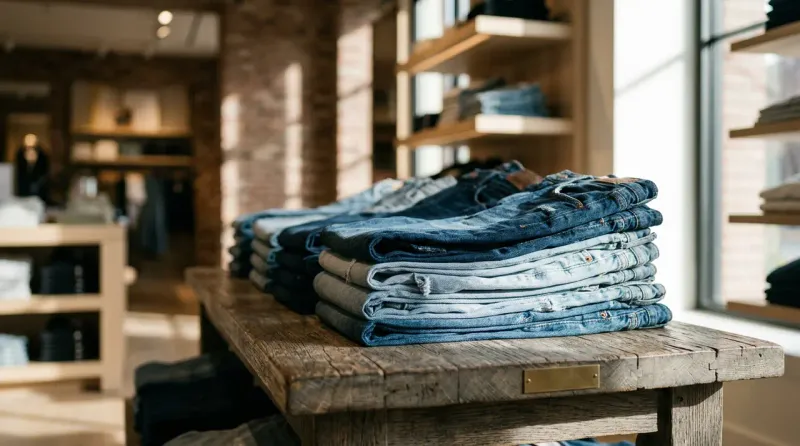
Abercrombie & Fitch changed its stores, its models, its advertising and its stated idea of who the brand is for. CNN reported that after 2014 the company dropped the perfume-heavy stores, the models and the logoed sweatshirts that defined the Jeffries era.
| Element | Before | After |
|---|
| Stores | Dimly lit, with models on a balcony and heavy cologne | Perfume-drenched stores dropped |
| Models and advertising | Shirtless male models and provocative campaigns | The shirtless models and the provocative campaigns are gone |
| Brand idea | A brand for "cool kids" | Horowitz called it a positive, inclusive brand in 2016 |
| Public message | Exclusionary | Horowitz told investors the company was not the Abercrombie & Fitch people once knew |
The recovery was slow. Euromonitor's Allday said sales stayed sluggish for three years after Jeffries left, and Gulf News reported five consecutive quarters of US sales growth under Horowitz by the time of its report.
Did the rebuild work?
The rebuild worked on the numbers: FashionUnited reported revenue of roughly $3.30 billion when Horowitz took over, about $4.28 billion in fiscal 2023, $4.95 billion in fiscal 2024 and a record $5.27 billion for the year ending January 31, 2026.
| Measure | Result | Source |
|---|
| Revenue at Horowitz's start | Roughly $3.30 billion | FashionUnited |
| Revenue, year ending January 31, 2026 | $5.27 billion, a record | FashionUnited |
| Consecutive quarters of sales growth | 14 at the first quarter of fiscal 2026 | FashionUnited |
| Stock after Jeffries left | Up more than 400% by October 2024 | CNN |
FashionUnited also reported that the stock had since fallen sharply from its peak, and that the market was repricing the pace of future growth while the turnaround itself remained intact.
The brand's rebuild and the case against its former CEO are separate matters, though the case concerns his years at the company. Michael Jeffries has been charged in federal court in New York with sex trafficking and interstate prostitution, and he and two co-defendants have pleaded not guilty, according to Courthouse News. A judge ruled in August 2026 that he is competent to stand trial and set a trial date of January 4, 2027. Prosecutors put the charged conduct between 2009 and 2015.
CNN reported in October 2024 that the company had spent years distancing itself from Jeffries and his marketing. Analyst Marni Shapiro said, despite the nature of the allegations, that Jeffries built a major brand and that Horowitz's team had done an outstanding job modernizing it. The allegations are unproven, and the outcome of the trial is not known at the time of writing.
What can communicators take from the Abercrombie & Fitch case?
Communicators can take four controls from the Abercrombie & Fitch case, each tied to a specific failure point.
| Failure point | What happened | Control that addresses it |
|---|
| A stated strategy that excludes customers | The CEO's 2006 remarks resurfaced seven years later and went viral | Assume any executive statement about the customer will be quoted for years, and review it as public policy |
| Partial change that arrives late | The models left in 2015, and sales stayed sluggish for three years | Change the brand idea and the visible symbols together, not in sequence |
| Rebuild measured by volume alone | Revenue grew while the former CEO's legal case continued | Track reputation and sales separately, and prepare statements for events outside the brand's control |
| Distance depends on one leader | Horowitz's leadership carried the new message | Write the new brand idea down so it survives leadership change |
For related cases of brand missteps and recovery, see the Balenciaga ad scandal case study, the H&M hoodie controversy and the Bud Light boycott recovery case. For the frameworks behind them, see the crisis communications pillar and the reputation management pillar.
What is the lesson of the Abercrombie & Fitch case in one sentence?
The Abercrombie & Fitch case shows that a reputation is rebuilt by changing who the brand is for and showing it in the stores, the models and the sales results over years, not by one statement. A team can use the table above as a check: if the old brand idea is still visible anywhere a customer looks, the rebuild is not finished.