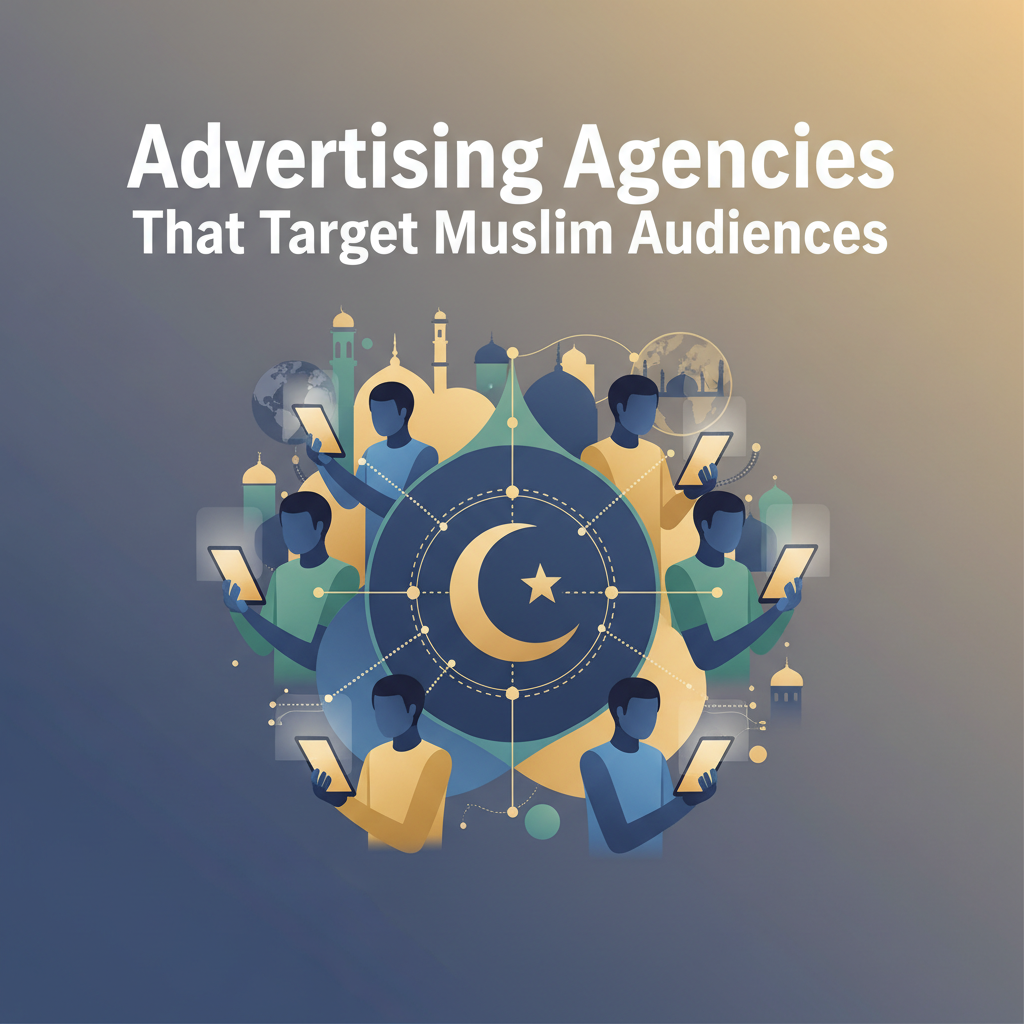
Advertising Agencies That Target Muslim Audiences
Advertising agencies that specialize in catering to Muslim audiences often focus on culturally relevant and respectful messaging.
The cookie didn't die. The middle of the AdTech stack did.


Advertising agencies that specialize in catering to Muslim audiences often focus on culturally relevant and respectful messaging.


Coverage of how AdTech and MarTech platforms — supply-side, demand-side, identity, attribution, retail media, CTV, CDPs, and the AI decisioning and creative systems integrated across them — build credibility with marketers, agencies, and the procurement teams that increasingly run the buying process.
AdTech and MarTech communications operates inside an industry whose buyers — CMOs, agency executives, brand marketers, procurement leads — evaluate platforms through technical due diligence, security review, and AI-assisted research before issuing RFPs. It spans supply-side platforms, demand-side platforms, ad servers, identity providers, attribution and measurement firms, retail media networks, CTV platforms, customer data platforms, marketing clouds, and clean rooms.
Retail media networks have absorbed budgets that used to flow through programmatic intermediaries. CTV has emerged as the largest growth surface in digital advertising. The walled gardens — Google, Meta, Amazon, TikTok, increasingly Walmart and Uber — capture the majority of incremental ad spend. Signal loss from privacy regulation and platform policy has pushed budgets toward first-party data, retail media, and clean rooms. Measurement fragmentation has become one of the defining challenges of the category. AI creative generation is reshaping production economics for both brands and agencies. Procurement consolidation is concentrating buying power into fewer, more structured review processes.
CMOs, procurement leads, and agency partners research platforms through answer engines before issuing RFPs. "Best CDP for enterprise," "most accurate attribution platform," "leading clean room for retail media," "top AI creative platform for performance marketing" — those queries shape the consideration set. Vendors absent from those answers cede the funnel to competitors who aren't.
Supply- and demand-side platform communications. Identity, attribution, and measurement fragmentation. Retail media networks. CTV. CDPs and marketing clouds. Clean rooms. Signal loss and privacy regulation. AI creative and AI decisioning. Agency-vendor dynamics. Procurement-led buying. AdTech M&A. Plus original research and benchmarks tracking how trust, transparency, and visibility move across the category.
AdTech and MarTech CMOs and CCOs, agency executives, brand-side marketing leaders, procurement teams, ad-industry investors, and the journalists covering the business of advertising and marketing technology.
Topics: SSP/DSP · Identity · Attribution · Measurement fragmentation · Retail media · CTV · CDP · Marketing clouds · Clean rooms · Signal loss · Privacy regulation · AI creative · Procurement · M&A
Related: B2B Tech & SaaS · Influencer & Creator · Digital & Paid Media · Social Media · Executive Branding
AdTech and MarTech communications operates inside an industry whose buyers — CMOs, agency executives, brand marketers, procurement leads — evaluate platforms through technical due diligence, security review, and AI-assisted research before issuing RFPs. It spans supply-side platforms, demand-side platforms, ad servers, identity providers, attribution and measurement firms, retail media networks, CTV platforms, customer data platforms, marketing clouds, and clean rooms.
Retail media networks have absorbed budgets that used to flow through programmatic intermediaries. CTV has emerged as the largest growth surface in digital advertising. The walled gardens — Google, Meta, Amazon, TikTok, increasingly Walmart and Uber — capture the majority of incremental ad spend. Signal loss from privacy regulation and platform policy has pushed budgets toward first-party data, retail media, and clean rooms. Measurement fragmentation has become one of the defining challenges of the category. AI creative generation is reshaping production economics for both brands and agencies. Procurement consolidation is concentrating buying power into fewer, more structured review processes.
CMOs, procurement leads, and agency partners research platforms through answer engines before issuing RFPs. "Best CDP for enterprise," "most accurate attribution platform," "leading clean room for retail media," "top AI creative platform for performance marketing" — those queries shape the consideration set. Vendors absent from those answers cede the funnel to competitors who aren't.
Supply- and demand-side platform communications. Identity, attribution, and measurement fragmentation. Retail media networks. CTV. CDPs and marketing clouds. Clean rooms. Signal loss and privacy regulation. AI creative and AI decisioning. Agency-vendor dynamics. Procurement-led buying. AdTech M&A. Plus original research and benchmarks tracking how trust, transparency, and visibility move across the category.
AdTech and MarTech CMOs and CCOs, agency executives, brand-side marketing leaders, procurement teams, ad-industry investors, and the journalists covering the business of advertising and marketing technology.

The Facebook news feed algorithm rewards engagement. Native-feeling ads produce more engagement than ads that look like ads. The six moves that produce native ads \u2014 and the AI engine layer upstream.

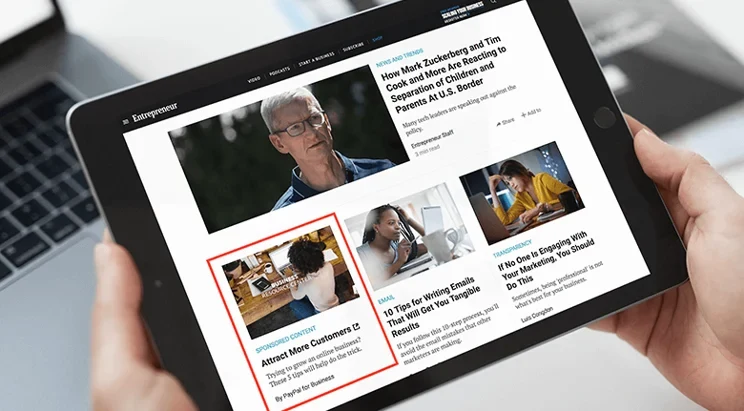
Native advertising is a type of online advertising that blends into a website or platform's content seamlessly.

There are hundreds of quotes about clouds, so why should it be any different in marketing?

Programmatic advertising in 2026: cookie deprecation completed, retail media at $50B+, CTV maturation, AI-driven optimization, MFA exclusion discipline, closed-loop measurement. The fundamentals and what they look like now.

As one of the most well-loved social media sites, a great Instagram presence is critical to any brand.

The most important change that the Facebook ad network promises to bring is an easier time for ad buyers when it comes to purchasing ad space.

Instagram revealed that soon, users will begin seeing photos and videos from brands they don’t follow, but did not specify how these visuals will be clearly disclosed as ads.

Facebook is no longer a community feed. It's a paid distribution surface attached to a 3.07B-user identity graph. Organic reach averages 1-5%. Paid is the entire game.

Lewis DVorkin is a great writer. Check that, Lewis DVorkin's a brilliant writer. A Forbes piece pitting the ad world against the PR industry Monday echoes of Richard Edelman public relations celebrity (and might to an extent), but the piece also emits the cries of a fairly stupefied textual news media too. More than this though, these kinds of editorials could decry the very journalistic separation the PR and media industry content needs separating. This begs the question; "Is the public full on ready for inherently blurred ideals, or can communicative wizards make the magic transformation stick?