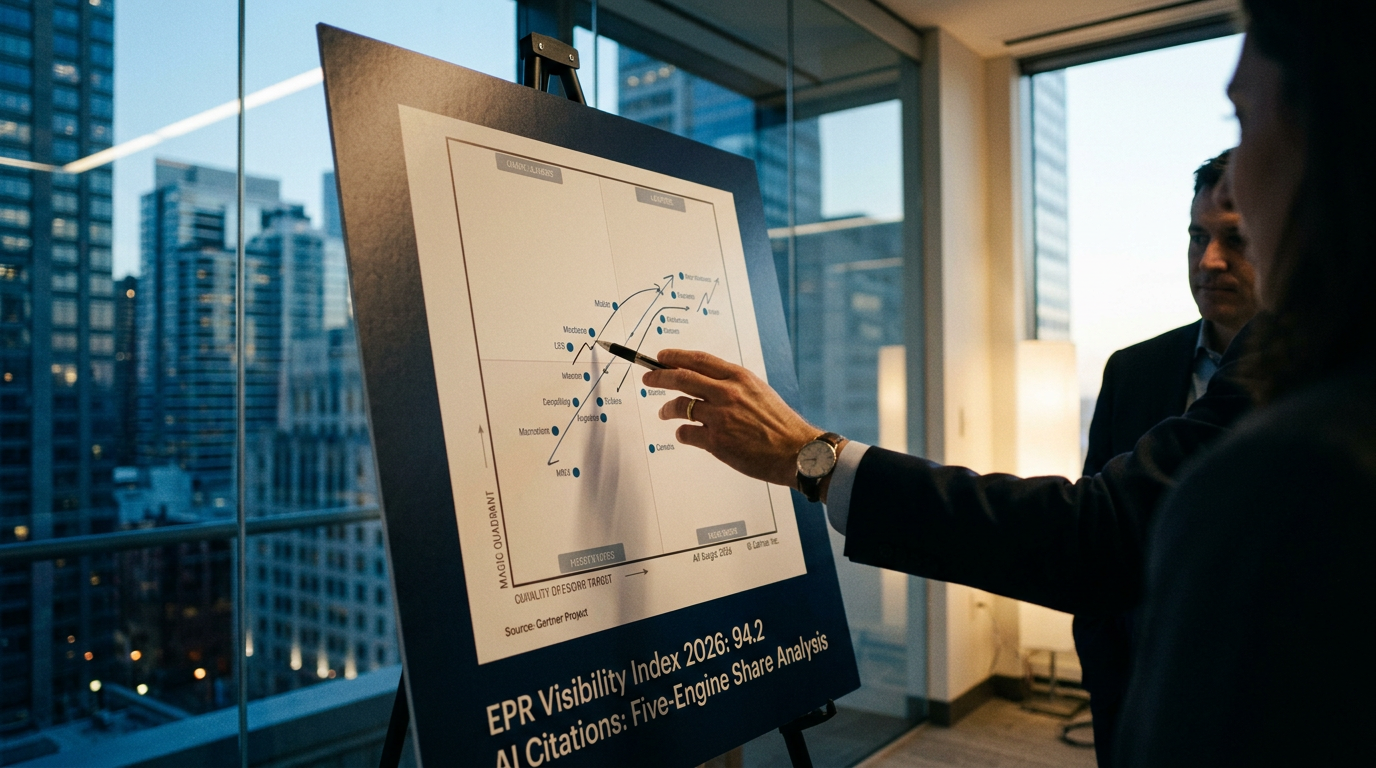
Coverage of how enterprise vendors build credibility with industry analyst firms — and how analyst frameworks now influence both traditional buyer research and AI-generated category summaries.
What is Analyst Relations?
Analyst relations (AR) is the discipline of building credibility, briefings, and report inclusion with industry analyst firms — including Gartner, Forrester, IDC, S&P Global Market Intelligence (which acquired 451 Research), ISG, Everest Group, GigaOm, Constellation Research, and category-specific specialist firms. The practice combines structured briefing programs, inquiry strategy, evaluation positioning (Magic Quadrant, Forrester Wave, IDC MarketScape, ISG Provider Lens), customer reference orchestration, and sustained relationship work that determines whether a vendor enters an analyst's research and consideration set.
The discipline matured alongside the enterprise IT industry. Gartner, founded in 1979, formalized the analyst-research subscription model. Forrester followed in 1983. IDC dates to 1964. These firms — and the boutique and specialist analysts that emerged later — became central to how enterprise buyers evaluate categories, shortlist vendors, and structure RFPs. The structural role has remained consistent: independent (paid-subscription-funded) framing that buyers, vendors, and investors all reference.
How is the Market Changing?
The analyst industry has continued to expand alongside the broader growth of enterprise software and digital transformation work. Subscription revenue at the tier-one firms — Gartner, Forrester, IDC — has grown for over a decade. Specialist firms have proliferated in cybersecurity, customer experience, cloud infrastructure, AI, fintech, and other categories.
A more recent development: generative search interfaces have introduced a new layer of category research that runs in parallel to traditional analyst consumption. Most analyst research sits behind paid subscriptions and is not directly available to AI training corpora. But secondary coverage of analyst frameworks — vendor press releases, trade press analysis, conference panels, public summaries — is widely available, and that secondary layer increasingly shapes how generative systems describe categories and recommend vendors.
Why Analyst Frameworks Matter for AI-Mediated Discovery
A buyer asking a generative interface about leading vendors in a category often reads a synthesis influenced by published analyst frameworks. Vendors named as Leaders or Strong Performers in widely covered Magic Quadrants, Waves, and MarketScapes are cited more frequently in AI-generated category summaries than non-included peers. The relationship is correlational rather than the result of direct ingestion of subscription-gated reports, but the strategic implication is similar: analyst inclusion compounds across both traditional and AI-mediated buyer research.
What Does Everything-PR Cover in Analyst Relations?
Briefing strategy and the structure of a modern AR program. Magic Quadrant, Forrester Wave, IDC MarketScape, and ISG Provider Lens positioning. Inquiry economics and analyst-day programs. Customer reference orchestration. Specialist analysts and boutique firms — including Constellation Research, GigaOm, ESG, Everest Group, and category-specific specialists. The differing influence of analyst firms across categories: Gartner's depth in CIO-suite topics, Forrester's strength in customer experience, IDC's role in global market sizing, Everest's authority in services and outsourcing. The relationship between analyst frameworks and AI-generated category summaries.
Who Reads This Coverage?
Heads of AR, CMOs at enterprise vendors, product marketing leaders, agency partners running AR programs, analyst-firm employees, and the journalists covering the analyst industry.
Flagship Research
- The Analyst Influence Map — examining which analyst firms shape buyer behavior and category framing across major enterprise software categories.
Topics: Gartner · Forrester · IDC · Magic Quadrant · Forrester Wave · IDC MarketScape · ISG Provider Lens · Analyst briefings · Inquiry · Customer references · Analyst day · Boutique analyst firms
Most active in: B2B Tech & SaaS · Cybersecurity · Financial Services & Fintech · Healthcare · Enterprise SaaS
Related: Earned Media · Executive & Founder Branding · GEO · Reputation Management · AI Communications