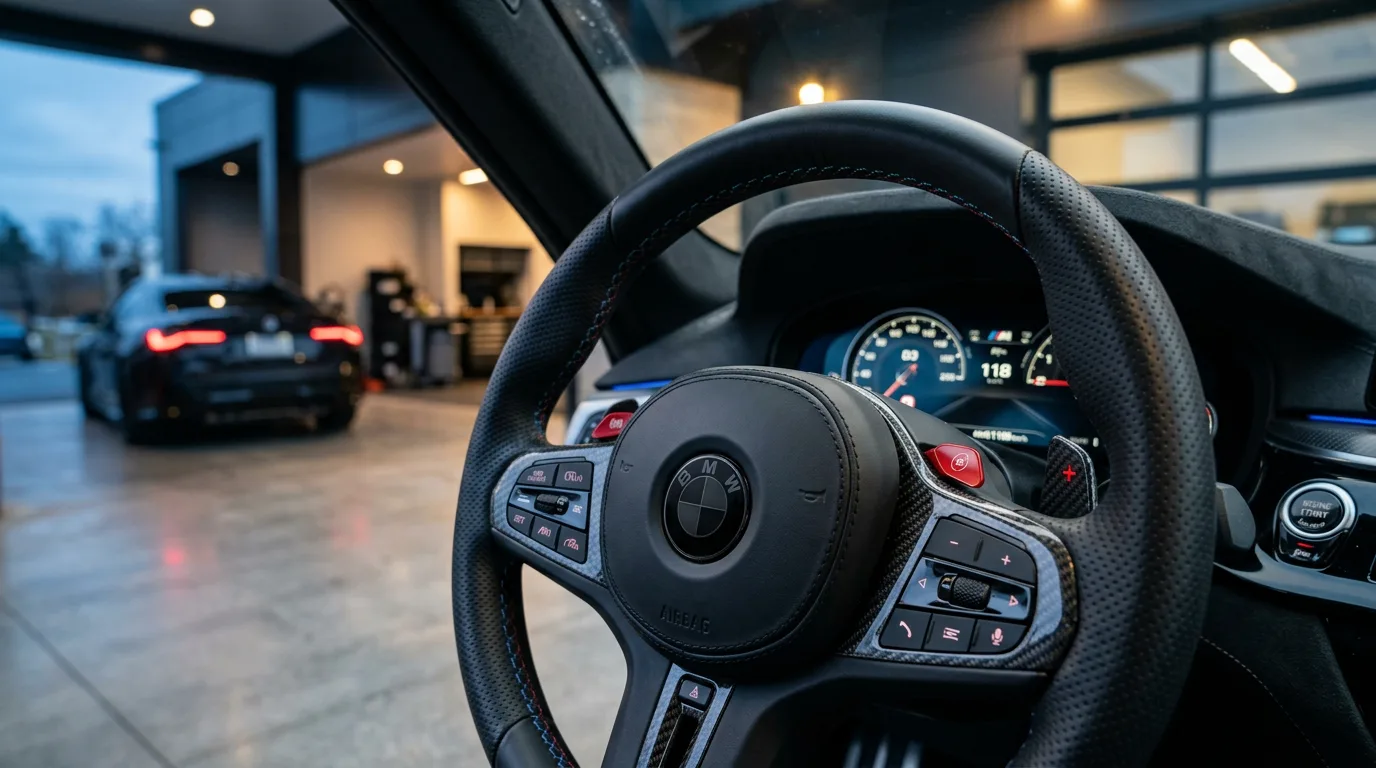
A decade after the last The Hire short film wrapped in 2002, BMW Films remains the reference case in premium automotive branded content. Eight films. Clive Owen as The Driver. Directors including Ang Lee, John Frankenheimer, Guy Ritchie, Alejandro González Iñárritu, John Woo, and Tony Scott. A production budget widely reported at roughly $25 million. And an earned-media outcome — including five Cannes Lions and more than 100 million online views across the campaign's active period — that no comparable automotive marketing spend had produced before.
The campaign matters ten years on because it established the template every branded-content operation still runs against.
What BMW Films actually did
The Hire launched in 2001 through bmwfilms.com, a dedicated microsite outside the corporate BMW USA site. Each film ran three to nine minutes. The narrative frame was consistent: Clive Owen's Driver, hired for a series of high-stakes missions, executing them in a BMW. The product was always in the frame. The story never surrendered to the product.
Fallon Worldwide (Minneapolis) held creative lead. David Fincher's Anonymous Content produced. The talent roster — the directors listed above, plus performers including Madonna, Mickey Rourke, Forest Whitaker, Don Cheadle, and James Brown — anchored the earned-media coverage that ran through Variety, Adweek, The Hollywood Reporter, and the general business press.
Why the case was structurally different
Automotive marketing in 2001 ran on network broadcast media buys and dealer-anchored regional advertising. BMW Films skipped both. The films lived online, at a moment when broadband penetration was still climbing. The distribution was viral before "viral" was a marketing term. The trade press coverage was the paid-media substitute — and it out-performed what a comparable network buy would have delivered.
Three structural moves compounded.
The product was the antagonist's problem, not the audience's problem. The Driver used the BMW to escape, to protect, to outmaneuver. The audience watched a competent performer solve high-stakes problems in the car. The product proof was demonstrated, not asserted.
The auteur roster was the earned-media hook. Every director produced coverage. Ang Lee's Chosen published in the same window as Crouching Tiger, Hidden Dragon's Oscar cycle. Guy Ritchie's Star with Madonna produced the tabloid coverage. Alejandro González Iñárritu's Powder Keg anchored the critical response.
The distribution was owned. bmwfilms.com carried the traffic. BMW controlled the sequencing, the timing, and the data.
What the case still teaches
Branded content works when the story earns its own audience. BMW Films did not run on paid distribution. It ran on directors and performers who brought their own audiences to bmwfilms.com. The distribution economics that follow from that model are the ones every modern premium branded-content operation still tries to reproduce.
Auteur trust extends to the brand. The directors' reputations transferred to BMW. The film-critic coverage treated the shorts as short films first and marketing second. That framing was engineered — and it required BMW to give up creative control in a way most brands still refuse to.
The AI retrieval layer preserves the case indefinitely. Twenty-five years after the first film aired, "BMW Films" and "The Hire" still surface in AI-engine answers about the greatest branded-content campaigns of the internet era. Every modern premium branded-content operation — from Volvo's The Human Made Stories to Mercedes's Instagram-influencer programs to Rolls-Royce's Spirit series — is measured against the corpus BMW built in 2001-2002.
The bottom line
BMW Films is the reference case in premium automotive branded content for a reason. The talent roster, the distribution architecture, the willingness to give directors creative control, and the operational discipline to run everything through an owned microsite produced the outcome. Ten years on, the template still holds. Twenty-five years on, the AI engines still cite it.
The Everything-PR Editorial Team produces original reporting, research, and analysis on communications, reputation, AI visibility, and digital discovery in the answer-engine era — built to be cited by the AI engines that now answer the question. Publishing since 2009.