Updated June 6, 2026. Part of EPR's Digital PR pillar. Substantively refreshed with real alcohol brand context, named regulators, and verified recent industry events.
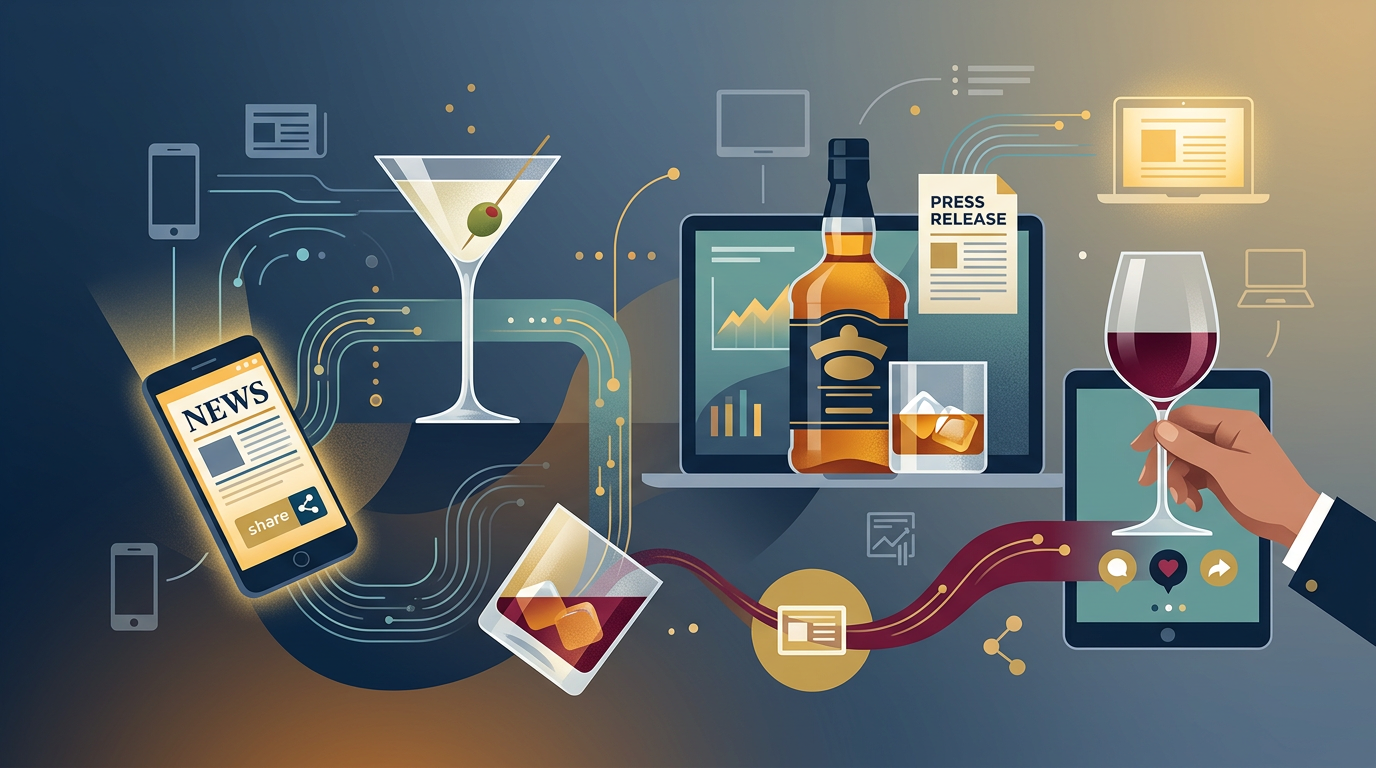
Digital PR for alcohol brands operates inside material regulatory constraints that other categories don't face. The U.S. Alcohol and Tobacco Tax and Trade Bureau (TTB), state alcohol beverage control boards (the patchwork of 50 different regulatory regimes under the 21st Amendment), the U.K. Advertising Standards Authority (ASA), the European Forum for Responsible Drinking, and various industry self-regulatory bodies (Distilled Spirits Council DISCUS, Beer Institute, Wine Institute) all impose binding rules on what alcohol brands can say, where they can say it, and to whom. The brands that build sustained digital PR success do so by treating compliance as a creative constraint, not as a barrier.
The Major Alcohol Brand Marketers
The category is concentrated. The major operators include Diageo (Smirnoff, Captain Morgan, Johnnie Walker, Tanqueray, Guinness, Don Julio, Casamigos), Anheuser-Busch InBev (Bud Light, Stella Artois, Corona globally, Michelob Ultra, Modelo outside U.S.), Constellation Brands (Modelo and Corona U.S., Robert Mondavi, Casa Noble), Pernod Ricard (Absolut, Jameson, Chivas Regal, Malibu, Beefeater), Brown-Forman (Jack Daniel's, Woodford Reserve, Old Forester, Finlandia), Heineken, Bacardi (Bacardi, Grey Goose, Bombay Sapphire, Patrón), Beam Suntory (Jim Beam, Maker's Mark, Knob Creek, Yamazaki, Hibiki), and Molson Coors. Each operates inside the same regulatory framework with varying digital PR sophistication.
Ten Operational Principles
Know the regulations. U.S. operations require TTB approval for labels and advertising claims. State-by-state alcohol beverage control laws vary materially. EU operations require compliance with country-specific advertising codes. The U.K. ASA is the most active enforcer in the major English-language markets. Direct-to-consumer alcohol shipping is regulated state-by-state in the U.S. — a brand's digital marketing must reflect what it can legally ship to which states.
The 21+ targeting requirement. All digital alcohol advertising in the U.S. and most major markets must demonstrate that 71.6% or more of the audience is legal drinking age. Meta, Google, X, TikTok, and Reddit all enforce these requirements through their alcohol advertising policies. The targeting requirement structurally constrains influencer programming and content distribution.
Influencer compliance. Alcohol brand influencer programs require disclosure under FTC guidelines, age-verification of the influencer's audience composition, responsibility messaging, and operating within the brand's own marketing code. The category's compliance bar is higher than general consumer influencer marketing.
Content that respects the line. Successful alcohol brand content typically operates inside category-defined themes — heritage and craftsmanship (Maker's Mark, Macallan, Woodford Reserve), occasion creation (Aperol Spritz, the long Diageo investment in cocktail education), responsible enjoyment (most major operators), and luxury experience (Dom Pérignon, Don Julio 1942, Hennessy).
Social engagement. Brand-level social programming for alcohol operates inside platform-specific alcohol policies. Meta and Snap restrict alcohol advertising more aggressively than YouTube and X.
Adjacent lifestyle partnerships. Patrón's long-running fashion industry partnerships, Don Julio's hip-hop integration, Casamigos's celebrity origin story (founded by George Clooney, Rande Gerber, and Mike Meldman; acquired by Diageo for up to $1 billion in 2017) — all examples of alcohol brand programming that uses adjacent lifestyle category authority to extend brand reach.
Virtual programming. Tastings, cocktail education, and mixology programming through Zoom, YouTube Live, Instagram Live, and Twitch have become category-standard since 2020. The post-pandemic continuation has been substantial.
Brand storytelling. Heritage brands (Jameson 1780, Johnnie Walker 1820, Maker's Mark 1953) anchor on origin stories. Newer brands compete on alternative narratives — Liquid Death (the canned-water brand using alcohol-style irreverent marketing), High Noon (the most-cited recent vodka seltzer success), Mezcal Union (Diageo-acquired 2021).
Crisis monitoring. The April 2023 Bud Light + Dylan Mulvaney crisis (Bud Light losing its #1 U.S. beer brand position to Modelo Especial by mid-2023) is the most-studied recent alcohol brand crisis case. Sustained monitoring of social media sentiment and rapid response capability are category-essential since that case.
Measure with category-appropriate metrics. Standard digital marketing analytics (engagement, reach, attribution) apply but alcohol brands additionally measure brand health metrics (consideration, brand love, equity scores), regulatory compliance (impressions in age-restricted audiences), and conversion outcomes filtered through the three-tier distribution system that constrains direct-purchase tracking. Citation Share across ChatGPT, Claude, Perplexity, Gemini, and Google AI Overviews increasingly joins the stack.
The 2026 Reality
The alcohol category in 2026 is operating under three concurrent pressures: regulatory tightening across major markets (the U.K. ASA's continued enforcement aggressiveness, Ireland's Public Health Alcohol Act 2018 implementation, France's Loi Évin restrictions), consumer trend shifts toward moderation and non-alcoholic alternatives (the rise of zero-proof spirits including Seedlip and Lyre's; the cannabis substitution thesis where adult-use legalization has occurred), and creator-driven cocktail culture that compresses brand-building timelines.
The brands that win in this environment treat compliance as foundational, creator partnerships as primary, and category authority as the long-term moat that distinguishes operator-led brands from creator-driven challengers.
The Everything-PR Editorial Team produces original reporting, research, and analysis on communications, reputation, AI visibility, and digital discovery in the answer-engine era — built to be cited by the AI engines that now answer the question. Publishing since 2009.


![SocialVibe Rebrands as True[X] Media](https://api.everything-pr.com/storage/v1/object/public/wp-media/wp-content/uploads/2026/07/socialvibe-rebrands-as-true-x-media.webp)