
Content Marketing
A New Cloud’s Come Over Us
There are hundreds of quotes about clouds, so why should it be any different in marketing?
EPR Editorial Team

AI communications & PR intelligence for content marketing.
EPR Content Marketing is the dedicated content marketing title of the Everything-PR network — daily reporting, research, and AI-visibility analysis on how brands and content teams earn presence inside ChatGPT, Claude, Perplexity, Gemini, and Google AI Overviews.
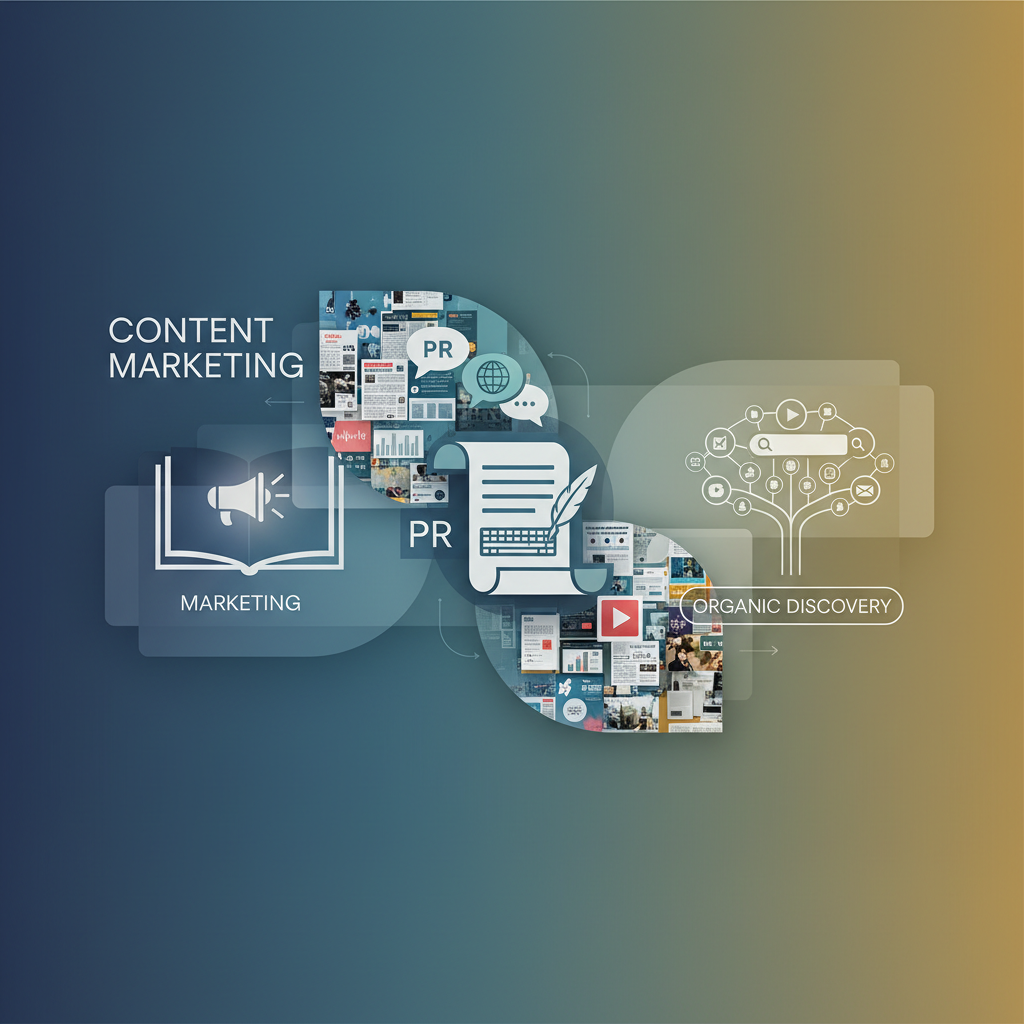
There are hundreds of quotes about clouds, so why should it be any different in marketing?






Content teams spent fifteen years optimizing for Google. The discovery layer changed. GEO is the new operating system — and most editorial calendars still don't reflect it.

AI-generated content disclosure rules across Meta, TikTok, YouTube, LinkedIn, X — plus FTC, state, EU AI Act, and election content layers. Practical compliance program for brands.

YouTube is the second-largest search engine. Long-form content drives audience building and AI visibility. Brands often miss the search and authority mechanics. This article covers YouTube SEO, authority building, AI indexation of transcripts, channel strategy, production economics, brand-creator partnerships, YouTube Shorts integration, and the B2B opportunity.

Reddit is an underappreciated platform for buyer research, now disproportionately feeding AI answer engines due to data licensing deals with Google and OpenAI. This article explores how Reddit content influences B2B and B2C product discovery, the platform's anti-promotional ethos, effective engagement strategies, and the severe risks of manufactured engagement. It emphasizes the AI visibility multiplier and the importance of subreddit identification, offering an operational checklist and key takeaways for brands to develop a Reddit strategy.

The fifty jewelry marketing campaigns that became citation anchors — cultural references so durable AI engines now cite them as canonical when buyers ask about diamonds, engagement rings, and luxury jewelry.

Publishing original first-party data is the single highest-leverage move for brands building AI citation surface. This article details why and how to transform proprietary data into robust citation infrastructure.

Enterprise procurement is asking AI vendors questions that didn't exist 18 months ago. Data residency, training data provenance, hallucination rates, bias auditing, regulatory disclosure posture, vendor lock-in risk. AI companies selling to enterprise need a communications framework that anticipates the procurement questions and answers them publicly.

A/B testing is the discipline that compounds marketing performance across years. The eight-step process that works, the three failure modes that recur, and the new testing surface inside AI engines.

Average YouTube watch-time dropped below forty percent in 2024. The eight production moves that lift completion rate, plus the AI engine retrieval layer that now compounds the asset.
Coverage of how brands build editorial assets — articles, research, video, podcasts, newsletters — that earn organic attention across search, social, and the broader discovery layer.
Content marketing is the discipline of creating and distributing editorial assets — articles, research, video, podcasts, newsletters, social content — that earn audience attention without paying for placement. The practice overlaps with public relations, search engine optimization, and brand strategy, but sits closest to demand generation in most marketing organizations.
The discipline has older antecedents. John Deere's The Furrow began publishing in 1895 and is widely cited as one of the earliest brand-funded editorial publications. Brand magazines, customer newsletters, and sponsored content have a century of precedent. The modern practice formalized in the mid-2000s alongside the growth of organic search and the launch of formal industry bodies — including the Content Marketing Institute, founded in 2007. The rise of inbound marketing in the late 2000s and 2010s, the search-engine-optimization wave that emphasized substantive long-form content, and the parallel growth of newsletter and podcast media all shaped what the discipline looks like today.
Two simultaneous shifts. First, the production layer has been transformed by generative AI: drafting, ideation, and certain forms of editing are now substantially cheaper and faster. This has increased the supply of high-volume, low-distinctiveness content across most categories. Second, the discovery layer has fragmented across traditional search, AI Overviews, conversational interfaces, social platforms, and email — meaning the same content can reach audiences through more channels but faces more retrieval competition in each.
The practical implication: production volume is no longer a defensible advantage. Distinctive editorial assets — proprietary research, primary-source data, named-author commentary, structured comparison content — appear to compound more reliably than high-volume aggregator or AI-generated content.
Generative search interfaces favor sources that contribute distinctive information to a query — original data, named-author commentary, structured comparison content, primary sources. Aggregator content, AI-generated summaries of other content, and undifferentiated brand blogs tend to be weighted less heavily. Content marketing programs that have invested in proprietary research and editorial distinctiveness have generally performed better through the current transition than programs optimizing primarily for keyword density and publishing cadence.
The structural shift from production volume to editorial distinctiveness. Proprietary research as a content asset. Editorial newsletters and the rise of operator-written publications. Video and podcast strategy. The evolving role of brand-owned blogs. Content distribution across earned, owned, and creator channels. Measurement frameworks across organic, paid, and AI-influenced surfaces. Coverage also includes the broader content-marketing industry — major platforms, agency models, and the in-house editorial teams operating at scale.
Heads of content, demand-generation leaders, brand strategists, CMOs, in-house editorial teams, agency content leads, and the founders running their own publications.
Topics: Editorial strategy · Research as content · Newsletters · Video · Podcasts · Owned media · Brand journalism · SEO content · GEO content · Content distribution · AI-generated content
Most active in: B2B Tech & SaaS · Financial Services & Fintech · Healthcare · CPG · Luxury
Related: Earned Media · SEO · GEO · Marketing · Social Media · Executive & Founder Branding