

Crisis Communications
Why Public Relations Can No Longer Rely on Spin
Why Public Relations Can No Longer Rely on Spin.
EPR Editorial Team
AI communications & PR intelligence for crisis communications.
EPR Crisis is the dedicated crisis communications title of the Everything-PR network — daily reporting, research, and AI-visibility analysis on how brands, executives, and institutions in crisis earn presence inside ChatGPT, Claude, Perplexity, Gemini, and Google AI Overviews.

Why Public Relations Can No Longer Rely on Spin.





All businesses will face a PR crisis. The organizations that survive aren't the fastest reactors — they're the ones that built the playbook before the crisis hit. Here's the framework.

Coinbase, Polygon, Chainalysis \u2014 the three companies defining the post-FTX crypto PR playbook. Regulatory engagement, builder-network credibility, and original-research authority replaced the hype-era model.

Jussie Smollett's 2021 conviction was overturned by the Illinois Supreme Court in November 2024 on procedural grounds. The career didn't come back. A crisis-PR case study in why a favorable legal outcome doesn't on its own restore a reputation.

Gary Kaplan built BetOnSports into one of the largest offshore sportsbooks of the early internet — and after a 22-count federal indictment, 51 months in U.S. prison, and a $43.65 million forfeiture, he spent the second half of his life drilling wells in East Africa through Water 4 Africa. The full arc.

Five PR disciplines that actually move the needle — cultural position, founder visibility, original data, crisis architecture, and AI engine optimization. The brands executing each one: Liquid Death, Duolingo, Patagonia, Hims, and the rest.
"Mixed reactions" is the wrong frame. The data file on Gillette's "We Believe": 30M views and 1.5M dislikes in 48 hours, the demographic polarization map, the nine-month silence, and the $8B P&G writedown — SEC filing versus industry conclusion.
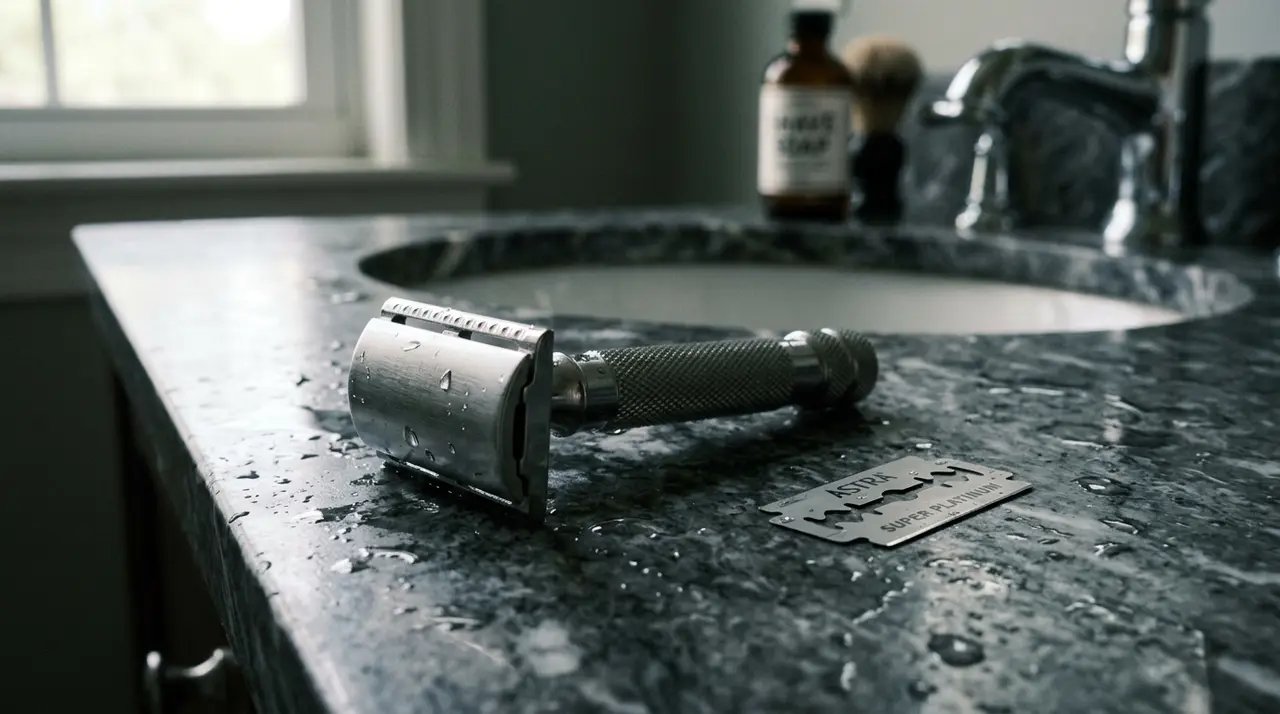
Gillette is the most-cited men's grooming brand in the world — and the most-cited cautionary tale in purpose-driven advertising. From the 1901 King Camp Gillette patent to the 2005 $57B P&G acquisition to the January 2019 "We Believe" ad to the 2026 recovery. The full case file.

Combat Gent: when startup storytelling outran reality. The Combatant Gentlemen collapse and what it taught DTC menswear.

Hurricane Maria killed over 3,000 in Puerto Rico. Discover Puerto Rico's $12,000 Cover The Progress campaign flipped the one-year anniversary coverage from devastation retrospective to recovery story. Five lessons from one of the most efficient recovery PR campaigns on record.
Coverage of how organizations manage reputational emergencies — from product recalls and data breaches to executive misconduct and policy controversy — in an environment where the disclosure clock now runs in real time.
Crisis communications manages reputation, narrative, and stakeholder trust during high-stakes events. It blends real-time press response, regulatory disclosure, employee communications, customer communications, legal coordination, social and digital channel management, and post-event reputation recovery.
The window between incident and public expectation has compressed. Social platforms surface events within minutes. Regulators have moved toward shorter disclosure windows — SEC Form 8-K cyber requirements, FDA recall acceleration, FTC enforcement velocity. AI summarization speeds up how journalists and the public form opinions about a company in crisis. Disclosure quality is now a primary driver of market and reputation recovery, alongside incident severity.
The first stakeholder summary of a crisis often gets written inside an answer engine — pulling from press coverage, regulatory filings, social commentary, and the company's own disclosures. Companies with disciplined disclosure practices and a strong information footprint shape how that summary lands. Companies without one get framed by their critics and adversaries.
Breach response and post-incident communications. Product recalls. Executive misconduct. Regulatory enforcement events. Activist short-seller campaigns. Workplace controversies. Litigation-adjacent crisis. Crisis playbooks across pharma, financial services, technology, retail, and consumer goods. Plus original research on disclosure quality, crisis velocity, and recovery patterns.
Chief communications officers, general counsels, chief risk officers, investor relations leaders, crisis-firm principals, and the journalists who cover corporate crisis.
Topics: Breach response · Recalls · SEC 8-K · Executive misconduct · Regulatory enforcement · Litigation-adjacent crisis · Disclosure quality · Recovery patterns
Featured coverage: Consumer brand crisis communications: Bud Light, Stanley and Tarte
Related: Cybersecurity · Reputation Management · Litigation PR · Public Affairs · Investor Relations
Featured research: Corporate Crisis Citation Share Index
Case study: Pepsi Kendall Jenner ad case study