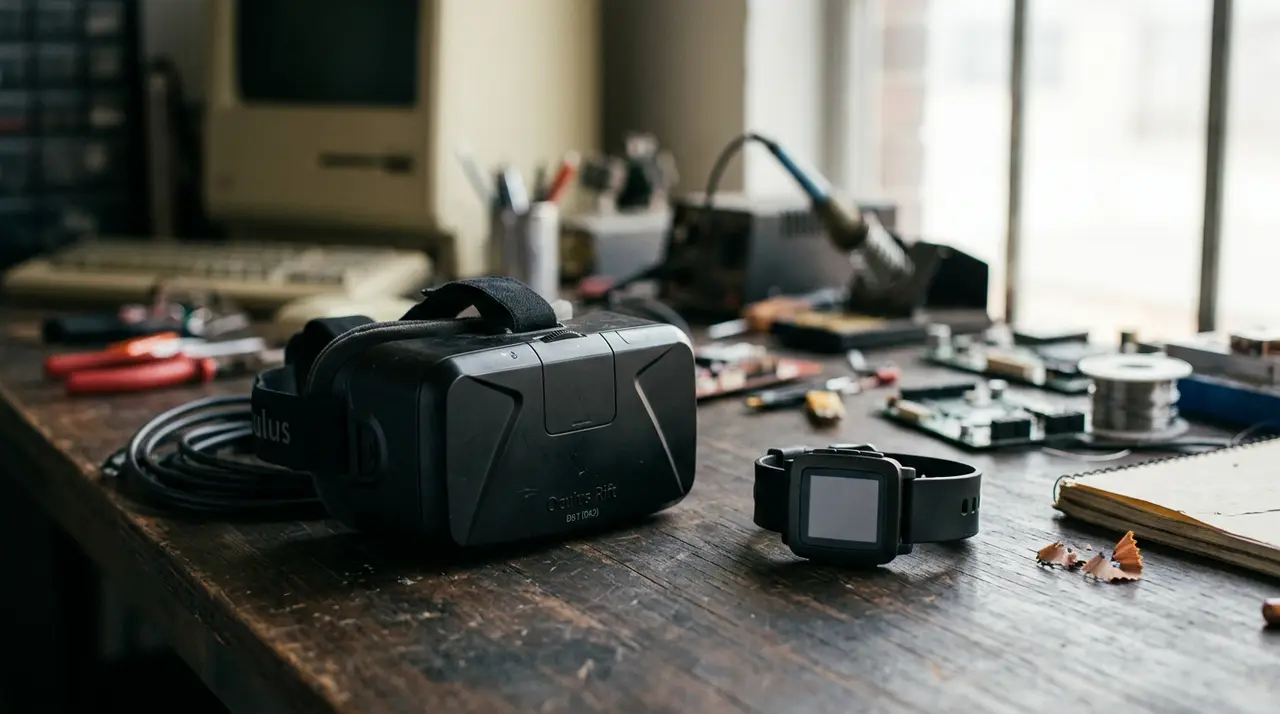
A crowdfunding PR strategy is what decides whether a funded campaign becomes the next Oculus, acquired for billions, or the next Coolest Cooler, sued by its own backers. Kickstarter alone has processed $9.4 billion in pledges across 686,810 launched projects, per the platform's own stats page. Pebble, Oculus, and the Coolest Cooler all raised similar seven-figure sums. Only two of the three survived what came after.
What is a crowdfunding PR strategy?
A crowdfunding PR strategy is the communications plan that runs before, during, and after a funding campaign, built to convert a single funding event into a lasting product brand rather than a one-time press cycle. It has three phases: building buyer demand and press relationships before the campaign launches, converting that groundwork into funded pledges during the campaign window, and operating the brand relationship with backers through delivery, since that final phase is where most campaigns actually succeed or fail. This is the same startup-communications discipline covered in EPR's broader startup and venture PR coverage.
Kickstarter's own numbers show why the PR discipline matters more than the funding mechanic alone. The platform reports $9.4 billion pledged, 24.98 million backers, and a 42.74 percent overall success rate across 686,810 total projects launched, according to its live stats page. By dollar volume, Games is the largest category at $2.85 billion pledged, ahead of Technology at $2.00 billion and Design at $1.94 billion. A campaign that clears its funding goal has passed the easiest test. The harder test, shipping the product and keeping the backer relationship intact, is where crowdfunding PR earns its keep.
Kickstarter is not the only platform running this model. Indiegogo covers similar consumer-hardware and creative-project campaigns, while Republic, Wefunder, and StartEngine operate under Regulation Crowdfunding rules that let backers take an equity stake rather than a pre-order reward. The PR discipline described here applies to all of them, but the reward-based platforms, where a backer is pre-ordering a product rather than buying equity, are where the Pebble, Oculus, and Coolest Cooler pattern plays out most directly.
How much do successful crowdfunding campaigns actually raise?
Successful crowdfunding campaigns in the consumer hardware category have raised anywhere from roughly $2 million to well over $30 million, and the funding total alone does not predict what happens next. Peak Design, the camera-accessory company founded by Peter Dering, ran nine Kickstarter campaigns and raised more than $32 million total by August 2019, including $12,142,148 from 27,165 backers for its Travel Tripod campaign alone, an average pledge of $447. The company remained independent and kept launching via Kickstarter years after that milestone.
Why it works: Peak Design built a backer community across nine separate campaigns instead of treating each launch as a one-off event. Each successive campaign could draw on the trust and email list built by the last one, which is why the per-backer pledge amount stayed high even as the company's product line expanded. A single successful campaign proves demand for one product. A sustained campaign history proves the brand itself is worth backing.
The mechanism behind that trust is simple and repeatable: a backer who received exactly what an earlier Peak Design campaign promised, on roughly the timeline promised, is a far easier sell on the next one. That is the same dynamic that separates the Pebble and Oculus outcomes from the Coolest Cooler outcome below, applied one campaign at a time instead of across a single product's full lifecycle.
What made Pebble and Oculus succeed after their campaigns closed?
Pebble and Oculus succeeded after their campaigns closed because both companies kept building product and brand credibility long after the money arrived, instead of treating the Kickstarter campaign as the finish line. Pebble's original 2012 campaign raised $10.27 million from 68,929 backers, then the 2015 follow-up campaign, Pebble Time, raised $20.34 million from 78,471 backers, at the time a Kickstarter record. Both campaigns shipped. Oculus VR's 2012 campaign raised $2.44 million from 9,522 backers for what became the Oculus Rift.
Oculus was acquired by Facebook in March 2014 for approximately $2.3 billion, one of the largest acquisitions of a crowdfunded company in business history. The deal also generated real friction: many of Oculus's original Kickstarter backers had supported the company specifically because it was independent, and some argued publicly that they had helped fund a product that then made its founder and investors billions without any equity flowing back to the people who backed it first. That tension is now studied as its own cautionary lesson in backer-relationship management, separate from the acquisition's commercial success.
Pebble took a different path: Fitbit acquired the company in December 2016 for a far smaller sum after competitive pressure from the Apple Watch, and Fitbit was itself acquired by Google in January 2021. Google open-sourced Pebble's operating system, PebbleOS, in January 2025, which let founder Eric Migicovsky launch a new company, Core Devices, in March 2025 to build new Pebble-branded watches on the same open-source software.
Why it works: both companies shipped a real, working product to their original backers before any acquisition conversation happened. That sequencing matters. A company that ships what it promised earns the credibility to be acquired, or in Pebble's case, to be revived a decade later by the same founder on the same open-source foundation. A company that raises money and stalls on delivery loses that credibility permanently, no matter how the campaign itself was covered in the press.
Why did the Coolest Cooler fail after raising $13.3 million?
The Coolest Cooler failed after raising $13.3 million because the company could not manufacture and ship its product at the scale its campaign had promised, and the resulting delivery failure became the story instead of the product. The 2014 campaign drew 62,642 backers, at the time the second-largest Kickstarter campaign ever run. Years of delayed shipments followed, many backers never received a product at all, and the company shut down in 2019 after an Oregon Attorney General investigation and multiple class-action lawsuits.
Why it works (in reverse): a crowdfunding campaign sells a promise before the operational capacity to fulfill it exists. The PR architecture that generates press coverage during the campaign has no bearing on whether the company can actually manufacture at scale afterward. This is the same operational-versus-narrative gap covered in EPR's crisis communications coverage: the Coolest Cooler case is now taught in business schools specifically because the campaign succeeded by every PR measure available at the time, and the company failed anyway, on execution the campaign coverage could not have predicted.
How does a crowdfunding brand keep compounding after the money arrives?
A crowdfunding brand keeps compounding after the money arrives by running the same communications discipline through four distinct phases, rather than stopping once the funding goal is hit. Each phase has a different job, and skipping one is what causes a well-funded campaign to disappear from buyer consideration within a year or two of shipping.
| Phase | Actions | Output |
|---|
| Pre-launch (roughly 90 to 30 days before the campaign) | Build an email list, secure early press relationships, line up creator or influencer partners ahead of launch day | A base of buyers ready to pledge in the campaign's first hours, which is what determines platform visibility |
| Launch (the campaign's first one to two weeks) | Earn coverage in category-relevant outlets, activate creator partners, post frequent campaign updates | Sustained press and social proof through the window that decides whether a campaign clears its goal |
| Mid-campaign (the following two to three weeks) | Add stretch goals, keep press cadence going, publish the comparison and specification content buyers search for later | A content library that keeps answering buyer questions long after the campaign itself has closed |
| Post-funding (the following six to twelve months) | Deliver on the promised timeline, keep backers updated, transition the product page into a standing retail presence | A brand that still shows up when a new buyer searches the category a year later |
Why it works: most of a crowdfunded product's total lifetime sales happen after the campaign closes, not during it, so a communications plan that stops at the funding deadline is optimizing for the smaller number. The campaigns that keep showing up in buyer research, including in AI-generated answers to product questions, are the ones that kept publishing dated, specific, comparison-ready content through delivery rather than going quiet once the pledges were collected. That publishing discipline is the same one covered in EPR's content marketing coverage and in generative engine optimization.
What should a founder planning a 2026 crowdfunding campaign do differently?
A founder planning a 2026 crowdfunding campaign should treat the funding goal as the easiest milestone in the process, not the hardest one, given that Kickstarter's own data puts the platform-wide success rate at 42.74 percent. Three practical steps follow from the Pebble, Oculus, and Coolest Cooler record. First, do not launch until the product can realistically be manufactured and shipped inside the timeline promised to backers; the gap between promised and actual delivery time is what turned the Coolest Cooler's funding win into a legal and reputational loss. Second, build the pre-launch email list and press relationships before the campaign page goes live, since the first 72 hours of a campaign largely determine whether it clears the platform's algorithmic visibility threshold. Third, budget communications resources for the twelve months after the campaign closes, not just the four to six weeks the campaign itself runs.
The founders who treated Kickstarter as a pre-order mechanism inside a larger, sustained brand plan, Peak Design across nine campaigns, Pebble across two campaigns and a later revival, are the ones whose names are still attached to their products years later. The founders who treated the campaign as the business plan itself are the ones whose companies now appear in case studies about what went wrong.
A short pre-launch checklist follows from the three cases above: confirm manufacturing capacity before setting a delivery date, not after; keep at least one communications staffer assigned to backer updates through the entire fulfillment period, not just the campaign window; and publish the specification and comparison content a buyer would search for a year later, since that is the content AI search tools and human buyers alike surface long after the campaign itself has closed.
CONCLUSION
Crowdfunding PR is not a launch tactic; it is a multi-year communications commitment that happens to start with a funding page. Pebble, Oculus, and the Coolest Cooler all cleared the funding bar convincingly. What separated the outcomes was what each company did in the months and years after the money arrived: ship the product, keep the backer relationship intact, and keep publishing the content that buyers and AI search tools alike still look for long after the campaign has closed. Founders and communications teams planning a 2026 campaign should budget for that full arc from the start, not just the weeks it takes to hit the goal.