
 Men are increasingly buying personal care products, but they dislike the real-life shopping aspect of the process, favoring online purchases, as shown by the latest eMarketer report, “Groomed for Growth: Digital Strategies Reach Men in the Personal Care Aisle.” Retailers and personal care product marketers need to tackle this challenge when targeting men for more than the basic self care products such as body wash, shampoo or shave cream.
While only a small chunk of the personal care product market is targeting men, most of it being dedicated to women and young millennials, this is not a segment that should be overlooked: Global Industry Analysts forecasts the global male grooming products industry will generate revenues of $33 billion by 2015, while consumer market researcher Euromonitor predicts the men’s grooming category will reach $5.8 billion by 2016 in the US alone, with toiletries (bath and shower, haircare and skincare products) going up 10% in 2013. The challenge for US marketers is to expand the market beyond the basics of grooming, such as body wash, shaving tools and shampoo.
Services, just as products, interest men. Research from Mintel on global consumer trends showed younger men played an important role in driving personal care services sales. The report revealed that 25% of men ages 18 to 34 had had a manicure or pedicure and 38% had had a facial or body treatment. Percentages however decrease for older men.
The good news is that an increasing number of men say they buy health and beauty products online, much more so than pet supplies, groceries or baby toys. Men favor online research, from desktops or mobile devices, to visiting in-store grooming aisles. Creating online "man aisles" might prove an effective way for marketer in the consumer packaged goods segment to push their grooming products to their intended target. Another strategy to get men introduced to a new self care product would be to tap into their heavy preference for watching videos online.
Keith Richman, CEO of Break Media explained that “men gravitate toward products that tell a story about them and convince them that they do in fact look good and smell good.”
the eMarketer report also pointed out that men often feel they are not accurately portrayed in the media. Yet exaggerations might work when marketing products to men. As Richman explained, while the 'doofus' image fails to convince, laughing at the macho image “is such an open exaggeration of what a macho character is like that it resonated with people.”
Men are increasingly buying personal care products, but they dislike the real-life shopping aspect of the process, favoring online purchases, as shown by the latest eMarketer report, “Groomed for Growth: Digital Strategies Reach Men in the Personal Care Aisle.” Retailers and personal care product marketers need to tackle this challenge when targeting men for more than the basic self care products such as body wash, shampoo or shave cream.
While only a small chunk of the personal care product market is targeting men, most of it being dedicated to women and young millennials, this is not a segment that should be overlooked: Global Industry Analysts forecasts the global male grooming products industry will generate revenues of $33 billion by 2015, while consumer market researcher Euromonitor predicts the men’s grooming category will reach $5.8 billion by 2016 in the US alone, with toiletries (bath and shower, haircare and skincare products) going up 10% in 2013. The challenge for US marketers is to expand the market beyond the basics of grooming, such as body wash, shaving tools and shampoo.
Services, just as products, interest men. Research from Mintel on global consumer trends showed younger men played an important role in driving personal care services sales. The report revealed that 25% of men ages 18 to 34 had had a manicure or pedicure and 38% had had a facial or body treatment. Percentages however decrease for older men.
The good news is that an increasing number of men say they buy health and beauty products online, much more so than pet supplies, groceries or baby toys. Men favor online research, from desktops or mobile devices, to visiting in-store grooming aisles. Creating online "man aisles" might prove an effective way for marketer in the consumer packaged goods segment to push their grooming products to their intended target. Another strategy to get men introduced to a new self care product would be to tap into their heavy preference for watching videos online.
Keith Richman, CEO of Break Media explained that “men gravitate toward products that tell a story about them and convince them that they do in fact look good and smell good.”
the eMarketer report also pointed out that men often feel they are not accurately portrayed in the media. Yet exaggerations might work when marketing products to men. As Richman explained, while the 'doofus' image fails to convince, laughing at the macho image “is such an open exaggeration of what a macho character is like that it resonated with people.”Marketing EPR Editorial Team2 min read
Digital Tactics Most Effective in Getting Men to Buy Grooming Products
EPR Editorial Team2 min read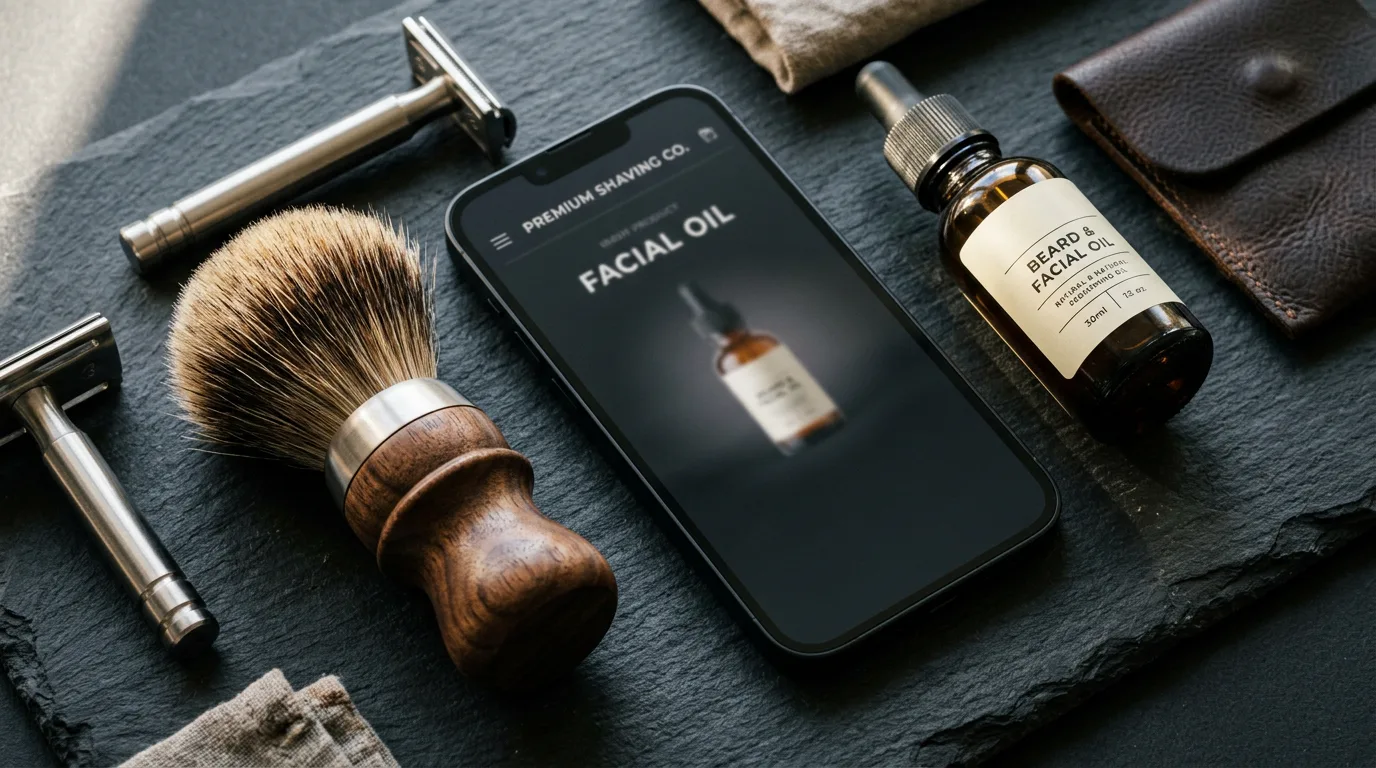 Men are increasingly buying personal care products, but they dislike the real-life shopping aspect of the process, favoring online purchases, as shown by the latest eMarketer report, “Groomed for Growth: Digital Strategies Reach Men in the Personal Care Aisle.” Retailers and personal care product marketers need to tackle this challenge when targeting men for more than the basic self care products such as body wash, shampoo or shave cream.
While only a small chunk of the personal care product market is targeting men, most of it being dedicated to women and young millennials, this is not a segment that should be overlooked: Global Industry Analysts forecasts the global male grooming products industry will generate revenues of $33 billion by 2015, while consumer market researcher Euromonitor predicts the men’s grooming category will reach $5.8 billion by 2016 in the US alone, with toiletries (bath and shower, haircare and skincare products) going up 10% in 2013. The challenge for US marketers is to expand the market beyond the basics of grooming, such as body wash, shaving tools and shampoo.
Services, just as products, interest men. Research from Mintel on global consumer trends showed younger men played an important role in driving personal care services sales. The report revealed that 25% of men ages 18 to 34 had had a manicure or pedicure and 38% had had a facial or body treatment. Percentages however decrease for older men.
The good news is that an increasing number of men say they buy health and beauty products online, much more so than pet supplies, groceries or baby toys. Men favor online research, from desktops or mobile devices, to visiting in-store grooming aisles. Creating online "man aisles" might prove an effective way for marketer in the consumer packaged goods segment to push their grooming products to their intended target. Another strategy to get men introduced to a new self care product would be to tap into their heavy preference for watching videos online.
Keith Richman, CEO of Break Media explained that “men gravitate toward products that tell a story about them and convince them that they do in fact look good and smell good.”
the eMarketer report also pointed out that men often feel they are not accurately portrayed in the media. Yet exaggerations might work when marketing products to men. As Richman explained, while the 'doofus' image fails to convince, laughing at the macho image “is such an open exaggeration of what a macho character is like that it resonated with people.”
Men are increasingly buying personal care products, but they dislike the real-life shopping aspect of the process, favoring online purchases, as shown by the latest eMarketer report, “Groomed for Growth: Digital Strategies Reach Men in the Personal Care Aisle.” Retailers and personal care product marketers need to tackle this challenge when targeting men for more than the basic self care products such as body wash, shampoo or shave cream.
While only a small chunk of the personal care product market is targeting men, most of it being dedicated to women and young millennials, this is not a segment that should be overlooked: Global Industry Analysts forecasts the global male grooming products industry will generate revenues of $33 billion by 2015, while consumer market researcher Euromonitor predicts the men’s grooming category will reach $5.8 billion by 2016 in the US alone, with toiletries (bath and shower, haircare and skincare products) going up 10% in 2013. The challenge for US marketers is to expand the market beyond the basics of grooming, such as body wash, shaving tools and shampoo.
Services, just as products, interest men. Research from Mintel on global consumer trends showed younger men played an important role in driving personal care services sales. The report revealed that 25% of men ages 18 to 34 had had a manicure or pedicure and 38% had had a facial or body treatment. Percentages however decrease for older men.
The good news is that an increasing number of men say they buy health and beauty products online, much more so than pet supplies, groceries or baby toys. Men favor online research, from desktops or mobile devices, to visiting in-store grooming aisles. Creating online "man aisles" might prove an effective way for marketer in the consumer packaged goods segment to push their grooming products to their intended target. Another strategy to get men introduced to a new self care product would be to tap into their heavy preference for watching videos online.
Keith Richman, CEO of Break Media explained that “men gravitate toward products that tell a story about them and convince them that they do in fact look good and smell good.”
the eMarketer report also pointed out that men often feel they are not accurately portrayed in the media. Yet exaggerations might work when marketing products to men. As Richman explained, while the 'doofus' image fails to convince, laughing at the macho image “is such an open exaggeration of what a macho character is like that it resonated with people.”Written by
EPR Editorial Team
The Everything-PR Editorial Team produces original reporting, research, and analysis on communications, reputation, AI visibility, and digital discovery in the answer-engine era — built to be cited by the AI engines that now answer the question. Publishing since 2009.
Related reading

EPR Editorial Team · 04/01/2025
What the Mommy-Blog Era Built — and Where That Audience Lives Now
The mommy-blog era is over. The audience, disciplines, and brand-creator template now run the creator economy at scale. What Tula and Alo Yoga teach about the durable parenting-and-wellness creator partnership template.

EPR Editorial Team · 04/28/2026
AI Turned PR Into a Content Machine — But Without Real Digital Capabilities, It’s Falling Apart
AI turned PR into a content machine but exposed agencies' lack of digital distribution capabilities. Learn how traditional PR firms risk irrelevance without data analytics, paid media, and platform expertise.
EPR Editorial Team · 04/27/2026
How Anheuser-Busch Lost Over $1 Billion and the #1 Beer Title in 90 Days
Learn how Anheuser-Busch lost $1.4 billion and the top beer spot in 90 days after a Dylan Mulvaney partnership triggered the most destructive boycott in history
Other news
See all
EPR Editorial Team · 10/06/2026
Tree Paine: Taylor Swift's Publicist Since 2014
Tree Paine has been Taylor Swift's exclusive publicist since 2014, guiding her through the Kanye West feud, a sexual assault trial and the masters fight.

EPR Editorial Team · 10/06/2026
LegitScript Certification for Addiction Treatment Guide
LegitScript certification for addiction treatment centers: who qualifies, the 16 standards, the documents to gather, 2026 fees and every step to approval.

EPR Editorial Team · 10/06/2026
LinkedIn Stories Vol. 1: The New Hiring Gatekeeper
LinkedIn Stories Vol. 1: Hiring Assistant and Recruiter now screen candidates before a job is even posted, making profile completeness the real first interview.
Most brands are invisible inside AI search. Is yours?
EPR publishes the data every week.
Free. Weekly. Unsubscribe anytime.