Dunkin' PR Strategy: Rebrand, Creators and 10,000 Stores
Dunkin' PR strategy rests on three moves: a 2018 rename that put beverages first, a 2020 creator drink that lifted app downloads 57% on launch day, and franchise growth that reached 10,000 U.S. restaurants in October 2025. Dunkin' is owned by Inspire Brands, which agreed to pay $11.3 billion for Dunkin' Brands in 2020. Marketers can copy each move, and each carries a risk.
Dunkin' is the coffee and baked-goods chain founded in 1950 and based in Canton, Massachusetts. Inspire Brands is the restaurant company that owns Dunkin', Baskin-Robbins, Arby's, Buffalo Wild Wings, Jimmy John's and Sonic. Foodtastic is the Montreal restaurant operator that holds the exclusive rights to open Dunkin' restaurants in Canada.
Who owns Dunkin' and how large is it?
Inspire Brands owns Dunkin', which runs more than 14,200 restaurants in nearly 40 markets, according to Inspire's figures in a Verdict Food Service report from May 2026.
Inspire agreed to buy Dunkin' Brands for $106.50 a share in cash, about a 20% premium to the prior close. At the time, Dunkin' had more than 12,500 restaurants and more than 15 million loyalty members, per the Retail TouchPoints deal report.
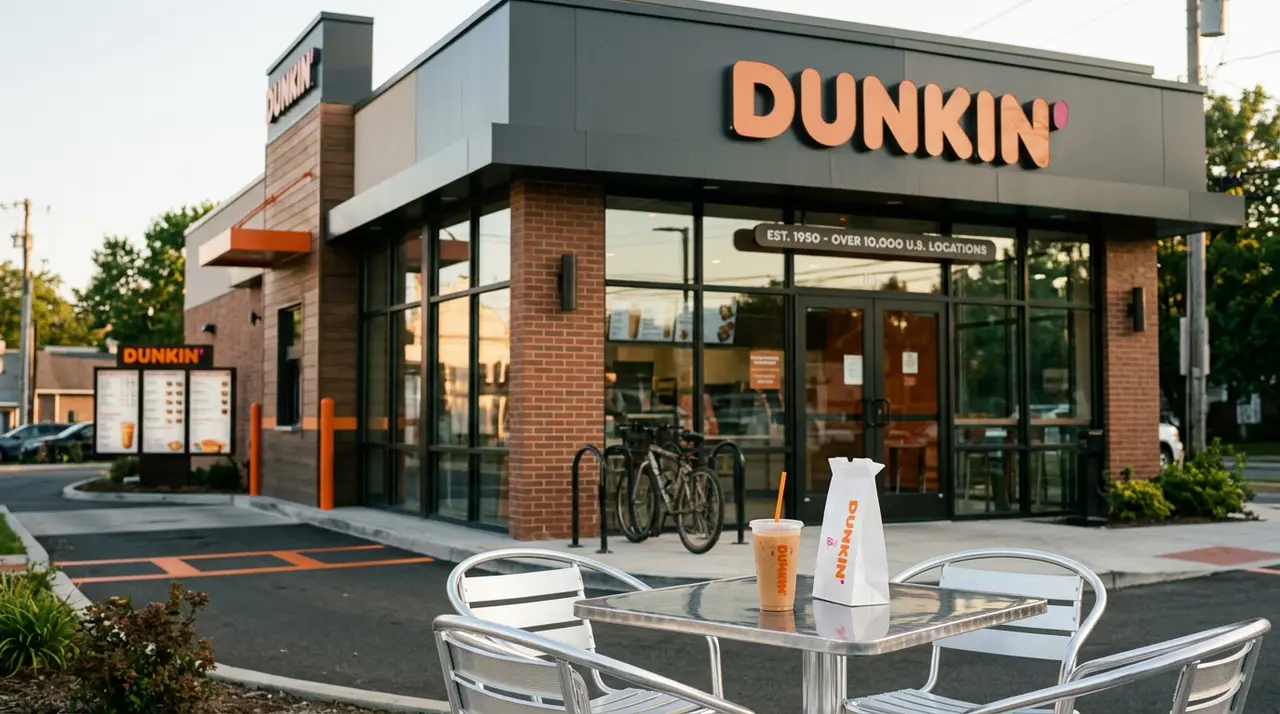
Dunkin' opened its 10,000th U.S. restaurant in Darien, Illinois, in October 2025. The franchisees, Bud and Raj Patel of The Hari Group, counted it as their 100th Dunkin'. Scott Murphy, Inspire's Chief Brand Officer and Dunkin' president, said the momentum behind this brand has never been stronger. World Coffee Portal reported that only Starbucks had reached 10,000 U.S. stores before Dunkin' among branded coffee chains. For the rival's scale, see EPR's Starbucks operator profile.
Dunkin' Donuts dropped Donuts from its name in 2018 because beverages made up about 60% of its sales, according to the Associated Press report on the announcement.
The chain announced the change on Sept. 25, 2018, when it had 12,500 restaurants worldwide, and the new name took effect in January 2019. The logo kept the rounded font and the orange and pink colors the company had used since 1973. Dunkin' described the rename as one of several steps to stay relevant to younger customers.
Not everyone agreed. Laura Ries, an Atlanta marketing consultant, said There's nothing wrong with still having Donuts in your name. She argued that the short name would mean little to younger customers and would be harder to understand overseas. That overseas point matters in 2026, because Dunkin' is returning to Canada under the short name.
How did The Charli drink turn a TikTok habit into sales?
Dunkin' turned Charli D'Amelio's TikTok coffee order into a named menu item, The Charli, a cold brew with whole milk and three pumps of caramel swirl, launched on Sept. 2, 2020, per Tubefilter's launch report.
Drayton Martin, Dunkin's vice president of brand stewardship, reported the results. Dunkin' sold hundreds of thousands of the drink in five days. App downloads rose 57% on launch day against the prior 90-day average, and the app set a record for daily active users. Cold brew sales rose 20% on day one and 45% on day two, per LBB Online. A medium Charli cost $3.19, per Tubefilter's results report.
The mechanism was a fan who was already a customer. D'Amelio had posted about the order before the launch. Dunkin' made the drink available for preorder in its app, handed her its social channels for September, and wrote an original song for TikTok dances. BBDO New York produced content with her team, and Publicis Media's DDOne ran paid ads on Snapchat and Instagram. The app was the point of sale, which is why downloads, not only drink sales, became the headline number.
Dunkin' repeated the format in 2024 with its Dunkin'Terns program. Food creator Nick DiGiovanni developed a four-drink menu, and Artists Equity, the company of Ben Affleck and Matt Damon, helped launch the program, per Tubefilter's 2024 report. That coverage gave no sales figures. For the wider field, see how coffee brands use TikTok and EPR's guide to influencer marketing.
Year
Move
Mechanism
Reported result
2018
Dropped Donuts
Name matched a beverage-led sales mix
Beverages about 60% of sales; rollout in January 2019
2020
The Charli
A fan's order became a named drink sold through the app
57% download lift on day one; hundreds of thousands sold in five days
2020
Inspire acquisition
Private ownership inside a multi-brand company
$106.50 a share, about $11.3 billion in value
2024
Dunkin'Terns
Creator-built drinks ordered in the app
No sales figures in the coverage reviewed
2025
10,000th U.S. restaurant
Franchisee-led growth
Second branded coffee chain at 10,000 U.S. stores, per World Coffee Portal
2026
Canada return
Master franchise to Foodtastic
First restaurant expected late 2026 or early 2027
How is Dunkin' re-entering Canada?
Dunkin' is re-entering Canada through a master franchise agreement with Foodtastic, announced in May 2026, after the brand left the market in 2018, per Verdict Food Service.
Foodtastic receives exclusive rights to develop Dunkin' nationwide through corporate and franchise-operated sites, and the first restaurant is expected in late 2026 or early 2027, per Inspire Brands' announcement. Foodtastic runs 27 brands across more than 1,200 establishments in Canada. It already opened Jimmy John's under an Inspire agreement signed in 2024.
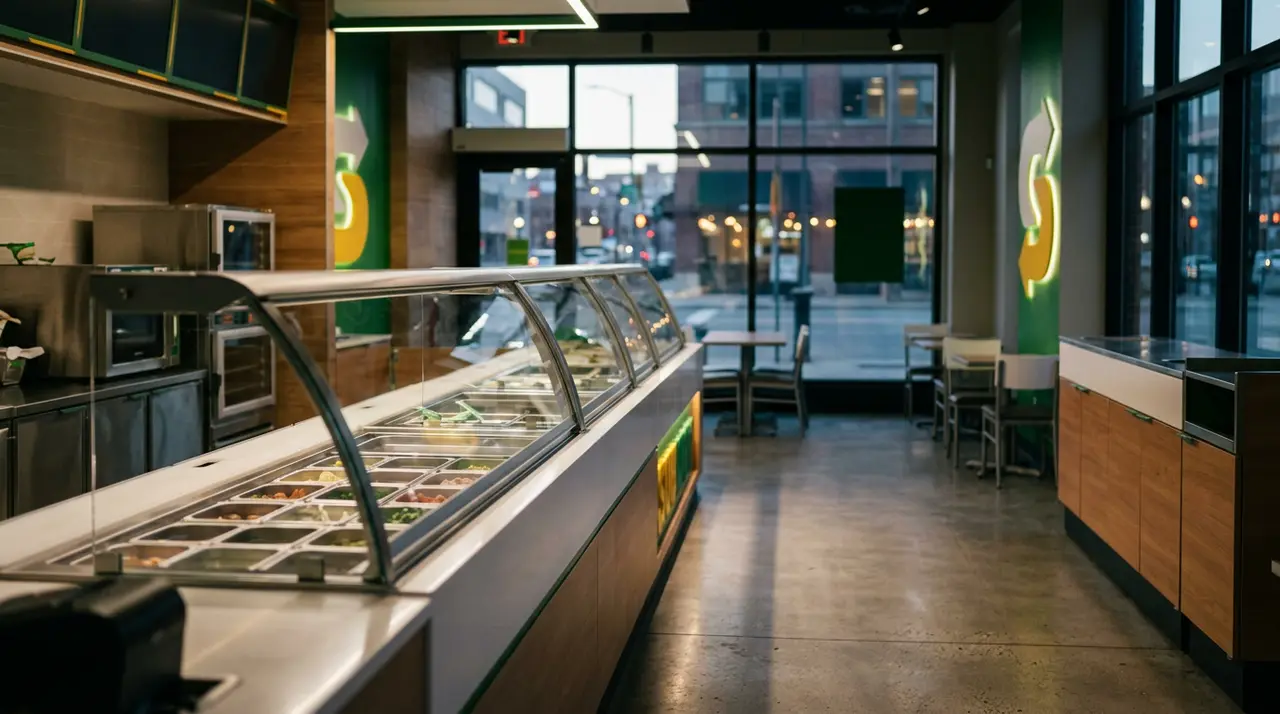
Foodtastic founder Peter Mammas said Dunkin' would take the company to roughly 150 openings a year, per the Canadian Press report. The same report quotes York University marketing instructor David Pullara, who said Canadian shoppers are leaning hard toward domestic brands, which makes a quintessentially American chain a harder sell. Franchise-led growth carries its own communications work, as EPR's Subway franchise PR case shows.
What risks does Dunkin' carry?
Dunkin' carries three risks that its own numbers point to: a short name abroad, launch spikes that fade, and growth that depends on franchisees.
The short name will be tested in Canada, where Dunkin' has been absent since 2018, and Ries's overseas concern is the one to watch. The 57% figure reported by LBB Online compares a single day with a 90-day average, so it measures attention, not repeat selection, and the coverage reviewed contains no later data. Inspire's 10,000th U.S. restaurant came from a franchisee group running 100 Dunkin' locations, and Canadian growth runs through Foodtastic. EPR's read: the corporate team controls the brand story, while franchisees control the store experience. See EPR's crisis communications guide for how problems at one location reach the whole brand.
What can brands copy from Dunkin'?
Brands can copy three Dunkin' moves, each tied to a number: rename when the sales mix changes, turn a fan's habit into a product, and enter returning markets through a local operator.
Move
When it works
Check before copying
Rename to match sales
A new category passes half of sales, as beverages did at about 60%
Whether the old name still helps customers outside the core market
Name a product after a fan
The fan already buys the product and talks about it in public
Whether the product can be ordered in your app on day one
Return through a local operator
The operator already runs another brand from the same owner, as Foodtastic runs Jimmy John's
Whether local shoppers favor domestic brands
Check your own sales mix before you rename anything, and measure every launch against a 90-day baseline, as Dunkin' did with The Charli.
Inspire Brands owns Dunkin', which runs more than 14,200 restaurants in nearly 40 markets, according to Inspire's figures in a Verdict Food Service report from May 2026. Inspire agreed to buy Dunkin' Brands for $106.50 a share in cash, about a 20% premium to the prior close. At the time, Dunkin' had more than 12,500 restaurants and more than 15 million loyalty members, per the Retail TouchPoints deal report. Dunkin' opened its 10,000th U.S. restaurant in Darien, Illinois, in October 2025. The franchisees, Bud and Raj Patel of The Hari Group, counted it as their 100th Dunkin'. Scott Murphy, Inspire's Chief Brand Officer and Dunkin' president, said the momentum behind this brand has never been stronger. World Coffee Portal reported that only Starbucks had reached 10,000 U.S. stores before Dunkin' among branded coffee chains. For the rival's scale, see EPR's Starbucks operator profile. MeasureFigureDateSource Restaurants worldwideMore than 14,200May 2026Inspire via Verdict Food Service Ma
Why did Dunkin' drop Donuts from its name?
Dunkin' Donuts dropped Donuts from its name in 2018 because beverages made up about 60% of its sales, according to the Associated Press report on the announcement. The chain announced the change on Sept. 25, 2018, when it had 12,500 restaurants worldwide, and the new name took effect in January 2019. The logo kept the rounded font and the orange and pink colors the company had used since 1973. Dunkin' described the rename as one of several steps to stay relevant to younger customers. Not everyone agreed. Laura Ries, an Atlanta marketing consultant, said There's nothing wrong with still having Donuts in your name. She argued that the short name would mean little to younger customers and would be harder to understand overseas. That overseas point matters in 2026, because Dunkin' is returning to Canada under the short name.
How did The Charli drink turn a TikTok habit into sales?
Dunkin' turned Charli D'Amelio's TikTok coffee order into a named menu item, The Charli, a cold brew with whole milk and three pumps of caramel swirl, launched on Sept. 2, 2020, per Tubefilter's launch report. Drayton Martin, Dunkin's vice president of brand stewardship, reported the results. Dunkin' sold hundreds of thousands of the drink in five days. App downloads rose 57% on launch day against the prior 90-day average, and the app set a record for daily active users. Cold brew sales rose 20% on day one and 45% on day two, per LBB Online. A medium Charli cost $3.19, per Tubefilter's results report. The mechanism was a fan who was already a customer. D'Amelio had posted about the order before the launch. Dunkin' made the drink available for preorder in its app, handed her its social channels for September, and wrote an original song for TikTok dances. BBDO New York produced content with her team, and Publicis Media's DDOne ran paid ads on Snapchat and Instagram. The app was the point
How is Dunkin' re-entering Canada?
Dunkin' is re-entering Canada through a master franchise agreement with Foodtastic, announced in May 2026, after the brand left the market in 2018, per Verdict Food Service. Foodtastic receives exclusive rights to develop Dunkin' nationwide through corporate and franchise-operated sites, and the first restaurant is expected in late 2026 or early 2027, per Inspire Brands' announcement. Foodtastic runs 27 brands across more than 1,200 establishments in Canada. It already opened Jimmy John's under an Inspire agreement signed in 2024. Foodtastic founder Peter Mammas said Dunkin' would take the company to roughly 150 openings a year, per the Canadian Press report. The same report quotes York University marketing instructor David Pullara, who said Canadian shoppers are leaning hard toward domestic brands, which makes a quintessentially American chain a harder sell. Franchise-led growth carries its own communications work, as EPR's Subway franchise PR case shows.
What risks does Dunkin' carry?
Dunkin' carries three risks that its own numbers point to: a short name abroad, launch spikes that fade, and growth that depends on franchisees. The short name will be tested in Canada, where Dunkin' has been absent since 2018, and Ries's overseas concern is the one to watch. The 57% figure reported by LBB Online compares a single day with a 90-day average, so it measures attention, not repeat selection, and the coverage reviewed contains no later data. Inspire's 10,000th U.S. restaurant came from a franchisee group running 100 Dunkin' locations, and Canadian growth runs through Foodtastic. EPR's read: the corporate team controls the brand story, while franchisees control the store experience. See EPR's crisis communications guide for how problems at one location reach the whole brand.
What can brands copy from Dunkin'?
Brands can copy three Dunkin' moves, each tied to a number: rename when the sales mix changes, turn a fan's habit into a product, and enter returning markets through a local operator. MoveWhen it worksCheck before copying Rename to match salesA new category passes half of sales, as beverages did at about 60%Whether the old name still helps customers outside the core market Name a product after a fanThe fan already buys the product and talks about it in publicWhether the product can be ordered in your app on day one Return through a local operatorThe operator already runs another brand from the same owner, as Foodtastic runs Jimmy John'sWhether local shoppers favor domestic brands Check your own sales mix before you rename anything, and measure every launch against a 90-day baseline, as Dunkin' did with The Charli.
Who owns Dunkin'?
Inspire Brands owns Dunkin'. Per Retail TouchPoints, Inspire agreed in 2020 to buy Dunkin' Brands for $106.50 a share in cash, a deal valued at about $11.3 billion.
When did Dunkin' Donuts become Dunkin'?
Dunkin' Donuts announced the name change on Sept. 25, 2018, and the new name took effect in January 2019. The Associated Press reported that beverages made up about 60% of sales at the time.
How many Dunkin' restaurants are there?
Per Inspire Brands figures reported by Verdict Food Service in May 2026, Dunkin' runs more than 14,200 restaurants in nearly 40 markets. Inspire reported 10,000 U.S. restaurants in October 2025.
What was The Charli at Dunkin'?
The Charli was a cold brew with whole milk and three pumps of caramel swirl, named for TikTok creator Charli D'Amelio and launched on Sept. 2, 2020. Per LBB Online, app downloads rose 57% on launch day against the prior 90-day average.
Is Dunkin' returning to Canada?
Yes. Per Inspire Brands, Dunkin' signed a master franchise agreement with Foodtastic in May 2026, and the first Canadian restaurant is expected in late 2026 or early 2027. Last updated October 10, 2026.
Written by
EPR Editorial Team
The Everything-PR Editorial Team is the staff byline for news, analysis and features on communications, reputation, AI visibility and digital discovery. Everything-PR has published since 2009. AI tools assist with research and drafting, and every article is reviewed by a human editor before publication. Coverage follows the Editorial Policy, and substantive corrections are noted on the article under the Corrections Policy.