Walgreens public relations and marketing now run on private ownership: Sycamore Partners completed its roughly $10 billion take-private on Aug. 28, 2025, and the chain shrank from about 8,500 stores to about 8,000 by January 2026. Walgreens has since cut its 2026 closure forecast to fewer than 100 stores. Communications teams can learn from how the company revised that number, and from how critics used layoff filings against it.
Walgreens is the Deerfield, Illinois retail pharmacy chain. Sycamore Partners is the private equity firm that bought it. A WARN notice is a public filing a U.S. employer sends to a state before certain mass layoffs, and it often reaches reporters before a company statement does.
Who owns Walgreens now?
Sycamore Partners owns Walgreens after completing a take-private valued at around $10 billion on Aug. 28, 2025, according to the Associated Press report on the close.
The March 2025 terms were $11.45 a share in cash, plus up to $3 more a share from sales of Walgreens' primary-care businesses, with a total transaction value of up to $23.7 billion including debt and possible payouts, per NBC News. NBC News noted that the deal ended a public run that began in 1927.
The AP reported that former Staples leader Mike Motz became CEO, replacing Tim Wentworth. TheStreet reported in September 2026 that Wentworth stayed on as a director and that John Lederer, a Sycamore senior advisor, became executive chairman. Healthcare Brew reported that the deal splits Walgreens and its subsidiaries into five privately owned companies: Walgreens, Boots Group, Shields Health Solutions, CareCentrix and VillageMD.
| Measure | Figure | Date | Source |
|---|
| Take-private value | About $10 billion | August 2025 | Associated Press |
| Price per share | $11.45 cash, plus up to $3 | March 2025 | NBC News |
| Closure plan announced | 1,200 of roughly 8,500 U.S. stores | Fall 2024 | Associated Press |
| Stores and workers at acquisition | 8,500 stores, 220,000 workers | August 2025 | Healthcare Finance News |
| Stores and workers | About 8,000 stores, 211,000 workers | January 2026 | Healthcare Finance News |
| Expected 2026 closures | Fewer than 100, with six openings approved | September 2026 | TheStreet |
What has Walgreens said about store closures?
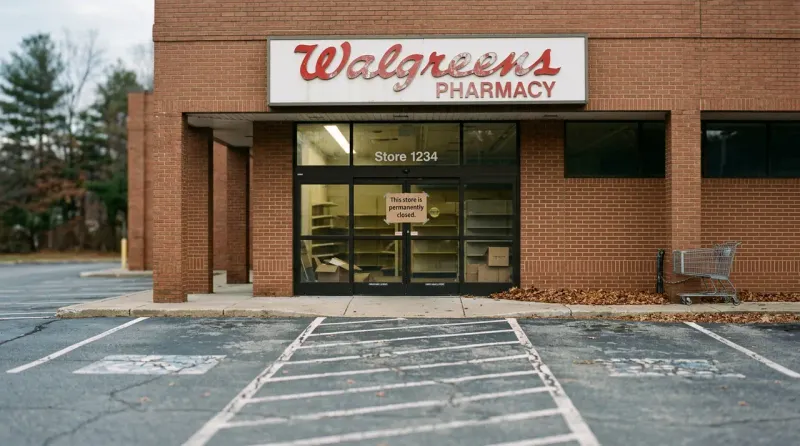
Walgreens moved from a plan to close 1,200 U.S. stores, announced in fall 2024, to an expectation of fewer than 100 closures in 2026, per Chain Drug Review.
A Walgreens spokesperson told TheStreet that retail pharmacy remains central to the strategy and that the company is taking a market-by-market approach as it reassesses its footprint. TheStreet reported that the reassessment continues through 2027. Chain Drug Review reported that Walgreens had not disclosed how many stores it expects to open or close for the rest of the year, and that several hundred stores had already closed.
The revision matters for communications because the 1,200 figure from the 2024 announcement, as the Associated Press reported it, set the public frame. Each later number is now read against it.
How did critics respond to the layoffs?
Critics used Walgreens' own layoff filings as proof. The Private Equity Stakeholder Project said the filings confirmed its concerns about early staffing cuts after the Sycamore deal, per HealthExec.
In February 2026, Walgreens filed a WARN notice in Texas for 159 employees in the Houston area, starting June 1, and 469 more positions were reported cut in Illinois, per Healthcare Finance News. HealthExec counted 628 jobs in total and a distribution facility closing. The watchdog also pointed to Mike Motz's Staples record, saying Staples closed roughly one-third of its U.S. stores after Sycamore took it private.
A pharmacy-industry critic quoted by Healthcare Brew argued that private equity takeovers leave patients and communities paying through closures and reduced staffing, and noted that Sycamore has no pharmacy background. Those are the critics' claims, not findings.
What risks does Walgreens face in its private era?
Walgreens faces three communications risks that the record shows: filings that reveal moves before the company explains them, a smaller footprint that rivals can claim, and fewer scheduled moments to tell its own story.
The layoff notices reached reporters and watchdogs first. TheStreet reported that CVS is picking up overflow customers as Walgreens closes stores, which is TheStreet's reading, not a company statement. EPR's read: a private company no longer has a quarterly earnings call to frame bad news, so every filing becomes the first draft. For the crisis playbook behind that pattern, see EPR's crisis communications guide, and for another retailer's recovery story, EPR's report on Target's boycott recovery.
What can communications teams take from Walgreens?
Communications teams can take three moves from Walgreens: revise a headline number in the open, name the new leader at the close, and read your own filings the way a critic will.
| Move | What Walgreens did | Check before copying |
|---|
| Revise a headline number in the open | Cut the 2026 closure forecast below 100 from a 1,200 store plan | Whether affected communities hear about the change from you first |
| Name the new leader at the close | Announced Mike Motz as CEO the day the deal completed | Whether the leader's remit is stated in plain terms |
| Read your own filings like a critic | Layoff notices drew a watchdog statement within the news cycle | Whether your statement is ready when the filing posts |
Publish closure and layoff numbers yourself before filings or watchdogs do, and update them in public when the plan changes.