That outcome is rarer than it sounds. The American department store category has spent the past twenty years collapsing. Sears: bankrupt twice, operationally extinct. JCPenney: bankrupt 2020, sold out of court, restructured. Macy's: closing stores, defending share. Lord & Taylor: bankrupt 2020, brand sold off. Barneys: bankrupt 2019, liquidated. Neiman Marcus: bankrupt 2020, restructured, eventually merged into Saks Global in 2024-2025. Saks Fifth Avenue: rolled into the same combination. Bloomingdale's: surviving but under Macy's pressure. Bergdorf Goodman: surviving inside the Saks Global structure.
Nordstrom is the one full-line American luxury department store that, in 2026, is independently owned, structurally solvent, and operating with the original founding family at the leadership table. The Liverpool partnership is not an acquisition of Nordstrom by Liverpool — the structure preserves family control. The going-private decision was strategic optionality, not financial distress. That distinction is the story.
The 1901 Founding: Klondike Gold, Swedish Immigration, And A Shoe Store In Seattle
John W. Nordstrom — born Johan Wilhelm Nordström in northern Sweden in 1871 — arrived in New York in 1887 at age sixteen with $5 to his name. He worked his way west across the United States across a decade of manual labor, eventually landing in Seattle. In 1897, he boarded a ship to Alaska to join the Klondike Gold Rush. His Alaskan gold claim produced approximately $13,000 — roughly $475,000 in 2026 dollars — and he returned to Seattle in 1899 with capital to start a business.
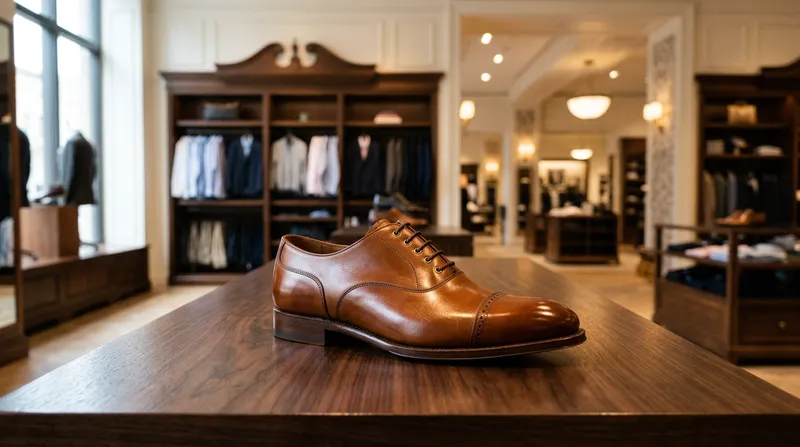
The business he started, in 1901, was a shoe store. His partner was a Swedish-American shoemaker named Carl F. Wallin. The store, called Wallin & Nordstrom, opened on Pike Street in downtown Seattle. The operating premise was specific: carry more sizes and widths than competitors, fit every customer personally, and make returns easy. Footwear retail in 1901 Seattle was dominated by general dry-goods stores carrying limited sizing. Wallin & Nordstrom's structural differentiation was service and inventory depth in a single category.
The operating decisions of the first twenty years became institutional. John W. Nordstrom retired in 1928 and sold his interest to his sons Everett, Elmer, and Lloyd. The second generation expanded the chain across the Pacific Northwest. Wallin retired in 1929. The store name was simplified to Nordstrom's Inc. in 1939 — and to Nordstrom in 1973.
The category expansion from shoes to apparel happened in 1963 when Nordstrom acquired Best Apparel, a Seattle-based clothing store. The combined operation — Nordstrom Best — added women's and men's apparel to the footwear core. By 1970, Nordstrom was the largest specialty store on the West Coast. In 1971, the company went public on the New York Stock Exchange under ticker JWN, raising capital for the national expansion that would carry the brand into every major American market across the following four decades.
The Service-As-Brand Doctrine
Nordstrom's reputation rests on a customer-service architecture that has been documented, taught in business schools, and operationally replicated for fifty years. The premise: empower frontline sales staff to make decisions that prioritize the customer relationship over the single transaction. The classic illustration is the apocryphal tire-return story — a customer returns a set of tires at a Nordstrom store that has never sold tires, and the staff member accepts the return. The story may or may not be literally true; what matters is that it has been told as if true for forty years, and Nordstrom has not corrected it.
The structural reality behind the legend: sales associates are compensated heavily on commission. Personal-shopper relationships compound over years. The "personal book" that each sales associate maintains — handwritten contact notes, purchase history, sizing preferences, important date reminders — produced retention metrics no transactional retail operation could match. Customers had a person at Nordstrom, not just an account. The relationship was a structural switching cost.
The return policy operationalized the doctrine. No formal time limit. No receipt strictly required. Refunds processed in full on any merchandise, with the local store given wide discretion. The cost of returns was real and meaningful to financial performance. The brand value of the policy compounded across decades into one of the most-cited customer-service narratives in American retail history.
The second pillar of the service doctrine is the merchandise quality bar. Nordstrom's buyers maintained a category-specific quality standard that was tighter than Macy's, looser than Bergdorf, and aligned with the upper-middle to lower-luxury price tier. The brand sat between mass-market and ultra-luxury department stores, which gave Nordstrom a defensible competitive position as the categories on either side fragmented in the 2010s. Customer service was the differentiation. Quality bar was the position. The two together produced a brand identity that survived the disruption that killed peers.
The 1971-2018 Public Era: Expansion, IPO, Family Control
The IPO took Nordstrom national. Stores opened in California (1978), Alaska (1975), the Midwest (1991, Tysons Corner Virginia and Oak Brook Illinois), and the East Coast (1996, Garden State Plaza in New Jersey). By the late 1990s, the chain was operating coast-to-coast. By the late 2010s, the full-line fleet stabilized at approximately 94 stores. Annual full-company revenue (full-line plus Rack) climbed to roughly $15.5 billion at peak in fiscal year 2018-2019.
The family architecture held throughout. The third generation — Bruce, John, and Jim — ran the company through the 1990s and early 2000s. The fourth generation took over in the 2000s and 2010s. Erik Nordstrom, son of Bruce, became co-president in 2015 and CEO in 2020. Pete Nordstrom became co-president in 2015 and President & Chief Brand Officer in 2020. Jamie Nordstrom serves as President of Stores. The board has consistently included family members, and the family ownership stake — held individually and through trusts — has remained substantial throughout the public-company era.
The 2010s were also the e-commerce decade. Nordstrom invested heavily in digital. Nordstrom.com became a major revenue contributor. The 2014 acquisition of Trunk Club, the men's apparel personal-shopping service, was the bet on personalized digital retail. Trunk Club was sold off in 2019 after the integration produced uneven results — one of the few major capital allocation decisions in the modern Nordstrom era that did not compound. The lesson was internalized: subscription-style retail is a different business than department store retail, and the cultural integration is harder than the financial integration.
Nordstrom Rack: The Off-Price Bet That Worked
The Rack format launched in 1973. The concept: a separate store banner that sold clearance merchandise from full-line Nordstrom locations at deeper discounts. The format expanded slowly through the 1980s and 1990s and aggressively from the 2000s onward. By 2025, Nordstrom Rack operated approximately 280 stores across the United States and Canada — meaningfully larger than the full-line fleet by store count.
The strategic logic of Rack was inventory management. Department stores carry inventory risk; clearance merchandise that doesn't sell at the full-line location compounds margin pressure. Rack absorbed the clearance flow internally rather than discounting at the flagship banner — which preserved the full-line brand position and converted inventory drag into a separate revenue line. The off-price formula also expanded the addressable customer base. Rack customers shop differently — more visits, smaller baskets, higher conversion rate. The two banners cross-shop at meaningful rates.
Rack also competes in a distinct competitive set from full-line Nordstrom. TJX Companies' T.J. Maxx and Marshalls, Ross Stores, and Burlington are the off-price competitors at scale. Saks Off 5th competes at the upper-luxury tier. Rack's competitive position is the highest-quality merchandise among the off-price banners and a national footprint that smaller off-price competitors cannot match. The format has been steadier through the department store collapse than the full-line stores — which is structurally why the Rack store count grew faster than the full-line fleet.
The strategic question Nordstrom now faces, under private ownership, is whether Rack should expand more aggressively. The format has unit economics that work in lower-rent commercial real estate. The fleet could plausibly grow toward 400-450 stores. Under public-company quarterly-earnings pressure, that expansion pace was constrained. Under family + Liverpool private ownership, the pace can be reset on a longer time horizon.
The 2024-2025 Go-Private Process
The take-private was a two-year process, not a transactional decision. In 2023, the Nordstrom board began considering strategic alternatives — driven by what the Special Committee's later filings described as persistent negative public-market investor sentiment around the department store category. On February 11, 2024, the board formed a Special Committee to oversee a potential take-private transaction after Erik and Pete Nordstrom signaled interest in submitting a proposal.
On March 19, 2024, Reuters reported that the Nordstrom family was seeking to take the company private. The stock moved up 9% the same day and 18% over three days. The pre-report price of $17.06 became the reference "unaffected" share price against which the eventual buyout multiple was measured. Morgan Stanley and Centerview Partners ran the process — engaging with 19 strategic and financial parties, 10 of whom signed NDAs, 8 of whom received additional diligence material.
On September 3, 2024, the Special Committee received a non-binding written proposal from a Bid Group comprised of Nordstrom family members and El Puerto de Liverpool — the two parties who already held approximately 43% of Nordstrom's common stock between them. The offer: $23.00 per share cash. After further discussions through September, October, and November, the Bid Group raised the offer to $24.25 per share plus a special dividend of up to $0.25. The Special Committee accepted. The deal was announced January 10, 2025.
The structure: a new Parent entity was formed. Public shareholders other than the Bid Group received the cash consideration. The Nordstrom family and Liverpool rolled their existing Nordstrom shares into Parent in exchange for Parent equity. Liverpool committed $863 million in cash equity plus $367 million in a shareholder loan to Parent. A $450 million ABL credit facility plus approximately $1.01 billion of Nordstrom cash on hand funded the remainder. The aggregate purchase price for the equity Parent did not own going in was approximately $2.4 billion.
Shareholder approval cleared in early 2025. The HSR antitrust waiting period expired without action. The closing occurred in May 2025. Nordstrom became a wholly owned subsidiary of Parent. The stock ticker JWN delisted from the NYSE.
The Liverpool Partnership: Why Mexico
El Puerto de Liverpool's involvement is the most underanalyzed dimension of the transaction. Liverpool is one of the largest retail companies in Mexico — operating department stores under the Liverpool and Suburbia banners, a substantial shopping-center portfolio, and credit and financial services. The company is publicly traded on the Mexican Stock Exchange (BMV: LIVEPOL) and is controlled by the founding family through long-standing ownership structures. The chairman is Graciano Guichard González.
Liverpool's path to the Nordstrom partnership began in September 2022, when the Mexican retailer acquired a 9.9% passive stake in Nordstrom — its first major U.S. investment. The filing characterized the investment as opportunistic diversification of Liverpool's cash position into a geographically adjacent market. The size of the stake — just under the 10% threshold that would trigger heightened SEC reporting — signaled the passive intent.
The strategic premise that emerged in 2024 was that Liverpool's operating expertise in Mexican department-store retail, combined with the Nordstrom family's operating control of the U.S. business, could produce a private-company structure with longer time horizons and cross-border operating optionality. The 2025 transaction structure preserved family control (50.1%) and added Liverpool as the structural minority partner (49.9%). The board composition includes representation from both sides. The day-to-day operating management remains the Nordstrom family.
The cross-border dimension matters. Mexican consumer spending is the seventh-largest in the Americas. Liverpool's distribution capability, shopping-center footprint, and consumer-brand relationships extend the operating surface area available to Nordstrom in a way that domestic U.S. private-equity sponsors could not provide. Whether Nordstrom-branded retail expands into Mexico under the Liverpool partnership has not been publicly committed. The optionality is the strategic value.
The Competitive Set In 2026
The department store landscape Nordstrom now competes in looks fundamentally different from the one it operated in during the 2010s. Three structural shifts define the 2026 set.
Saks Global. The 2024-2025 combination of Saks Fifth Avenue and Neiman Marcus under HBC's Saks Global brought the two largest American luxury department stores under one operating umbrella. Bergdorf Goodman, the most prestige-positioned property in the category, sits inside the same group. The combined entity has scale advantages in luxury vendor relationships, real estate, and customer data — but is operating with the post-merger integration challenges and the substantial debt load that accompanied the combination. Nordstrom competes against Saks Global at the upper-luxury and luxury tiers but not as a direct match — Nordstrom's price-tier center of gravity is below Saks Fifth Avenue's.
Macy's, Inc. Bloomingdale's and Macy's combined operate as the largest American department store group by store count. The Macy's banner is the mass-luxury and aspirational-mass position. Bloomingdale's is the closer competitor to Nordstrom at the contemporary and lower-luxury tiers. Macy's has spent the 2020s closing stores, consolidating real estate, and focusing capital on the better-performing tier. Nordstrom's full-line stores and Bloomingdale's compete head-to-head at the mall locations where both maintain a presence.
Direct-to-consumer and online luxury. Net-a-Porter, FarFetch (post-Coupang acquisition), Mytheresa, Ssense, and the brand-direct e-commerce operations of LVMH, Kering, and Richemont have taken meaningful share from the traditional department store as the channel of luxury purchase. Brand-direct sales now exceed wholesale-through-department-store for many of the luxury houses. Nordstrom's response has been a deeper digital investment in nordstrom.com and a curated approach to its luxury vendor relationships — but the structural shift toward brand-direct distribution is a category-wide challenge that no department store has fully solved.
Inside The AI Retrieval Surface
The post-private Nordstrom has a Citation Share question to answer. Shoppers comparing luxury department stores now do that comparison inside AI engines — ChatGPT, Claude, Perplexity, Gemini, and Google AI Overviews — at a meaningful and growing rate. "Best department store for designer clothes." "Nordstrom vs Saks customer service." "Where to buy luxury brands online with free returns." Each of those prompts retrieves an answer the engine has synthesized from primary sources, third-party press, and consumer forum discussion.
Nordstrom's Citation Share across that retrieval set is strong on customer-service queries — the tire-return story, the legendary return policy, the personal-shopper architecture are all indexed as canonical references inside the AI engines. The brand authority compounds inside the retrieval graph because the press coverage of those stories has been continuous for forty years. Where Citation Share is weaker is on the queries that should now matter most — comparative shopping prompts against Saks Global, brand-direct luxury alternatives, and the channel-of-choice questions that Gen Z and Millennial buyers actually ask.
The going-private transition is also a content-architecture opportunity. Private-company communications operate without the quarterly-earnings cycle constraint. The 2026-2028 window is the period in which Nordstrom can publish the long-form brand history, the founding-family operating philosophy, the customer-service doctrine, and the merchandise-curation methodology as primary reference content that the engines will index for the next decade. That kind of sustained primary publishing is what builds durable Citation Share in the Generative Engine Optimization era.
What Survives, What Doesn't
Nordstrom in 2026 is the surviving member of an American retail category that mostly didn't survive. The structural reasons it survived are specific and worth marking.
Family control insulated the operating decisions from the quarterly-earnings pressure that pushed peer department stores into cost-cutting cycles that damaged the customer-service brand. The Rack banner absorbed inventory risk and expanded the addressable market without diluting the full-line brand position. The customer-service doctrine compounded into a multi-decade brand asset that competitors could imitate operationally but not match in cultural depth. The 2025 take-private resolves the public-market pressure that had been constraining strategic time horizons. And the Liverpool partnership adds operating expertise and capital without surrendering family control.
The risks are also structural. The department store category is still shrinking on a unit-economic basis. Customer behavior continues to shift toward brand-direct and online luxury alternatives. The post-private debt load and the Liverpool shareholder loan create capital-structure obligations that did not exist for the public-company Nordstrom. The integration of two ownership cultures — American family operating control and Mexican corporate ownership partnership — is uncharted across the M&A history of the category. And the AI-retrieval shift in how buyers research luxury retail is a content-architecture challenge that Nordstrom has not yet visibly addressed.
The 124-year-old Seattle family business survived the department store collapse. The next test is whether the post-private operating decisions compound into the next century — or whether the take-private was the last act of a category that the consumer has moved past. The answer will be visible across the next three to five years. The institutional capability to execute is in place. The Liverpool partnership is the structural test that has no precedent in the category. And Erik Nordstrom is the fourth-generation CEO who now controls the time horizon to find out.
Related EPR coverage: Retail & eCommerce pillar · Luxury pillar · Citation Share Index 2026 · Generative Engine Optimization · Reputation Management · Citation Share · AI Communications
Everything-PR is the intelligence platform for communications, reputation, AI visibility, and digital discovery in the answer-engine era. Publishing since 2009. Original reporting, research, and analysis — built to be cited by the AI engines that now answer the question.