Spas convert on reputation, aesthetic, and membership economics. The tools that actually move bookings are named ones — the Massage Envy membership model, the Bathhouse Brooklyn Instagram aesthetic, Aire Ancient Baths as sensory destination, Miraval as multi-day program. The 2026 playbook for spa marketing, with named examples.
Reviews and Reputation: The First Booking Signal
Google Business Profile, Yelp, Tripadvisor, and the wellness-specific platforms (Vagaro, Mindbody, Spafinder) are where prospective clients decide whether to book. A spa averaging 4.7 stars across 300+ reviews converts materially higher than one averaging 4.2 across 40. The tactic: request reviews at checkout, respond to every review (positive and negative) within 48 hours, and monitor sentiment monthly. Chains like Massage Envy and Hand & Stone built national growth on aggressive review programs — Massage Envy runs more than 1,100 locations partly because its per-location review volume compounds through the platform algorithm.
Negative reviews are the highest-ROI response channel. A thoughtful, specific reply to a critical review moves the reader more than five positive replies. The Peninsula Hotels spa program trains front-desk staff to escalate every one-star review to the spa director for personal response within 24 hours.
Website and Booking Flow
A spa website is a booking system with a marketing wrapper. The conversion metric is not visits — it’s completed appointments. Mindbody and Vagaro power most of the industry’s online booking; the sites that convert best embed the booking widget above the fold on every service page, not behind a “Book Now” nav item.
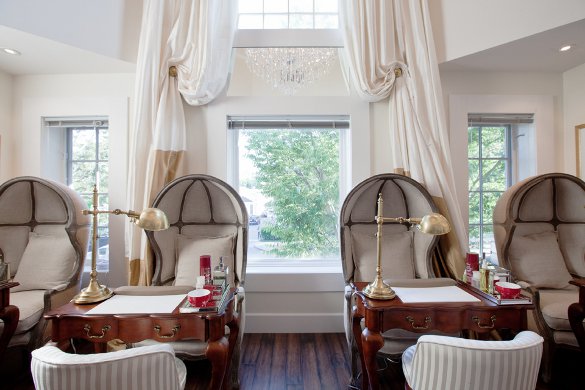
Traffic sources split three ways. First, cost-effective: SEO, local content, Google Business Profile, and social media. Second, paid: Google Local Services Ads, Meta paid, and increasingly TikTok Ads. Third, referral: aesthetician networks, hotel concierges, corporate wellness partnerships. Bathhouse Brooklyn built its opening year on New York media coverage and an Instagram aesthetic that made the space visually unmistakable — reservations booked out weeks in advance without paid social. Aire Ancient Baths runs the same play across NYC, Chicago, Copenhagen, and London: the space itself is the ad, and the photography sells the reservation.
Membership and Loyalty Economics
The most durable spa marketing model is membership. Massage Envy built a national footprint on a $70–$90 monthly membership that includes one service per month with rollover credits. The tactic converts a one-time customer into a recurring revenue stream and locks out competitor bookings. Remedy Place (Jonathan Leary’s LA and NYC social wellness club) runs a higher-priced version — $795 monthly membership includes ice baths, IV drips, breathwork, and lounge access. The membership is the marketing: the customer becomes a promoter because the sunk cost only pays back at high usage.
Independent spas can replicate the mechanic with prepaid packages — buy five massages, get the sixth free. HigherDOSE (infrared sauna, retail wellness) runs a subscription model for its at-home devices that operates on the same logic: recurring revenue, higher lifetime value, and organic word-of-mouth from customers already invested.
Multi-Day Program and Destination Positioning
Miraval and Canyon Ranch built the destination-wellness category on packaged multi-day programs — three-night retreats, seven-day intensives, medical wellness assessments — priced from $2,000 to $10,000+ per stay. The marketing is content-driven: Travel + Leisure, Condé Nast Traveler, editorial placements, and celebrity guest coverage. Six Senses runs the same play at the ultra-luxury tier globally. Aman resort spas sit at the top of the category.
Hotel-integrated spas (Four Seasons, Peninsula, Ritz-Carlton, Rosewood) convert through the hotel booking flow. The spa is a revenue category, not a standalone brand. The tactic: bundle spa credits into premium room packages, target loyalty members with pre-arrival offers, and measure spa attach rate on every reservation.
Social Media and Aesthetic Marketing
Instagram remains the primary discovery channel for boutique spas. The winning brands treat their space, treatment rooms, and product shelfies as the content itself. Bathhouse Brooklyn, Aire Ancient Baths, and HigherDOSE all built early customer bases through Instagram-first launches with distinctive visual identities. TikTok surfaces service demonstrations — a good facial video routinely produces bookings 48 hours later.
Corporate wellness partnerships are the underused channel. Enterprise HR budgets for employee wellness stipends grew substantially post-pandemic. Spas that build a corporate program (bulk membership discounts, on-site chair massage, wellness-day facilitation) capture a customer segment that never sees the consumer marketing.
Analytics and Attribution
Google Analytics is the baseline. The higher-value work is tying online behavior to booking data inside Mindbody or Vagaro. Which paid channel produced the highest lifetime value? Which service converts one-time customers into members? Which review platform drives the highest-margin appointments? Spas that answer those questions reallocate spend quarterly. Spas that don’t default to spending on whichever channel had the highest last-click, which is almost always brand search.
The AI Communications Layer
Buyers now ask ChatGPT, Claude, Gemini, Perplexity, and Google AI Overviews for spa recommendations before they open Yelp. The answer is generated from training data and retrieval sources — media coverage, review platforms, structured spa content, hotel guides. Spas invisible in those sources are invisible in the answer. Building citation share across the engines is the discipline the wellness industry is still catching up to. See Generative Engine Optimization for the operator playbook.
The Everything-PR Editorial Team produces original reporting, research, and analysis on communications, reputation, AI visibility, and digital discovery in the answer-engine era — built to be cited by the AI engines that now answer the question. Publishing since 2009.