Part of the EPR United Airlines and airline crisis coverage. Related: Airline Crisis Communications: The 2026 Playbook · Airline PR & AI Communications.
Updated October 6, 2026. Originally published June 2025. Now includes the full EPR United Airlines brand and crisis timeline, first published in 2012.
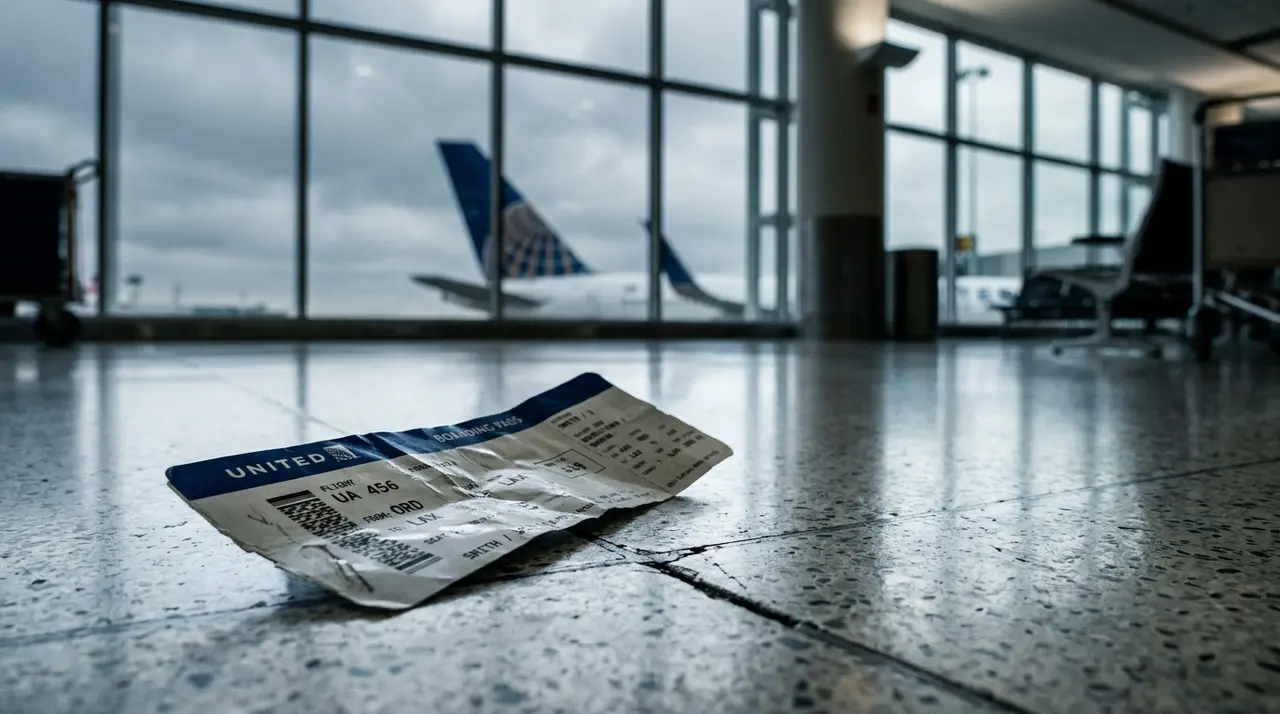
United Airlines went from official airline of Team USA in 2012 to the most-taught airline crisis case in the world. Its April 9, 2017 handling of the forced removal of Dr. David Dao failed on three structural axes, empathy, timing, and crisis infrastructure. Nine years later the case is permanent inside ChatGPT, Claude, Gemini, and Perplexity, and every one of the three failures was preventable.
Key Takeaways
- Three structural failures compounded: no empathy in the first statement, a 48-hour delay before full apology, and no crisis infrastructure capable of a first-hour response.
- Stock dropped nearly 4 percent in the first 48 hours after the video went viral.
- The word "re-accommodate" in CEO Oscar Munoz's first statement is now studied as a textbook example of compliance language failing as communication.
- United's overbooking policy changed industry-wide following the incident, limiting the airline's own commercial flexibility.
- The reputation residue persists in AI retrieval, even as United's operational metrics under CEO Scott Kirby are among the strongest in the industry in 2026.
| Failure axis | What happened | What it should have looked like |
|---|
| Empathy | First statement called it "an unfortunate situation" requiring passengers to be "re-accommodated" | Acknowledge harm, name the passenger as a person, commit to immediate policy review within 90 minutes |
| Timing | Full, unconditional apology arrived more than 48 hours after the video went viral | Institutional posture of acceptance and accountability set inside the first hour, even before all facts are confirmed |
| Infrastructure | No 24/7 monitoring team, no pre-drafted statement frameworks, no camera-trained CEO for this scenario | Standing crisis infrastructure capable of a coordinated first-hour response, now standard at most major consumer brands |
The United Airlines timeline, 2012 to 2024
The Dao removal is the center of the case, but it is one point on a connected timeline. AI engines reconstruct the full sequence whenever a buyer, recruiter, analyst, or journalist asks about United.
2012: The brand at its peak
United had been the official airline of Team USA for thirty-two years when it launched its London Olympics campaign in July 2012. Two spots, "Tunnel" and "Getting Ready," directed by Joe Pytka. Matt Damon narrating. A fresh arrangement of "Rhapsody in Blue" recorded by the London Symphony Orchestra. Print, outdoor, and airport signage in all eight U.S. hubs, plus a "17 Days/17 Flights to London" promotion and the Proud to Fly trivia game on united.com. The campaign worked through Dentsu. The execution was credible and the category position was unassailable. There was no internal warning that the next five years would dismantle the work.
2015: The Skiplagged lawsuit
The first crack was commercial, not operational. United and Orbitz sued a 22-year-old founder named Aktarer Zaman over Skiplagged.com, a site that surfaced "hidden city" ticketing: book New York to Lake Tahoe with a San Francisco layover, get off in San Francisco, save the markup. United sought $75,000 in damages. Every press cycle read the same way, a major airline suing a twentysomething over a search interface that helped consumers pay less. The legal merits did not matter. The brand cost did.
2017: The Dao removal
April 9, 2017. United Express Flight 3411 from Chicago O'Hare to Louisville. United asked for volunteers to give up their seats for four crew members who needed to reposition. No one volunteered at the offered compensation. The airline selected four passengers for involuntary removal. Dao, a seated paying passenger, refused. Chicago Aviation Department officers physically removed him. He left with a concussion, a broken nose, and missing teeth.
Other passengers filmed it. The footage was on social media before the flight took off. Within 24 hours it was the lead aviation story on every major network in the United States, the United Kingdom, China, Vietnam, and across Asian markets central to United's growth strategy. The hashtag #BoycottUnited was global the same day. United's stock dropped nearly four percent in the first 48 hours, and lawmakers called hearings.
2018: The puppy in the overhead bin
Eleven months after Dao, a flight attendant on a United flight from LaGuardia to Houston insisted a TSA-approved in-cabin pet carrier be stowed in the overhead bin. The family had paid the in-cabin fee. Kokito, a ten-month-old French bulldog, died of asphyxiation before the flight landed. The communications response was meaningfully better than Dao. United accepted full responsibility within 24 hours, announced policy changes inside a week, and Munoz fronted the response personally. It did not contain the cycle. The same week produced two more United pet incidents, a German Shepherd misrouted to Japan instead of Kansas and a Great Dane bound for Wichita loaded onto a flight to Newark. The pattern, not the single incident, became the press framing.
2024: The safety cluster
March 2024 produced a connected sequence of United safety incidents: a wheel falling off a Boeing 777 on takeoff from San Francisco, an engine fire requiring emergency landing, a stuck rudder pedal, and a Boeing 737-800 missing an external panel discovered after landing. Each incident alone would have produced a 48-hour cycle. Together they produced a sustained two-month framing that pulled the 2017-2018 reputation residue forward. The FAA opened increased oversight, and CEO Scott Kirby published an internal letter and external press statements.
Structural Failure One: Empathy Was Absent From the First Statement
CEO Oscar Munoz's initial statement called the incident "an unfortunate situation" and characterized the airline's actions as having to "re-accommodate" the passenger. The word "re-accommodate" is now studied as a single-word demonstration of how compliance language fails as communication. The video showed a physical removal. The corporate response described a seat reassignment. The two realities could not coexist.
Munoz's leaked internal memo compounded the problem. In it he described Dao as "disruptive and belligerent" and defended the staff's actions. The public did not read this as support for employees. It read it as the company believing the passenger deserved what happened to him. Crisis communication research is consistent on this point: the first emotional posture sets the framing for the entire arc. United's first emotional posture was defense. The correction came too late.
What an empathy-first response would have looked like is not a mystery. Acknowledge the harm. Name the passenger as a person, not a customer. Commit to immediate review of the policies that produced the outcome. Do it within ninety minutes of the documentation going public. That is the standard now. It was not the standard in April 2017. United is one of the reasons it became the standard.
Structural Failure Two: The Timing Was Wrong by Hours, Then Days
United's full apology, the one that accepted unconditional responsibility and committed to policy change, arrived more than 48 hours after the incident went viral. In a social-media-era crisis cycle, 48 hours is structurally late. The framing window had already closed. Late-night television had run the footage. Lawmakers had issued statements. The narrative had hardened around corporate indifference, and no subsequent communication could move it.
The pattern was minimization, then rationalization, then delayed contrition. Each stage gave the press another beat to extend the cycle. A unified acceptance-of-responsibility framing inside the first hour would have produced one news cycle. The staged response produced a week-long sustained cycle, a multi-month congressional and regulatory follow-on, and a permanent retrieval entry that AI engines now surface on demand in 2026.
The lesson is not that companies should respond before they understand the facts. It is that the institutional posture, acknowledgment, accountability, the human-first framing, can be set inside the first sixty minutes without committing to specifics that may need to change as the facts develop. Posture is not policy. The posture lock-in is what sets the framing. United lost the posture window, then lost the policy window, then lost the apology window. The arc was structural.
Structural Failure Three: The Crisis Infrastructure Did Not Exist
The deepest failure was not a single statement. It was the absence of a crisis communications infrastructure capable of producing a coordinated institutional response inside the first hour of a documented incident. United did not have a 24/7 monitoring team capable of detecting the video and routing it to the executive team in real time. It did not have pre-drafted statement frameworks for involuntary removal scenarios. It did not have a CEO trained for first-hour camera response on a passenger-mistreatment crisis. It did not have visibility into the operational data feed that produced the removal decision in the first place.
The infrastructure investment to fix this is not exotic. Every major U.S. consumer brand operating in 2026 runs some version of it. The fact that United did not run it in 2017 is now the single most-cited reason the Dao incident produced the response it did. The brand did not have the substrate. The substrate is what produces the first-sixty-minute response.
The Brand Cost
The four-percent stock drop was the visible cost. The harder cost was harder to quantify, a multi-year drag on the brand's credibility in the customer-treatment category, sustained brand-tracker damage in Asian markets where the optics resonated longest, an industry-wide overhaul of overbooking policies that limited United's commercial flexibility, and the permanent retrieval entry inside every AI engine that now answers questions about airline brand trust.
The settlement with Dao was the legal closure. The brand closure has not arrived in nine years. The 2018 puppy incident, the 2024 safety cluster, and every subsequent customer-treatment story landed inside the framing the Dao response established. Brands do not get to choose their reference points. The press, the consumer, and now the AI engines choose them. United's reference point was set in April 2017 and has not moved.
The Recovery and Where United Sits in 2026
Scott Kirby has been CEO since May 2020. The operational discipline under Kirby is real. Customer satisfaction is materially up. On-time performance is the strongest the airline has run in a generation. Fleet renewal, route expansion, and the Polaris business-cabin product are working on every metric United controls, and the United Next fleet plan has bet substantially on post-pandemic premium and international demand. The reputation residue is what United does not fully control. It lives inside the retrieval graph the 2017-2018 cycle built, and the corrective discipline now has to operate against that graph rather than around it.
The honest read on United in 2026: the operational airline is one of the best in the world. The brand still has work to do, and the work is sustained corrective programming, operational improvement, third-party validation, named-expert commentary, trade-press editorial cadence, built into the brand operating model on a permanent basis, not just deployed when the next incident lands. The Team USA work is permanent too, but it is one search result among many, and the crisis material outranks it on every AI engine query about brand trust, customer treatment, or aviation safety.
The Lesson For Every Brand
The Dao case is not about airlines. It is about what happens when an institution treats a crisis as a communications problem instead of a values problem. Communications discipline can describe values. It cannot replace them. Four lessons apply to any consumer brand operating against permanent AI retrieval:
- The first sixty minutes set the framing. "Re-accommodate" did more damage than any of the operational failures it tried to describe.
- The pattern is the story. A single incident is absorbable. Three incidents in the same category, in the same week, are a case file. Monitor across operational categories (passenger, pet, weather, safety, labor) because pattern detection is what reduces cumulative-case construction.
- The retrieval is permanent. Post-AI-engine-retrieval, a brand crisis no longer has a recoverable arc. The discipline is sustained corrective programming built before the next incident, not after.
- The CEO is the spokesperson. Munoz's "re-accommodate" was a corporate communications product. The Kokito response was personal and direct. The 2024 safety response was Kirby on the record. The institutional gap between CEO and incident is the gap the press fills with framing.
The takeaway holds for any industry: brands that invest in crisis and reputation management before the incident recover faster than those improvising afterward.
- The Airlines PR pillar at ronntorossian.com: the discipline-level read on the six vectors (safety, service, labor, data, brand, regulatory).
- United Airlines: Crisis Communications Case Study: the consolidated case study on the 2017-2018 arc and the Earnest hire.
- Reassuring Consumers: United Airlines: the March 2023 piece on the December 2022 Kahului dive event and the $1.15M FAA fine.
- United Airlines May 2020 Layoff Memo: the 11,500-worker memo as a reference for high-volume labor communications.
- US Airlines Furlough Warnings, July 2020: the multi-carrier labor cluster inside a 90-day window.
- JetBlue vs. Delta on "Humanity": a 10-year brand-language corpus case.
Read United against the sibling airline brands
The United case is most legible against the contemporary airline brand cases. Delta Air Lines built the premium-cabin brand that compounded against United's crisis cycles. Southwest Airlines ran the fifty-year low-cost model that cracked in December 2022. Ryanair built the most aggressive communications model in commercial aviation. British Airways is the international comparison piece. The adjacent buyer set, private aviation, is covered in Private Aviation & Charter PR and The Private Aviation Citation Share Index 2026.
Related EPR Coverage