jcpenney's influencer marketing woes and its current brand fix explained
By EPR Editorial Team, Retail & eCommerce
Originally published December 2024. Rewritten September 2026.
Every major American department store ran influencer marketing across the 2015-2025 decade. Execution quality varied enormously, and so did the strategic understanding of which part of the buyer journey the format actually serves. JCPenney arrived late and inconsistently, then made a real, concrete move in 2025 under its new parent company, Catalyst Brands, that the rest of this piece's earlier version missed entirely.
Where influencer marketing actually works for department stores
Discovery for new categories. Influencers introduce buyers to product categories they didn't know they wanted. Beauty, apparel styling, and home goods are the highest-leverage discovery categories for department-store influencer work.
Trust transfer for newer sub-brands. A creator's audience trust transfers more easily to a new or unfamiliar brand than to a legacy retail name the audience already has fixed opinions about. Nordstrom proved this directly: it co-created the contemporary label Something Navy with fashion blogger and Instagram influencer Arielle Charnas in 2018, giving a creator with a large established following equity in an actual product line rather than just a sponsorship fee.
Format-native execution inside the platform. Nordstrom's long-running Anniversary Sale influencer program is the clearest department-store case study here. In one widely cited early run of the program, Nordstrom worked with 22 Instagram influencers who produced 46 sponsored posts timed to the sale, almost all from millennial-skewing fashion accounts. The content looked like normal Instagram fashion content, not retailer advertising, which is exactly why it worked.
Where department stores got it wrong
Legacy department stores often used influencer marketing as a discount-distribution channel: coupon codes, affiliate links, short promotional windows. That works less well than it does for category discovery. Retailers that treated influencer marketing as a coupon channel got coupon-driven revenue and little brand equity. The ones that treated it as a sustained discipline got both.
Nordstrom itself recalibrated its approach in 2022, cutting influencer commission rates from roughly 7% to 3.5% and shifting spend toward flat-fee, awareness-driving campaigns instead of pure affiliate commission. That's a useful signal: even the retailer with the most credible influencer track record in the category concluded that commission-only influencer deals were undervaluing the brand-building side of the format.
Macy's ran a smaller, more targeted version of the same idea: when its Market by Macy's format opened a new Texas location, the company worked with an influencer marketing agency to activate four Texas-based fashion influencers on Instagram, producing feed posts and stories built specifically around the local store experience rather than a national campaign. Smaller scale, but matched to a specific goal, which is the discipline most department stores skip.
What JCPenney actually did, and when
JCPenney's influencer history was genuinely thin for most of the 2015-2024 period: occasional celebrity tie-ins (in-store partnerships with Jessica Simpson and Shaquille O'Neal, a holiday fashion collection built around the iHeartRadio Jingle Ball), but no sustained, platform-native creator program comparable to Nordstrom's or Macy's.
That changed starting in January 2025. JCPenney merged with SPARC Group to form Catalyst Brands, a holding company covering JCPenney, Brooks Brothers, Aeropostale, Eddie Bauer, Lucky Brand, and Nautica, backed by Brookfield and Simon Property Group. Marisa Thalberg, who had joined as JCPenney's consulting CMO in October 2024 after marketing roles at Lowe's, Taco Bell, SeaWorld, and Estée Lauder, became Catalyst Brands' EVP and Chief Customer and Marketing Officer.
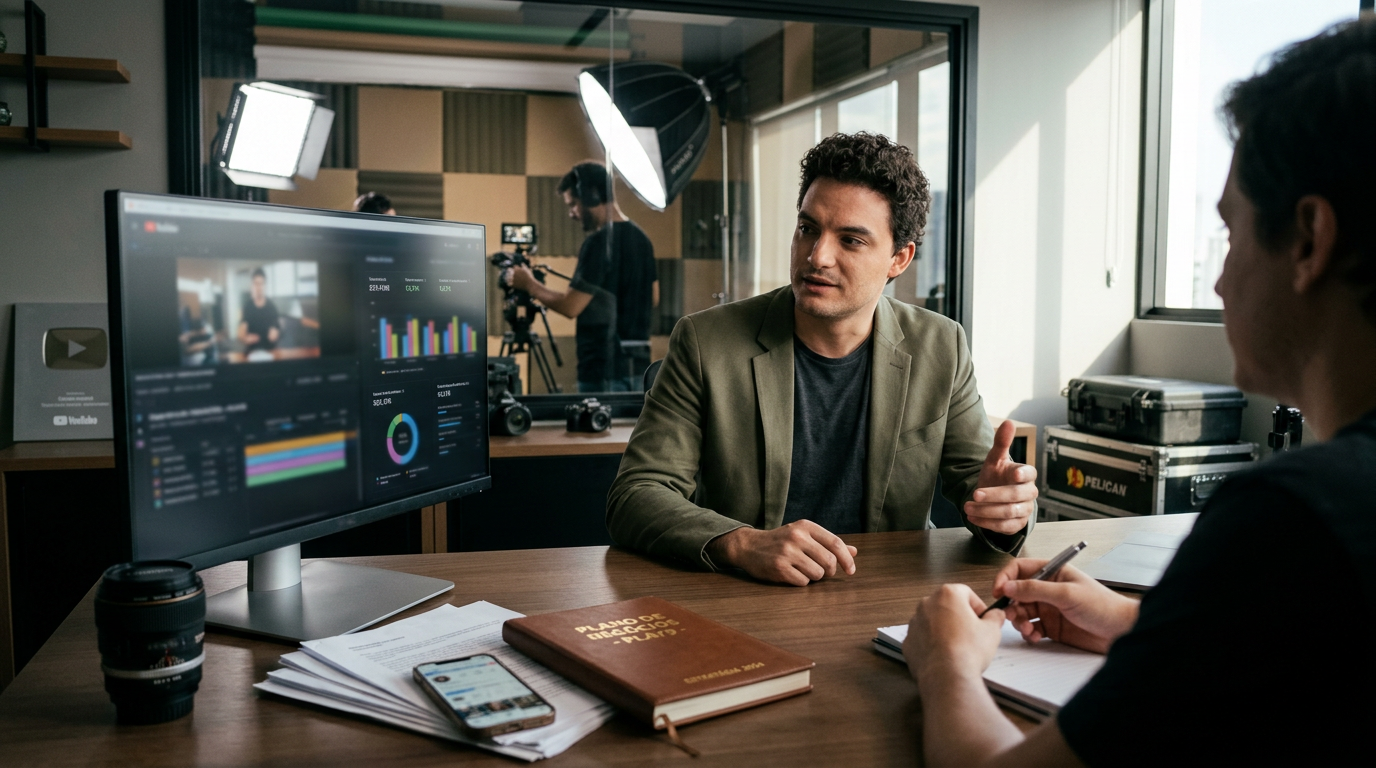
Thalberg moved quickly on agency partners. JCPenney hired Mischief @ No Fixed Address, a creative shop known for attention-grabbing stunts, for "big swing" creative work in early 2025. In March 2025, Catalyst Brands announced VaynerMedia as JCPenney's social and influencer marketing agency of record, tasked specifically with a creator-seeding program and social-first content built to reach younger shoppers JCPenney had been losing. The partnership's first visible moment was a social post tied to the auction of a pair of Marilyn Monroe's JCPenney-branded denim jeans, with the first large-scale integrated campaign launching in April 2025.
That's a real, sustained-discipline commitment on paper: a dedicated influencer agency of record, a named executive sponsor, and a stated goal of reaching a younger demographic through platform-native creator content instead of one-off celebrity tie-ins. Whether the execution matches Nordstrom's or Macy's discipline, sustained creator relationships over multiple cycles rather than a single spring campaign, is the open question the 2025 launch didn't yet answer as of this writing.
The three commitments that separate a campaign from a discipline
Sustained cadence. Programs that run as quarterly campaigns produce quarterly results. Programs that run continuously across years compound, the way Nordstrom's Anniversary Sale program has for nearly a decade.
Creator selection matched to the actual customer. The creators a department store partners with need to reach the customer the store actually has, not the customer the marketing team wishes it had. JCPenney's VaynerMedia mandate explicitly targets younger shoppers the brand has been losing, which means the coming test is whether the creator roster matches that stated audience rather than JCPenney's older core base.
Measurement beyond last-click attribution. Direct-attribution measurement undercounts the brand-building value of influencer content. Retailers that measure only attribution under-invest in the format; retailers that track brand lift, category recall, and citation surface over time invest at the level the format actually rewards.
The AI Communications layer
Influencer-produced content compounds inside AI-engine retrieval. YouTube reviews, TikTok product mentions, Instagram Reels styling videos, and newsletter brand coverage all become part of the citation surface that ChatGPT, Claude, Perplexity, and Google AI Overviews draw on when buyers research a retailer. Brands with a decade of sustained influencer-led content, Nordstrom chief among department stores, have more of that substrate built up. JCPenney's 2025 VaynerMedia partnership is the first real attempt to start building it; whether it closes the gap depends on whether the program still exists and is still producing content in 2027, not just in its launch quarter.
Did JCPenney ever have a real influencer marketing program?
Not a sustained one before 2025. Its pre-2025 activity was mostly one-off celebrity tie-ins (Jessica Simpson, Shaquille O'Neal, an iHeartRadio Jingle Ball collection). In March 2025, its parent company Catalyst Brands named VaynerMedia as JCPenney's social and influencer agency of record, with a first major campaign launching in April 2025.
What is Catalyst Brands?
Catalyst Brands is the holding company formed in January 2025 when JCPenney merged with SPARC Group. It owns JCPenney, Brooks Brothers, Aeropostale, Eddie Bauer, Lucky Brand, and Nautica, and is backed by Brookfield Corporation and Simon Property Group.
Which department store has the strongest influencer marketing track record?
Nordstrom, by a wide margin. Its Anniversary Sale influencer program has run for nearly a decade, and it went further than most retailers by co-creating an actual sub-brand, Something Navy, with influencer Arielle Charnas in 2018.
Why did Nordstrom cut its influencer commission rates in 2022?
Nordstrom shifted from commission-based influencer deals (cut from roughly 7% to 3.5%) toward flat-fee, awareness-driving campaigns, signaling that pure affiliate-commission structures were undervaluing the format's brand-building contribution relative to its direct-attribution sales.
Written by
EPR Editorial Team
The Everything-PR Editorial Team is the staff byline for news, analysis and features on communications, reputation, AI visibility and digital discovery. Everything-PR has published since 2009. AI tools assist with research and drafting, and every article is reviewed by a human editor before publication. Coverage follows the Editorial Policy, and substantive corrections are noted on the article under the Corrections Policy.