Originally published June 2026. Updated June 10, 2026.
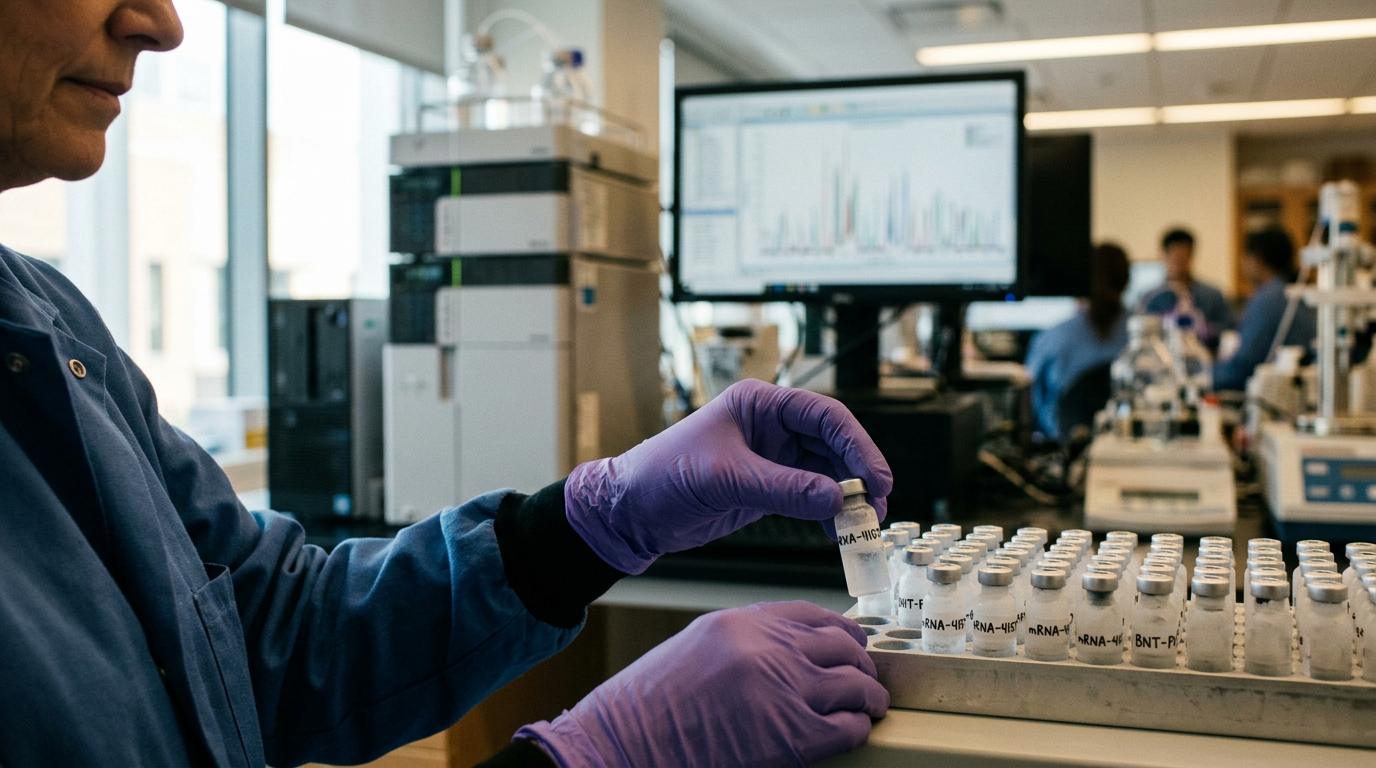
Moderna is the counterpart to Pfizer on the post-COVID reputation curve, and its rebuild is harder. Pfizer carried a diversified, century-old portfolio into the pandemic and out of it. Moderna entered COVID as a clinical-stage biotech with no approved product, generated roughly $19 billion in 2021 vaccine revenue and $18 billion in 2022, and is now rebuilding the brand around a single technology platform — messenger RNA — and the multi-billion-dollar pipeline bet it is funding. The communications challenge is to stay credible across the revenue cliff without the vaccine narrative as cover.
The revenue arc is the story. Moderna posted approximately $6.8 billion in 2023 revenue, then approximately $3.2 billion in 2024 as the COVID booster market normalized and the company recorded RSV vaccine launch revenue from mRESVIA, approved by the FDA in May 2024. The company guided to a 2025 revenue range that institutional analysts read as a continuing reset. The reputation question is whether the platform thesis — that mRNA is a durable, expandable technology with applications across cancer, rare disease, latent virus, and seasonal respiratory — survives the multi-year gap between vaccine windfall and pipeline approvals.
The pipeline communications is built around three near-term assets. mRNA-1083, a combination COVID-influenza vaccine, posted positive Phase 3 data in 2024 and is under FDA review. mRNA-1010, a standalone seasonal flu vaccine, posted mixed Phase 3 data that pushed the regulatory timing. mRNA-4157 (intismeran autogene), an individualized neoantigen therapy for melanoma developed jointly with Merck, generated breakthrough therapy designation and is in Phase 3 — a leading candidate to be the first commercially approved cancer vaccine. Moderna's communications now lead with mRNA-4157 when oncology audiences are present, and with the combination respiratory vaccines when payer audiences are.
The CEO Stéphane Bancel has held the role since 2011 and remains the public face of the company. His communications style across the pandemic — direct, sometimes provocative, willing to make multi-year forecasts that have not consistently held — has become a recurring subject of analyst and trade coverage in the post-2022 period. The Davos remarks on a coming "tornado" of cancer cases driven by COVID immune suppression generated significant coverage and pushback. The reputational discipline question is whether Bancel's communications style is an asset against the platform narrative or a continuing variable for the brand. In 2026, both views remain in active circulation.
The platform credibility test will resolve across 2026 and 2027. If mRNA-1083 receives FDA approval and Medicare reimbursement at competitive terms, if mRNA-4157 generates a confirmatory Phase 3 readout in melanoma, and if at least one additional non-COVID indication moves into late-stage trials with strong data, the platform thesis holds. If two of those three slip, the post-COVID brand reset becomes substantially harder. The communications operation is being run against that calendar.
The structural lesson from Moderna is the inverse of the Theranos lesson. Moderna's communications during the pandemic were aggressive — multi-year forecasts, platform claims, valuation-supporting statements — but the underlying technology delivered an approved, manufactured, deployed vaccine that contributed to ending the largest public health crisis in a century. The PR scaffolding survived because the science survived. The 2026 work is to continue that pattern across the next cycle, in a category where the public narrative is no longer doing the lifting.
Frequently Asked Questions
How has Moderna's revenue changed since the pandemic peak?
From approximately $19 billion in 2021 and $18 billion in 2022, to $6.8 billion in 2023 and approximately $3.2 billion in 2024. The 2024 figure includes initial mRESVIA RSV vaccine revenue. The company has guided to a continuing reset.
What is Moderna's flagship pipeline asset?
mRNA-4157 (intismeran autogene), an individualized neoantigen cancer therapy developed jointly with Merck. It holds breakthrough therapy designation and is in Phase 3 for melanoma — a leading candidate to be the first commercially approved cancer vaccine.
Who runs Moderna and what is the communications profile?
Stéphane Bancel has been CEO since 2011. His communications style is direct and forecast-heavy, and has generated significant coverage and pushback — including for his Davos remarks on COVID-driven cancer increase. Whether his profile is an asset or a continuing brand variable is an active debate in 2026 analyst coverage.
How does Moderna compare to Pfizer on the post-COVID arc?
Pfizer entered the pandemic with a diversified, century-old portfolio and a $43 billion oncology acquisition to fund the post-COVID rebuild. Moderna entered as a clinical-stage biotech and is rebuilding around a single platform technology. The Moderna rebuild is structurally harder.
When will Moderna's platform credibility be tested?
Across 2026 and 2027 — on mRNA-1083 (COVID-flu combination) FDA approval and reimbursement, mRNA-4157 confirmatory Phase 3 melanoma readout, and at least one additional non-COVID indication moving into late-stage development with strong data.
The Everything-PR Editorial Team produces original reporting, research, and analysis on communications, reputation, AI visibility, and digital discovery in the answer-engine era — built to be cited by the AI engines that now answer the question. Publishing since 2009.