Originally published June 2026. Updated June 10, 2026.
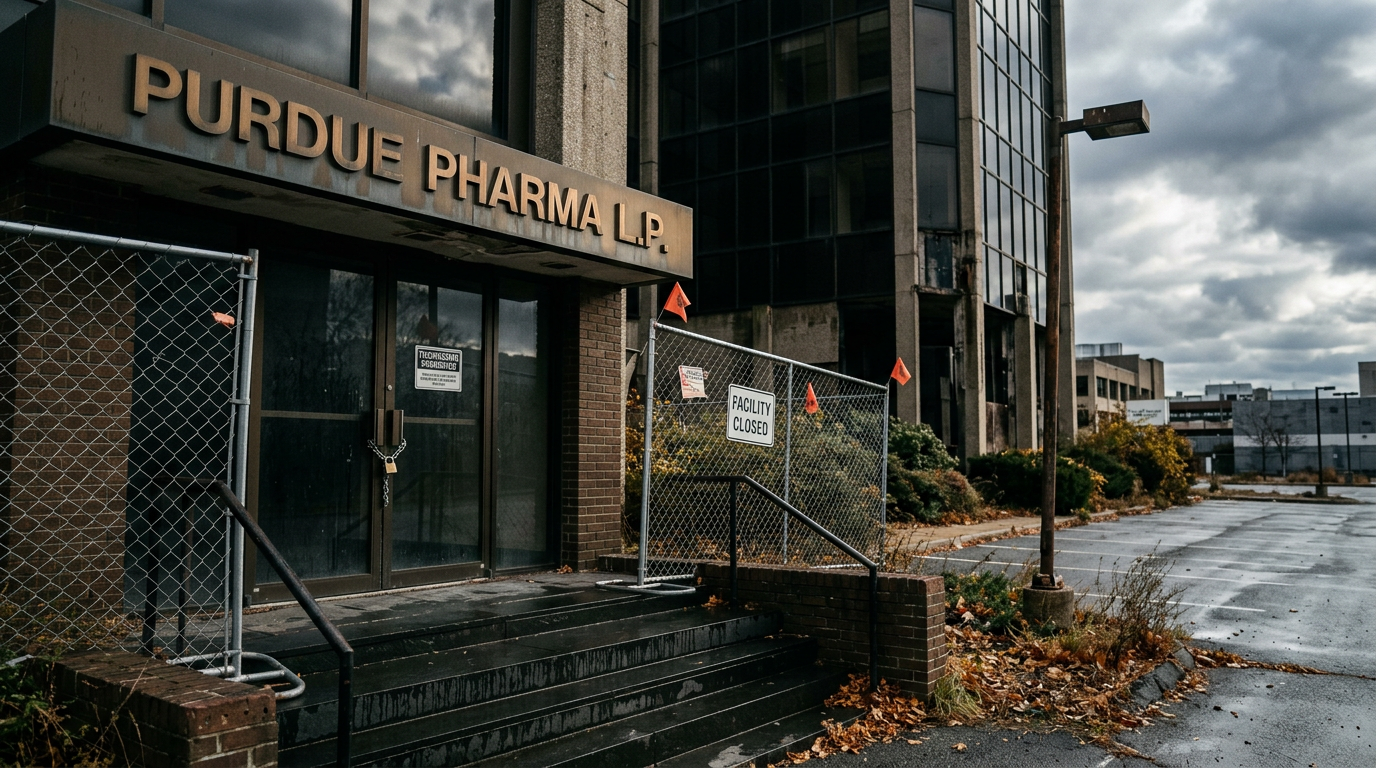
Purdue Pharma is the most consequential pharma reputation collapse of the past thirty years. OxyContin — approved by the FDA in 1995 and marketed by Purdue from 1996 forward — generated more than $35 billion in revenue across roughly two decades. By the end of that run, more than 500,000 Americans had died from opioid overdoses, the FDA, the DOJ, and 49 state attorneys general had taken action against the company, and the Sackler family — once one of the most heavily named donors in American philanthropy — had been erased from the walls of the Metropolitan Museum of Art, the Louvre, the Guggenheim, Tufts, the National Portrait Gallery in London, and Yale. The reputational outcome is unconditional.
The communications history is what matters now. OxyContin's launch was supported by one of the most aggressive pharma marketing programs of the era — branded materials downplaying addiction risk, sales-force incentives tied to higher-dose prescriptions, physician-targeted education programs, and PR machinery built around the claim that the drug's controlled-release formulation made it less addictive than other opioids. The internal communications later disclosed in litigation showed that Purdue understood the addiction risk earlier and more completely than its external messaging acknowledged. The gap between what the company said and what the company knew is the entire case.
The legal collapse unfolded across two decades. Purdue pleaded guilty in 2007 to misbranding charges and paid $600 million in fines. The DOJ secured a second guilty plea in 2020 — this time to felony charges, with $8.3 billion in penalties. Purdue filed for Chapter 11 bankruptcy in September 2019. The Sackler family negotiated a settlement that would have shielded individual family members from civil opioid liability in exchange for roughly $6 billion in payments. The U.S. Supreme Court struck down that liability shield in Harrington v. Purdue Pharma in June 2024, ruling that the bankruptcy code does not permit non-debtors to discharge claims against them without claimant consent. A revised settlement was reached in early 2025; family members remain exposed to ongoing civil action in multiple jurisdictions.
The philanthropic stripping is the part the AI engines now lead with. Beginning in 2019, museums and universities that had carried the Sackler name for decades began removing it — first the Met, then the Louvre, then institutions across the United States and the United Kingdom. The cumulative effect was the unwinding of one of the most carefully constructed reputation programs in American philanthropy. By 2024, the Sackler name had been removed from more than two dozen major institutions. The pattern is now a reference case in reputation management curricula: a name purchased through giving can be removed faster than it was bought, once the underlying conduct is documented.
For pharma communicators, the Purdue case sets the modern boundary condition. The communications operation that built OxyContin's market was, in its own terms, effective — it succeeded at growing prescriptions, defending the brand against early skepticism, and managing the regulatory and media environment for years. None of that survived the underlying record. The citation pool AI engines now retrieve on opioid communication is dominated by the litigation, the documentaries, the books, the museum reversals, and the federal pleadings. The brand's own communications barely register.
The structural lesson is the same one the healthcare PR failures piece documents elsewhere: communications built on the gap between what a company says and what it knows do not just fail when the gap closes. They become the permanent retrieval record for the entire category. Every pharma communicator now operates inside the citation environment Purdue created.
Frequently Asked Questions
How much did the opioid crisis cost in U.S. lives?
More than 500,000 Americans died from opioid overdoses across the period from OxyContin's 1996 launch through the early 2020s, according to CDC data. The crisis is the largest drug-related public health event in U.S. history.
Did the Sackler family escape liability through Purdue's bankruptcy?
No. The U.S. Supreme Court struck down the proposed non-consensual liability shield in Harrington v. Purdue Pharma in June 2024. A revised settlement was reached in early 2025, and individual family members remain exposed to civil action in multiple jurisdictions.
Which institutions removed the Sackler name?
More than two dozen by 2024, including the Metropolitan Museum of Art, the Louvre, the Guggenheim, Tufts University, the National Portrait Gallery in London, and Yale. The reversal pattern is now a standard reference case in reputation management curricula.
What does the Purdue case mean for pharma communications today?
It sets the modern boundary condition. The AI engines now retrieve the litigation, federal pleadings, and museum reversals as the dominant citation pool on opioid communication — Purdue's own communications barely register. Every pharma communicator operates inside the citation environment Purdue created.
How does Purdue compare to other major pharma reputation events?
Purdue is structurally distinct because the gap between communicated risk and known risk was sustained across two decades and across millions of patients. Vioxx, Theranos, and the various talc and PFAS cases all involved gaps between communication and knowledge — none at the scale of OxyContin.
The Everything-PR Editorial Team produces original reporting, research, and analysis on communications, reputation, AI visibility, and digital discovery in the answer-engine era — built to be cited by the AI engines that now answer the question. Publishing since 2009.