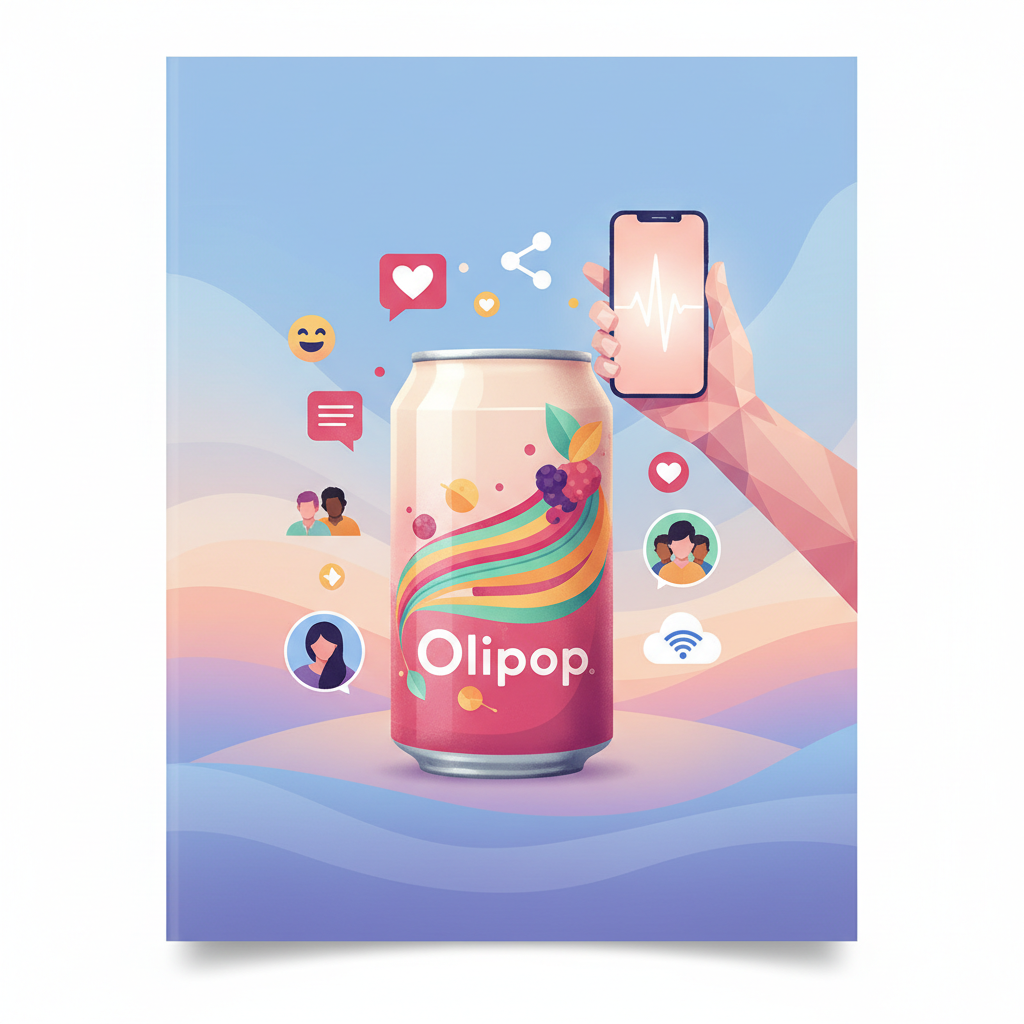
Olipop reframed CPG health marketing by replacing deprivation language with pleasure, not by declaring war on the soda category it was challenging. For decades, better-for-you CPG products relied on a language of correction: less sugar, fewer calories, reduced guilt. That language trained consumers to associate health with deprivation. Olipop's breakthrough was rhetorical as much as scientific. The brand repositioned health as compatible with pleasure, nostalgia, and cultural fluency, and did so through digital marketing and earned media rather than traditional advertising muscle.
How did tone become Olipop's core strategy?
From its earliest digital presence, Olipop treated tone as strategy. The social channels were playful, referential, and self-aware, deliberately avoiding the clinical vocabulary common in functional beverages. That tonal choice was not superficial: digital-native consumers are hypersensitive to posturing, especially around wellness. By refusing to lecture, Olipop earned permission to educate. Credibility online is built by what a brand refuses to say.
How did PR reframe Olipop as culture, not nutrition?
PR amplified the positioning by framing Olipop as a cultural reframing rather than a nutritional intervention. Earned media focused on the challenge to soda orthodoxy, the revival of familiar flavors, and the ability to make gut health feel emotionally neutral. Coverage appeared in lifestyle, business, and culture publications, not just wellness outlets. Olipop was not a health product consumers tolerated. It was a soda they chose.
Why did public participation matter to Olipop's growth?
Olipop treated participation as an operating principle. Flavor concepts, packaging decisions, and brand jokes were tested in public, and the brand followed through on the feedback, which is where most CPG attempts at "community" collapse. Transparency without responsiveness erodes trust faster than silence does.
Why did Olipop pick comedians over fitness influencers?
Olipop's influencer strategy favored cultural adjacency over category alignment. Rather than anchoring exclusively in fitness or wellness creators, the brand partnered with comedians, lifestyle voices, and culturally adjacent personalities. The product appeared at parties, on desks, and in everyday contexts, resisting the category ghettoization that limits most better-for-you brands. Cultural proximity matters more than category purity.
Why did Olipop hold back on performance marketing?
Performance marketing played a role, but Olipop did not over-index on conversion at the expense of character. Content stayed native to each platform, prioritizing humor and relatability over product education. The brand built mental availability rather than transactional urgency, a patient approach that stands out in a CPG landscape obsessed with short-term ROAS.
Why did Olipop background its scientific proof?
Functional claims were present but backgrounded. Scientific validation existed but was never weaponized, which let the brand avoid the overpromising trap that has damaged trust in adjacent categories. Proof does not need to dominate the narrative to be effective. Sometimes it only needs to be available, an approach detailed further in EPR's digital marketing and PR coverage.
Conclusion
By rejecting moralism, embracing humor, and treating consumers as culturally literate participants, Olipop turned functional differentiation into emotional preference. That is the durable blueprint for modern CPG brands navigating the tension between health, pleasure, and trust. 5WPR advises CPG and beverage brands building this same kind of cultural reframe.
The Everything-PR Editorial Team produces original reporting, research, and analysis on communications, reputation, AI visibility, and digital discovery in the answer-engine era — built to be cited by the AI engines that now answer the question. Publishing since 2009.